A sprawling investigation into coordinated, contract-fueled violence across Toronto has launched a cross-border manhunt, with law enforcement racing to unmask foreign backers accused of recruiting young criminals to carry out attacks that have left one officer dead and targeted Jewish community sites and a U.S. diplomatic facility.
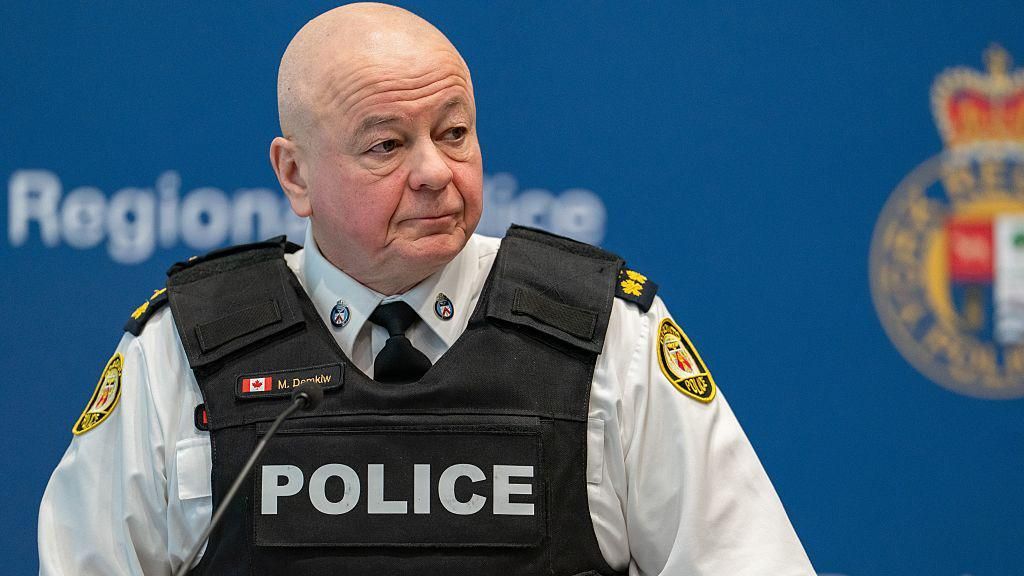
Toronto Police Chief Myron Demkiw confirmed this week that investigators are untangling a web of violence involving dozens of shootings linked to a so-called “criminals for hire” network, whose operatives are recruited on encrypted messaging platforms. Authorities have not yet been able to answer the central question driving the probe: which actors are funding this coordinated campaign of fear. “Who is paying for this? That is what we are trying to determine,” Demkiw told reporters, repeating the core line of inquiry that has defined the investigation.
The investigation gained a new critical development this week, when law enforcement arrested 19-year-old Zara Jabbi at Toronto Pearson International Airport. Jabbi is directly linked to a March shooting outside the U.S. consulate in Toronto, one of the most high-profile attacks in the series of violent incidents. Shortly after his arrest, Jabbi made an initial court appearance, where he faces a slate of charges including theft, possession of a restricted firearm, and attack on an internationally protected property.
Last week, Toronto police carried out a citywide series of search warrants tied to the consulate shooting plot, including a targeted raid on a downtown Toronto apartment complex. The operation turned deadly when Constable Marc Pinizzotto, a veteran Toronto police officer, was killed in the line of duty during the raid. Investigators also recovered a cache of handguns sourced from the United States during the search, and believe this same type of weapon was used in dozens of other unrelated shootings across the Greater Toronto Area.
Security camera footage from the consulate attack has given investigators a key clue into the network’s operating model: suspects allegedly recorded themselves carrying out the shooting to provide proof of completion to their paymasters, Demkiw said. The investigation has also confirmed that the consulate attack is not an isolated incident, but part of a wider pattern of coordinated attacks targeting sensitive community and diplomatic sites, including multiple synagogues and Jewish schools across the city.
“It is clear that some of the people hiring these criminals want to create a sense of fear in our communities, including in the Jewish community,” Demkiw said. The probe is already a coordinated multinational effort, with Toronto police partnering with Canada’s national law enforcement agency, the Royal Canadian Mounted Police, and the U.S. Federal Bureau of Investigation to trace the origins of the plot.
The investigation comes just one month after U.S. authorities announced the arrest of a 32-year-old Iraqi national, Mohammad Baqer Saad Dawood al-Saadi, who is alleged to be a commander in Kataib Hezbollah — an Iraqi militia branded a foreign terrorist organization by the U.S. government with documented ties to Iran. U.S. prosecutors have charged al-Saadi with plotting more than a dozen attacks across North America and Europe targeting Jewish institutions and U.S. interests, including the March consulate attack in Toronto. Toronto police have so far declined to confirm any connection between al-Saadi and their ongoing domestic investigation, and al-Saadi’s lawyer has dismissed the charges against his client as political prosecution.