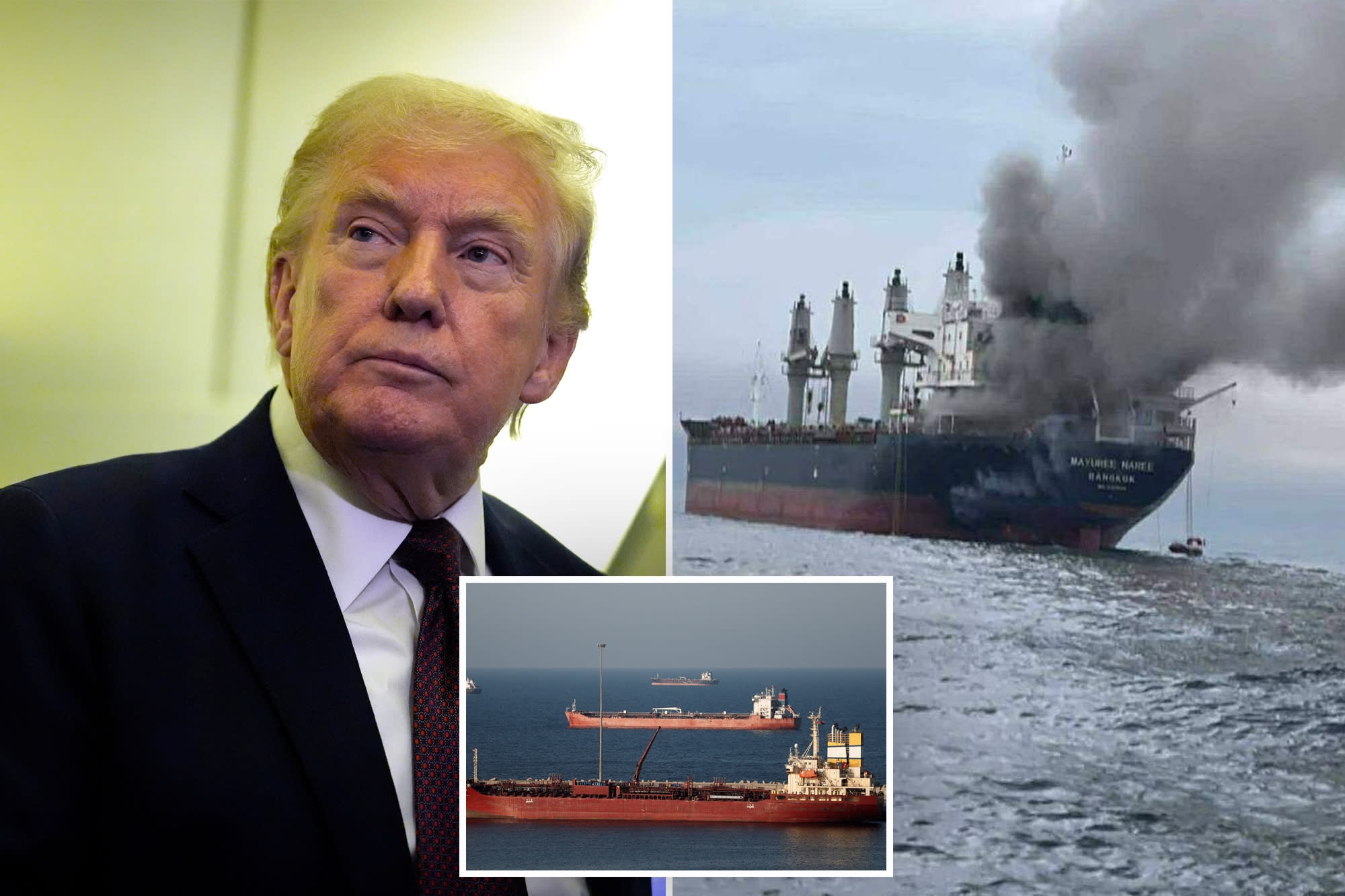
Following the collapse of weekend ceasefire negotiations with Iran, U.S. President Donald Trump’s announcement of a full blockade on the strategic Strait of Hormuz has sparked widespread pushback from key NATO allies, while triggering sharp volatility in global energy markets that threatens broader economic fallout. The strait, one of the world’s most critical maritime chokepoints for global energy trade, has become a central flashpoint in the escalating conflict between the U.S.-Israel coalition and Iran.
Within hours of Trump’s claim that other nations would join the blockade effort, top officials from major NATO member states made their opposition explicit on Monday, just ahead of the proposed implementation of the measure. British Prime Minister Keir Starmer told the BBC that the United Kingdom would not lend any support to the blockade, emphasizing that London’s top priority remains securing the full, unobstructed reopening of the waterway for global shipping.
“[The closure] is deeply damaging,” Starmer said, adding that the UK and France would host a diplomatic summit this week to develop a coordinated multinational plan to protect commercial navigation through the strait once the broader conflict cools.
Other European and NATO-aligned nations echoed this sharp rejection. Spanish Defense Minister Margarita Robles described Trump’s order to block all vessels entering or departing Iranian ports and coastal areas in the strait as fundamentally unreasonable, framing the move as the latest escalation in a dangerous downward spiral of conflict. Spain has already consistently condemned the U.S.-Israeli declaration of war on Iran and refused to deploy any Spanish military assets to the conflict zone.
Turkish Foreign Minister Hakan Fidan also added his voice to calls for a diplomatic resolution to reopen the strait, rejecting any unilateral military escalation that would harm global trade.
In an apparent partial retreat from Trump’s initial aggressive announcement, U.S. Central Command clarified Monday that American forces would not block the passage of commercial vessels traveling to and from non-Iranian ports through the strait, softening the original pledge of a “complete blockade” that Trump had reiterated as recently as Monday during an interview on Fox News.
The breakdown of the ceasefire talks followed sharp mutual recriminations between the U.S. and Iranian negotiating teams. Iranian officials have accused U.S. Vice President JD Vance of acting in bad faith during the high-stakes negotiations, while Vance has claimed Iran refused to comply with American demands related to Tehran’s nuclear development program. The collapse comes just one week after the two sides announced a temporary two-week ceasefire, a deal that had been struck hours before a sweeping Trump-imposed deadline that saw the president threaten to “obliterate Iran’s whole civilization” if no agreement was reached.
The ceasefire had already delivered an immediate calming effect on global energy markets, pushing Brent crude prices below $100 per barrel, but Trump’s blockade announcement reversed those gains almost overnight. By Monday trading, Brent crude had jumped 7.7% to settle at $102.52 per barrel, while U.S. domestic crude rose nearly 8% to hit $104.02 per barrel. The UK’s May wholesale natural gas contract surged by an even steeper 11.7%, underscoring the broad impact of the strait closure on global energy supplies.
Before the war began and Iran effectively closed the strait, roughly 20% of the world’s total daily oil and liquefied natural gas supplies, plus large volumes of global fertilizer shipments, passed through the narrow waterway connecting the Persian Gulf to the Arabian Sea.
Market analysts warn that the risk of prolonged disruption to Hormuz shipping carries severe structural consequences for the global economy, already grappling with persistent inflationary pressures. “The market reaction to Trump’s threat underscores a simple but powerful reality: Hormuz risk is not theoretical; it is structural, and it is real,” explained Priyanka Sachdeva, a senior market analyst at brokerage firm Phillip Nova, in comments to The Guardian. “In today’s environment, every barrel of risk added to oil markets carries an inflation price tag for the global economy,” she added.
Trump’s blockade order would target any vessel that has paid a transit toll to Iran since Tehran closed the strait, with the president accusing Iran of running an extortion racket on commercial shipping. But analysts note that the order would inevitably disrupt energy flows to many U.S. allies, even those that depend entirely on Hormuz shipments for their energy security.
Writing for Responsible Statecraft over the weekend, analyst Kelley Beaucar Vlahos noted that the U.S. blockade plan would directly impact major treaty allies such as the Philippines, which gets 98% of its total energy supplies via the Strait of Hormuz. The blockade would also impact commercial vessels from other major U.S. partners including Japan, which has had LNG carriers transit the strait in recent weeks.
Geopolitical analysts warn that the blockade marks a dangerous escalation of the conflict that erodes the norms of international maritime law. Sarang Shidore, director of the Global South program at the Quincy Institute for Responsible Statecraft, described the U.S. move as a further step toward a “might-makes-right” global order. “Illegalities are being heaped on top of illegalities. The attack on Iran that started this war was compounded by Tehran’s seizure of the Strait of Hormuz. Washington’s blockade of the strait has further upped the ante,” Shidore said.
Iranian officials have already signaled they will take aggressive countermeasures to respond to the blockade. An advisor to Iranian Supreme Leader Ali Khamenei said Tehran retains significant unused leverage to retaliate, while Iranian Parliament Speaker Mohammad Bagher Ghalibaf warned that American consumers will soon face skyrocketing fuel prices, saying U.S. drivers will “be nostalgic for $4-$5 gas.”
International legal experts echo the widespread concern that the blockade will kill the last remnants of the fragile ceasefire and plunge the region back into full-scale hostilities. Donald Rothwell, an international law professor at Australian National University, wrote in an analysis for The Conversation that a U.S. blockade would almost certainly end the temporary truce and resume full open hostilities. “In purely legal terms, if the US imposes a blockade then the ceasefire is over and hostilities have resumed,” Rothwell wrote.