Nearly three decades after the brutal 1998–99 Kosovo war left thousands dead and more than a thousand unaccounted for, new excavations of recently uncovered mass graves in northern Kosovo have rekindled fragile hope for families still searching for answers about their missing loved ones. Among those waiting is Erblin Ademi, who was just 9 years old when his father, prominent local surgeon Adem Ademi, vanished alongside 22 other Kosovo intellectuals in April 1999, mere months before the war concluded.
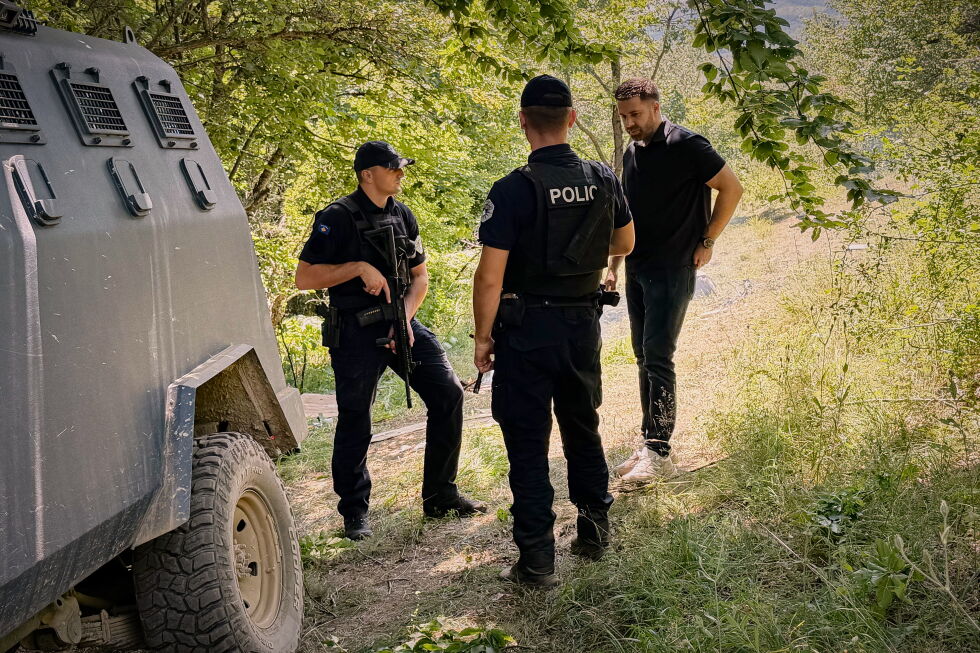
Ademi has watched from the sidelines as forensic teams worked the dig site near the adjacent villages of Upper and Lower Kalluder, located in Zubin Potok municipality. The site, where initial surveys turned up human remains, launched full excavation operations in late July. Kosovo authorities suspect the newly discovered graves hold the remains of the missing group, who were allegedly captured by Serb troops while attempting to flee Kosovo to avoid roundups. For the Ademi family, this new search carries special weight: the site sits just a short distance from where Adem Ademi was last seen, ending decades of fruitless searches that have left the family mired in persistent uncertainty and grief.
For Ademi, the start of each new search brings a uniquely devastating blend of emotion. “Always, when we hear about the beginning of the excavations, there is a mixed feeling, a feeling of hope and a feeling of pain,” Ademi explained. “No matter how many years pass, the feeling of pain will always exist … but at the same time there has always been hope, a feeling that finally the truth will be revealed.” Clutching a decades-old photograph of his father holding him as a young child, Ademi stressed that all families of the missing deserve the basic right to lay their loved ones to rest properly. “Every human being has the right to have a grave where they can be visited, where they can be honored, where they can be remembered,” he said. “We are very hopeful that this will be the end, no matter how long the whole process will take, we will wait until we can honor them as they deserve.”
The 1998–99 Kosovo war erupted when ethnic Albanian rebels launched an uprising against Serbian rule, ending after a 78-day NATO bombing campaign pushed Serbian forces out of the territory. Around 13,000 people were killed in the conflict, and an estimated 1,600 more remain missing to this day, their bodies hidden in unmarked graves scattered across the region. According to the Humanitarian Law Center, a local human rights group, the missing population includes roughly 1,200 ethnic Albanians, 400 ethnic Serbs, and dozens of Roma people.
Kosovo declared independence from Serbia in 2008, a move that Belgrade has never recognized, and cross-border tensions over the legacy of the war remain high. In May 2023, the two sides reached a European Union-brokered agreement that included a commitment to collaborate on resolving the fate of the missing, but progress has stalled, with both sides blaming one another for the lack of cooperation. “It is obvious that authorities are not willing to cooperate,” said Bekim Blakaj of the Humanitarian Law Center. The EU has made normalization of relations between Kosovo and Serbia a core requirement for both countries to advance their bids to join the bloc.
In a sign of progress in the domestic investigation, Kosovo police announced the arrest of two ethnic Serbs on suspicion of war crimes connected to the newly discovered mass graves just days before excavations got underway. The two men remain in police custody as investigations continue. This is not the first time that individuals linked to war crimes in Kosovo have faced justice: multiple high-ranking Serbian political and military officials have already been convicted of war crimes stemming from the Kosovo conflict by a United Nations tribunal based in The Hague, Netherlands.