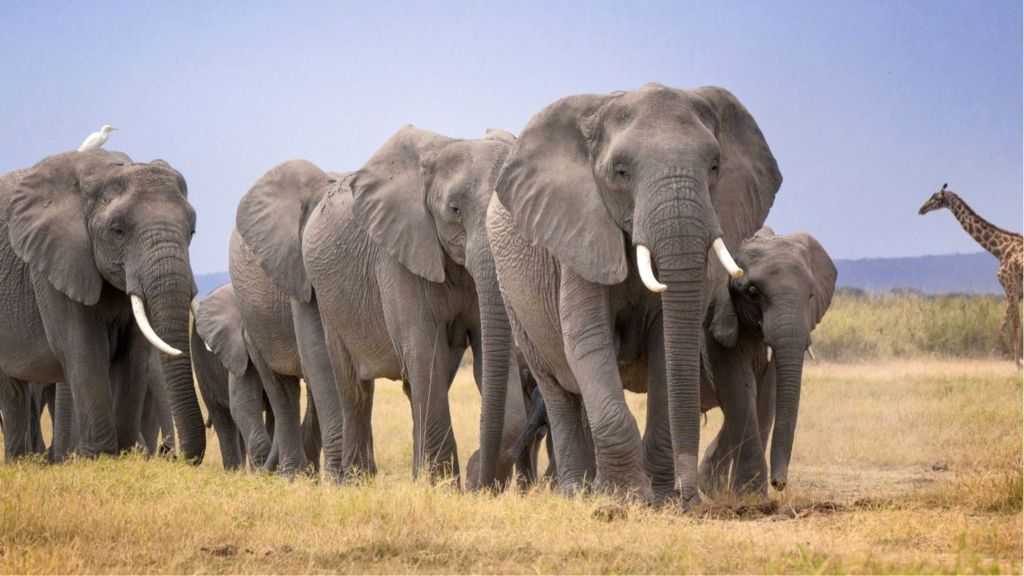
Kenyan wildlife authorities have launched an urgent investigation into the unexplained deaths of 14 elephants across areas adjacent to Amboseli National Park, an event conservation officials describe as unprecedented for the region in recent decades.
The Kenya Wildlife Service (KWS) confirmed that a team of veterinary and conservation experts has been deployed to examine the recovered carcasses, with tissue samples transported to accredited laboratories for comprehensive testing. Analysts are working through a list of potential causes, including infectious disease, toxic poisoning, and other environmental or human-linked factors, to pinpoint what led to the mass mortality event.
Spanning the Kenya-Tanzania border, the Amboseli ecosystem is one of East Africa’s most iconic wildlife habitats, renowned for its large, well-documented elephant population. Unlike many African regions, Amboseli has seen major successes in anti-poaching operations in recent years, leading to steady growth in elephant numbers. KWS communication head Duncan Wanyama told reporters that the 14 bodies were discovered across multiple scattered sites, ranging from 15 to 30 kilometers outside Amboseli National Park’s official boundaries. The dead animals include individuals of different age groups and both sexes, ruling out the theory that the deaths were isolated to a single elephant family group.
As of 2025, long-term population monitoring by the Amboseli Trust for Elephants estimates the region’s total elephant population exceeds 2,000 individuals. To date, KWS says no conclusive evidence has emerged to confirm a single root cause of the deaths, and investigations remain ongoing.