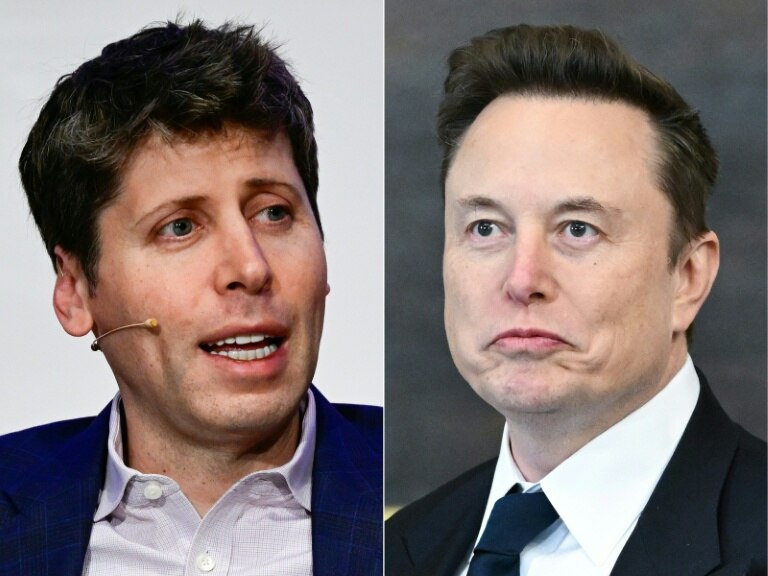
One of Silicon Valley’s most anticipated legal showdowns came to a swift and decisive close this Monday, when a federal jury ruled that Elon Musk had waited far too long to file his blockbuster lawsuit against OpenAI and its top leaders, handing a major victory to the ChatGPT developer.
The verdict, reached quickly after three weeks of high-stakes testimony that featured appearances from a host of technology industry leaders, brings an end to Musk’s legal challenge that accused OpenAI of abandoning its founding non-profit mission to chase massive commercial profits. Sitting in Oakland federal court, the jury concluded that all of Musk’s claims against OpenAI CEO Sam Altman, President Greg Brockman, the OpenAI Foundation, and lead investor Microsoft were time-barred by applicable statutes of limitations, rejecting the core argument of the world’s wealthiest person.
District Judge Yvonne Gonzalez Rogers, who had asked the jury to deliver an advisory ruling on the threshold limitations issue, formally accepted and finalized the jury’s decision. The outcome removes what many analysts described as a potentially existential legal threat to OpenAI. Had Musk succeeded in his claims, he would have forced the AI leader to revert to a non-profit structure—a move that would have derailed OpenAI’s heavily anticipated initial public offering and dissolved its partnership with major investors that have poured tens of billions of dollars into the company amid the global artificial intelligence arms race. Those investors include Microsoft, Amazon, and SoftBank.
Outside the courthouse following the ruling, OpenAI lead attorney William Savitt slammed Musk’s lawsuit as a disingenuous attack on a growing competitor. “The finding of the jury confirms that this lawsuit was a hypocritical attempt to sabotage a competitor and to overcome a long history of very bad predictions about what OpenAI has been and will become,” Savitt said. “Musk can bring his claims, and he can tell his stories, but what the nine members of this jury found is that his stories were just that — stories, not facts,” he added.
Musk, who co-founded OpenAI in 2015, launched the suit in 2024, alleging that Altman and Brockman had improperly hijacked his $38 million founding donation. Musk said he intended the funds to support OpenAI as an open-access non-profit research lab focused on developing AI for the broad public benefit, rather than the $850 billion profit-driven juggernaut it has become.
The statute of limitations question was resolved as a threshold matter before the jury could consider the underlying substantive claims of the lawsuit. Musk filed his suit four years after he made his last financial contribution to OpenAI, and the jury ultimately agreed that the window to file such a claim had long closed. Judge Rogers had indicated ahead of deliberations that she would almost certainly follow the jury’s advisory recommendation on the issue, a promise she fulfilled in formalizing the ruling’s dismissal. If the case had moved forward, the court would have gone on to weigh whether OpenAI’s co-founders misused Musk’s donation and broke founding agreements to pursue commercial growth and personal financial gain.
For weeks, industry observers speculated that the trial’s outcome would hinge on which combative tech leader the nine-person jury would find more credible. Much of the testimony and cross-examination focused on Altman’s leadership, including questions about his decision-making integrity and behind-the-scenes operational moves that alienated dozens of early OpenAI employees, many of whom have since left the company.
OpenAI’s legal team countered Musk’s claims by highlighting inconsistencies in his accounts of OpenAI’s early days, and drew on testimony from Shivon Zilis, a close business associate of Musk’s (with whom he shares four children) who acted as an intermediary between Musk and OpenAI’s leadership after Musk left the company.
Musk departed OpenAI’s board in 2018, and has since launched his own competing artificial intelligence efforts: first through his aerospace firm SpaceX, and more recently with dedicated AI startup xAI. To date, xAI has failed to gain significant market traction against dominant players like OpenAI and fellow Bay Area AI leader Anthropic.
For Altman, the ruling does not fully resolve lingering questions about his leadership: the 2023 unexpected board ouster that saw Altman fired over allegations of lack of candor, before widespread employee pressure forced his reinstatement, left unaddressed claims of manipulative behavior and a toxic internal work culture that were raised during the trial.
Beyond OpenAI itself, the ruling is also a major win for Microsoft, OpenAI’s largest financial backer that has committed $13 billion to the company to date. Industry analyst Dan Ives, of Wedbush Securities, told AFP the outcome clears a major barrier for OpenAI’s planned public listing. “This is an important victory for Altman and OpenAI and clears the path for an IPO by removing this black cloud trial,” Ives said. “Musk was creating noise around this lawsuit but ultimately it was more of a soap opera than a long-term negative for OpenAI,” he added.