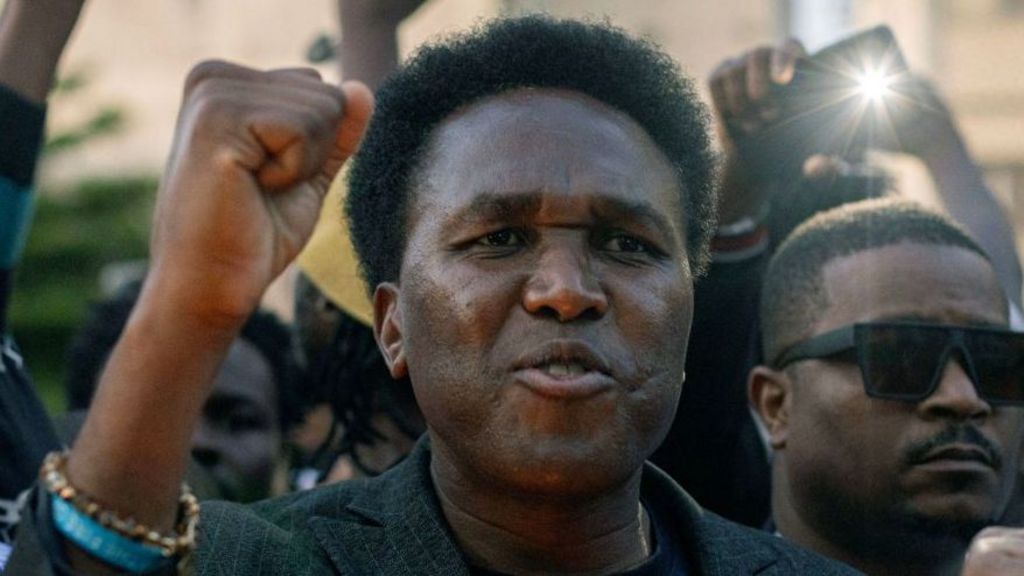
Maputo, Mozambique – Ahead of a landmark Tuesday court appearance for prominent 2024 presidential election runner-up Venâncio Mondlane, Mozambique’s capital has seen a sweeping, visible deployment of law enforcement personnel across the Supreme Court perimeter and major urban thoroughfares, as authorities move to pre-empt a resurgence of the deadly unrest that rocked the country in the aftermath of the disputed October 2024 general vote.
Mondlane, leader of the opposition National Alliance for a Free and Autonomous Mozambique (Anamola), faces a sweeping slate of criminal charges ranging from incitement to collective civil disobedience, public glorification of criminal acts, and instigation of unlawful activity, to the most severe count of incitement to terrorism. If found guilty on the top charge, he could face a maximum prison sentence of 24 years. The opposition figure has categorically rejected all allegations, emphasizing that his public calls for nationwide demonstrations and work stoppages were solely intended to demand full electoral transparency, not to foment violence, after he accused the ruling Frelimo party’s declared election winner Daniel Chapo of securing victory via systemic, widespread electoral fraud.
The months of unrest that followed the contested vote marked one of Mozambique’s deadliest post-independence political crises on record. Amnesty International, compiling data from local civil society partners, confirmed more than 300 fatalities during the wave of protests, while independent human rights groups documented repeated instances of excessive, disproportionate force deployed by state security personnel against demonstrators. European Union election monitoring teams also formally flagged widespread procedural irregularities across the October 2024 polling process, casting significant public doubt on the overall credibility of the final certified results.
Prosecutors argue that Mondlane’s public appeals directly spurred mass actions that disrupted critical public services, caused widespread property damage, and posed a pervasive threat to broader public safety. In response, Anamola leadership has framed the entire legal case as a transparently politically motivated prosecution targeting the leading opposition figure who challenged the ruling party’s hold on power. For their part, Supreme Court officials have forcefully rejected all claims of improper political interference in the upcoming trial proceedings.
In an official public statement released on the Monday preceding the trial, Mozambique’s national police force urged all citizens to exercise maximum tolerance and uphold peaceful coexistence, noting that the constitutional right to public demonstration must be exercised strictly within legal boundaries. Law enforcement agencies further pledged to carry out their duties to protect civilian lives and critical public and private property via preventive, proportionate operations fully aligned with national rule of law standards.
Controversy has already flared over the court’s decision to restrict courtroom access to a small, pre-vetted group of selected media outlets, a move that has drawn sharp criticism from local journalist associations and global press freedom advocacy groups. Court administrators have defended the access limits as a practical necessity stemming from the small, fixed seating capacity of the trial courtroom, though critics counter that the restrictions erode public transparency for a legal proceeding of unparalleled public national interest. The full trial panel will consist of five presiding judges, with both prosecution and defense teams scheduled to call witness testimony over the course of the proceedings.
Across Mozambique, the trial is widely regarded as a defining, make-or-break test of the country’s fragile political stability, nearly two years after the disputed 2024 elections triggered the worst episode of political bloodshed the nation has witnessed in multiple decades. Independent Mozambican political analyst Luis Nhachote noted that the proceedings represent a critical, tangible opportunity for national institutions to demonstrate that the rule of law is applied equally and impartially to all individuals, regardless of political status. Many independent political observers have also issued stark warnings that missteps during the high-profile trial risk reigniting widespread communal tensions, at a moment when the country is still grappling to recover from the lingering trauma, deep societal rifts, and economic disruption left by the 2024 post-election violence. For ongoing updates on regional developments, audiences can access additional African continent coverage at BBCAfrica.com, and connect with BBC Africa via its dedicated Twitter, Facebook, and Instagram social media channels, alongside its curated slate of region-focused news podcasts.
Mozambique opposition leader faces trial over deadly 2024 election unrest