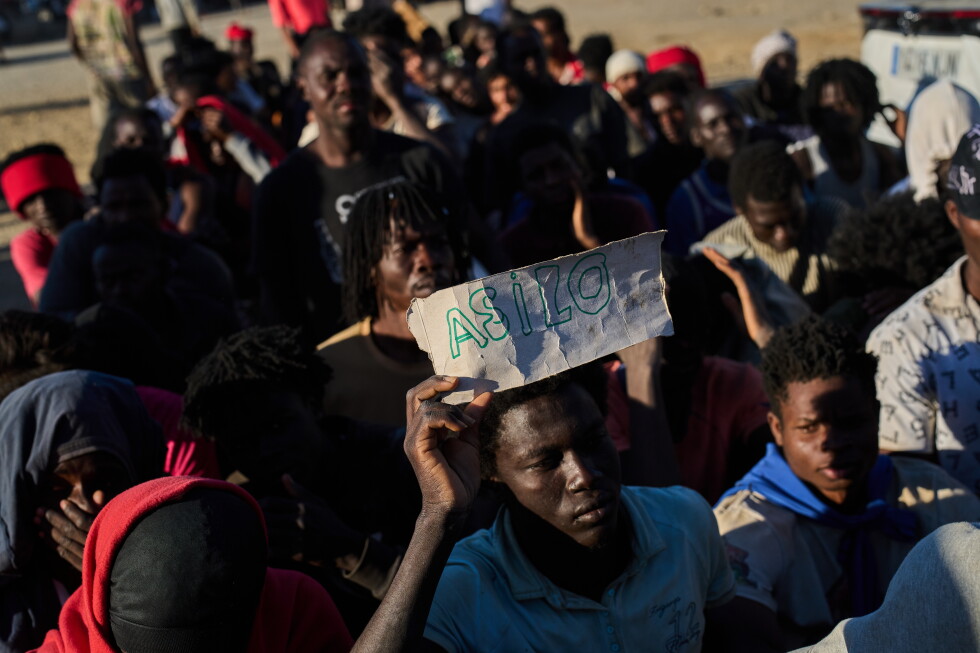
FNIDEQ, Morocco — Along the sunbaked Moroccan side of the border fence separating the country from Spain’s North African enclave Ceuta, crowds of anxious relatives gather every day. Mothers clutch crumpled printed photos, fathers scan every approaching returnee’s face, and siblings lean against the barrier, calling out names of loved ones who crossed into Ceuta during last week’s unprecedented mass migration surge. Each returning traveler is stopped with the same urgent question: Have you seen my son? My daughter? My brother?
In what has become one of the most high-profile migration crises to shake Europe in recent years, more than 72,000 Moroccan migrants flooded across the border into Ceuta in a matter of days. The sudden surge was triggered by a toxic mix of widespread economic desperation and unfounded online rumors claiming the border had been permanently opened, drawing thousands of young people hoping to start new lives in the European Union. Today, authorities confirm that all but roughly 2,000 migrants have returned to Morocco — but hundreds of families are still without any word of where their relatives are.
The human cost of the crossing has already been devastating. Official counts put the death toll at more than 80, with migrants drowning while attempting to swim across border waters or suffering fatal injuries while scaling the heavily fortified border fence. It remains unclear if all bodies have been recovered and repatriated; a morgue source in Tetouan, Morocco’s largest city near the border, told the Associated Press that more than a dozen fatalities have already been brought to the facility, though journalists have not been granted access to confirm the count.
As survivors trickled back across the border in recent days, the AP witnessed first-hand the agony of families waiting for news. Many returnees lost or abandoned their mobile phones during the chaotic crossing, so they borrowed devices from strangers to call anxious family members waiting at home. For those whose loved ones have not come home, the border has become a site of endless, heart-wrenching waiting.
“I have been looking for my son for five days now,” said Ibtissam Chari, whose 19-year-old son Rayan crossed into Ceuta with a group of friends after seeing the viral rumors of an open border online. “He called me when he arrived, and since then I haven’t heard anything from him.”
Another woman, who asked to remain anonymous to protect her children, spoke to reporters while staring silently toward the Ceuta side of the border. Her 12-year-old son crossed the border with his older brother; only the older boy made it back to Morocco. “I have nothing else to do but come here and wait,” she said. “I spend all my days here. I will come back tomorrow again.”
Of the migrants still unaccounted for, an estimated 1,000 are minors remaining in Ceuta. Under Spanish law, security forces lack the authority to expel unaccompanied minor migrants, leaving their long-term fate uncertain. Moroccan authorities have already welded shut the small opening in the border fence that was temporarily opened to allow returning migrants to cross back into Morocco, closing off the main passage for returnees.
The same social media groups that helped coordinate the mass crossing — sharing tips on where to swim and how to avoid patrols — have now pivoted to serve as clearinghouses for missing person posts. Families flood the groups with photos and descriptions of their unaccounted-for relatives, begging any migrants still in Ceuta for information. “If anyone has seen this girl in Ceuta or Castillejos, please let us know. Her family is going crazy,” user Hiba Nakaax wrote in the popular Facebook group Fnideq Bab Sebta, one of the main hubs for crossing coordination.
For many young Moroccans, attempting the crossing to Europe is a decades-long common aspiration, rooted in persistent economic inequality across the country. While coastal tourist regions have seen steady economic growth in recent years, inland areas continue to grapple with crippling poverty and youth unemployment that tops 30%. Last year’s widespread youth-led Gen Z protests across Morocco laid bare the deep public frustration over limited economic opportunity and underfunded public services, driving many young people to see migration to Europe as their only shot at stability.
That desperation is so deeply rooted that even after the deadly chaos of the Ceuta surge, some parents still urge their children to find another way to cross. After 17-year-old Mohamed Chakor from the inland city of Taounate returned home traumatized from the failed attempt, he called his father to share the news. Instead of urging him to abandon the plan, his father asked him to start looking for another route to Europe.
Twenty-six-year-old Othmane El Merzoug, who returned barefoot and hungry after being turned away from Ceuta, called his father in Salé from a reporter’s phone. “Dad, I’ve returned from Ceuta. They didn’t allow me to stay,” he said over the speakerphone. His father immediately promised to send money so he could make the trip back home — and left unsaid what many here already know: for many young Moroccans, the next attempt to cross will come soon.