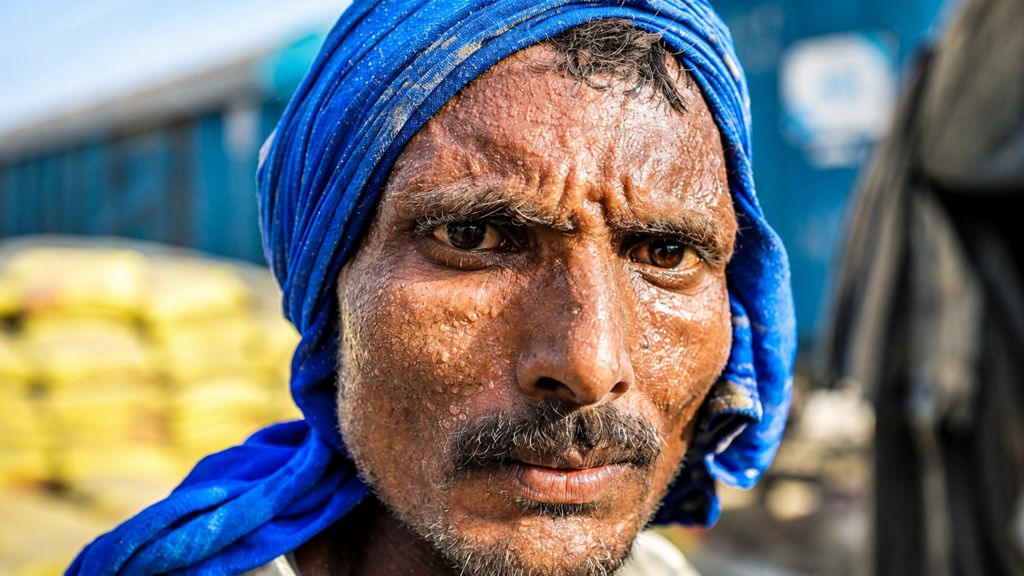
By early June 2026, a historic and unrelenting heatwave has pushed Banda, a dusty rural district in India’s northern Uttar Pradesh state, into the center of a growing climate crisis. For more than a straight week, temperatures hovered between 47°C and 48°C (116°F to 118°F) — an extraordinary stretch of extreme heat that even long-term residents describe as unprecedented, marking a dangerous shift from the region’s familiar seasonal weather patterns.
Located just a short distance from the Tropic of Cancer, Banda is no stranger to sweltering summers. But this year’s heatwave has broken all patterns of persistence, bringing a grinding, non-stop heat that alters every part of daily life for the district’s 2.3 million residents, most of whom rely on outdoor labor like farming, construction, road work and small-scale trade to survive. With little access to air conditioning or even reliable cooling for millions of low-income households, Banda’s population has been forced to completely restructure their lives around the deadly heat.
By 6 a.m., when most urban centers across India are just waking to morning, the sun over Banda already blazes with the harsh intensity of a mid-afternoon summer sun. Atarra’s wholesale vegetable market, which once bustled with trade until late morning, now clears out completely by 8 a.m. Farmers and traders travel to the market before dawn to unload their harvests of tomatoes, gourds, chillies and melons, rushing to sell all stock before the heat becomes unbearable — a necessity that grows more urgent by the day, as high temperatures cut the shelf life of fresh produce drastically. “It’s only 6:15 a.m., but it already feels like 8 or 9 a.m.,” explained Himanshu, a local vegetable trader, wiping sweat from his brow as he leaned against crates of ripening tomatoes. “A box of tomatoes has to be sold today or tomorrow; in this heat, it simply won’t last.”
Across the district, this compressed daily schedule governs nearly every activity. As veteran Polish journalist Ryszard Kapuściński once observed of equally sweltering African landscapes, Banda’s residents now devote most of their energy to a constant, daily search for shade and cool air. Pappu Verma, a local mason, has rearranged his work schedule to start at 7 a.m., wrap up by noon, take a four-hour break to avoid the peak midday heat, then return to work from 4 p.m. to 7 p.m. While the break protects him from dangerous heat exhaustion and headaches, it stretches his workday out to 12 or 13 hours — and his pay remains the same regardless. “Otherwise, whatever I earn would just end up being spent on medicine for heat sickness,” he shrugged, a common trade-off for low-income workers across the district.
Outdoor laborers bear the brunt of the crisis most directly. On a 46°C day last week, three female road construction workers were found huddled in the thin sliver of shade cast by a water tanker chassis on a highway bridge spanning the Ken River, eating their simple lunch of flatbread with onion, salt and pickle. “If we brought cooked vegetables, they’d spoil before noon,” explained Shanti Devi, one of the workers, who walks six kilometers to her job site every morning and another six kilometers back home each evening. She summed up the reality for Banda’s working poor in a blunt, memorable line: “Poor people don’t have the luxury of worrying about the heat.”
The Ken River, which once provided a natural cooling effect for surrounding communities, has itself been weakened by decades of overexploitation. Researchers note that widespread illegal sand mining and steady groundwater depletion have eroded the river’s ability to moderate local temperatures, creating a vicious cycle where water scarcity amplifies extreme heat, which in turn worsens water demand.
The economic and public health impacts of the prolonged heatwave are visible across every corner of the district. E-rickshaw drivers report almost no passengers during midday hours; shopkeepers now open before sunrise and close their doors from noon to 4 p.m., and customer numbers have fallen by half. Local hospitals report a steady stream of heat-related illnesses, with 15 to 20 new cases arriving daily, most involving children and elderly patients. Common symptoms include diarrhoea, vomiting and high fever, all brought on by constant exposure to extreme heat.
Banda’s current ordeal is not an isolated anomaly: it is a local manifestation of a growing climate crisis unfolding across northern India. Climate researchers have identified the Indo-Gangetic Plain, the vast fertile belt that covers most of northern India including Uttar Pradesh, as one of the world’s fastest-growing hotspots for dangerous humid heat — a combination of high temperatures and high humidity that places far more physiological stress on the human body than dry heat alone. With a dense population of low-income outdoor workers, widespread irrigation that adds moisture to the air, and limited access to residential cooling, Uttar Pradesh is one of the most vulnerable regions in the world to deadly heatwaves, according to Delhi-based think tank Climate Trends.
Local geographic and development choices have amplified Banda’s risk dramatically. Data from Banda University of Agriculture and Technology shows that nearly one-sixth of the district’s dense forest cover disappeared between 1991 and 2022, driven by agricultural expansion, mining and urban development. Tree cover now sits far below the recommended levels to moderate local temperatures, while concrete infrastructure and exposed sand river beds absorb and radiate heat, pushing daytime temperatures even higher. While Banda has recorded extreme temperatures of 48°C to 49°C in the past, including two consecutive days of 49°C heat in 2024, local meteorologist Dinesh Sah notes that this year’s heatwave is unprecedented for its persistence. “For eight or nine straight days, 47°C to 48°C without a break — that is what is new this year,” he explained.
The heat does not fade when the sun sets. Overnight temperatures remain stuck around 30°C, meaning residents never get a chance to fully cool down and recover from the day’s heat. “It feels as if mornings and cool nights no longer exist,” Sah said. By 7 or 8 a.m., it already feels like mid-afternoon.
In rural Achharaund village, 20 kilometers from Banda’s district headquarters, the crisis is as much about water as it is about heat. A single deep well supplies most of the village’s drinking water, and women spend up to five hours a day queuing under the blazing sun to fill buckets for their households. Eighteen-year-old Kranti Vishwakarma says that when afternoon power cuts cut off access to the village’s few electric pumps, the only relief comes from the shade of ancient neem trees. “We don’t have coolers or air conditioners, so for us, the neem trees play that role,” she said.
Eighty-year-old Chunubadi, one of the village’s oldest residents, relies on a rickety table fan held together with string to circulate air in her small home. Even when the power stays on, the fan only blows dry, hot air. “In my 80 years, I’ve never seen heat like this,” she said, watching the fan blades turn slowly. “Old people die in extreme cold or extreme heat. I don’t know whether I’ll be able to endure this one.”
Even as residents adapt their daily routines to survive the heat, adaptation does not equal safety. Research from the University of California, Berkeley estimates that a single severe five-day heatwave in Uttar Pradesh could cause more than 8,000 excess deaths, with the burden falling overwhelmingly on the elderly, outdoor workers and low-income households without access to cooling. What worries climate scientists is not that Banda is hot — it is that heatwaves are growing longer, more intense and more frequent, as the natural systems that once kept temperatures in check are destroyed by human activity.
After more than a week of record heat, a western disturbance finally brought brief relief: dust storms and scattered rain dropped temperatures by 8 to 9°C, and Banda’s residents were finally able to step outside during midday without fear. But the respite is only temporary. The daily routines that Banda’s population has adopted to survive this heatwave — starting work before dawn, retreating indoors during peak heat, constantly searching for shade — are no longer temporary adaptations. They are quickly becoming the new normal, a preview of what climate change will bring to millions of vulnerable people across South Asia in the coming decades.