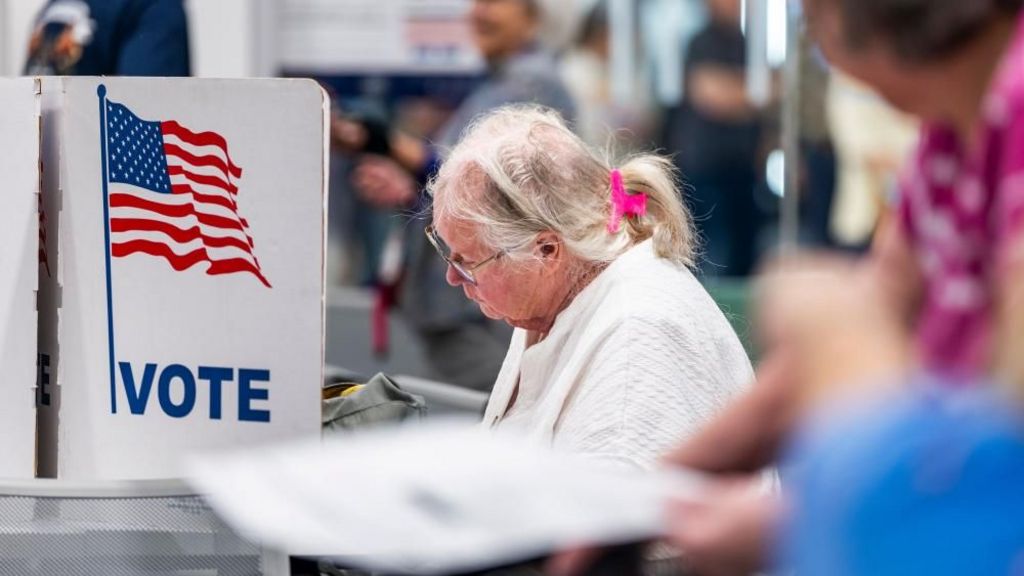
With less than seven days remaining before the 2026 United States midterm elections that will determine partisan control of both chambers of Congress for the subsequent two-year legislative term, preliminary data shows more than 43 million U.S. residents have already submitted their ballots via early in-person or mail-in pathways. The widely tracked Election Lab run by University of Florida political science scholar Prof Mike McDonald reveals that daily early vote volumes have hovered between 4 million and 5 million in recent weeks, a far brisker pace than recorded in the vast majority of prior midterm cycles. To date, Texas, a pivotal battleground state that could single-handedly tip partisan control of the U.S. Senate for the remainder of Donald Trump’s presidential tenure, has posted the most dramatic above-average turnout surge nationwide. The Lone Star State has already notched roughly 1.75 million more early ballots than its total 2022 early vote count, with more than 5.8 million submissions logged as of the latest update. Demographic breakdowns from the three states that collect racial identity data during voter registration — Georgia, Florida, and North Carolina — show sharp upticks in early participation from Black and Hispanic communities, while white voter early turnout rates hold nearly identical to 2022 levels. In Texas, which does not require voters to disclose partisan affiliation or racial background on registration forms, border counties where Hispanic residents make up over 90% of the population are seeing unprecedented turnout spikes, with multiple projected to exceed their full 2022 total turnout numbers before election day even arrives. Among the subset of U.S. states that mandate voters declare a formal partisan affiliation when registering, early vote totals from Democratic voters have climbed notably compared to 2022, while Republican early voting volumes have remained largely consistent with the previous midterm cycle. The latest aggregated data from these party-registration states shows 44% of early ballots cast to date come from registered Democrats, 31.2% from registered Republicans, and the remaining 24.7% from unaffiliated independent voters, whose candidate preferences cannot be tracked via public records. The national shift toward early voting accelerated dramatically during the 2020 COVID-19 public health crisis, when dozens of states expanded no-excuse early in-person and mail-in voting access to reduce crowding at polling sites. During that 2020 presidential election cycle, over two-thirds of all ballots were cast early, with half of those submissions arriving via post. Prof McDonald’s analysis notes that modern voters are increasingly opting for in-person early voting rather than mail-in submissions, and returning their ballots far earlier in the pre-election window than in prior cycles. While no definitive empirical data exists to confirm the driving force behind this trend, experts point to widespread public concerns over U.S. Postal Service operational disruptions, as well as the higher rate of ballot disqualification linked to accidental procedural errors on mailed submissions. Early voting operations will begin winding down across the country in the coming days, as individual states enforce their pre-election cut-off deadlines ahead of official election day on Tuesday, November 3.
More than 43 million ballots cast so far in midterms early voting surge