A landmark new survey from the nonpartisan U.S.-based Pew Research Center has captured a historic shift in global public opinion: for the first time since the organization began tracking global attitudes toward the world’s two major superpowers in 2002, a majority of surveyed nations hold more favorable views of China than of the United States.
Between February and May, Pew researchers polled more than 42,000 respondents across 36 countries, asking participants to rate their opinions of both China and the U.S. on a four-point scale from very favorable to very unfavorable. The final results showed that in 25 out of the 36 included nations, more respondents reported holding a favorable opinion of China than the U.S. Only six nations — all longstanding close U.S. allies, including Poland, the Philippines, South Korea, India, Japan and Israel — still registered more favorable views of the U.S. than China.
Jonathan Schulman, a lead researcher on the study, noted that while global approval of the U.S. has dipped in previous years — most notably at the end of George W. Bush’s administration in 2008 and at the start of Donald Trump’s first term in 2017 — China’s favorable ratings never outpaced the U.S. by this margin in prior measurements. This year’s survey saw record-high favorable ratings for China across multiple nations, including Italy, Spain, Colombia, Mexico, Indonesia, Malaysia, Nigeria and Turkey. The largest shifts toward more positive views of China were recorded in Spain, Indonesia, Italy, Greece and Canada.
Longitudinal analysis from the research team found that median favorable opinion of the U.S. across tracked nations has declined steadily in recent years, while median favorable opinion of China has climbed consistently. The research also identified a broad demographic pattern: middle-income countries generally hold more positive views of China, while wealthier nations tend to report more negative perceptions. Singapore stands out as a clear exception to this rule: as the nation with the highest GDP per capita in the survey, it still recorded high levels of favorable sentiment toward China.
Regional breakdowns showed that the most extreme divergences in views of China are found within the Asia-Pacific. Roughly 90% of Pakistani respondents expressed favorable views of China, compared to just 11% of Japanese respondents.
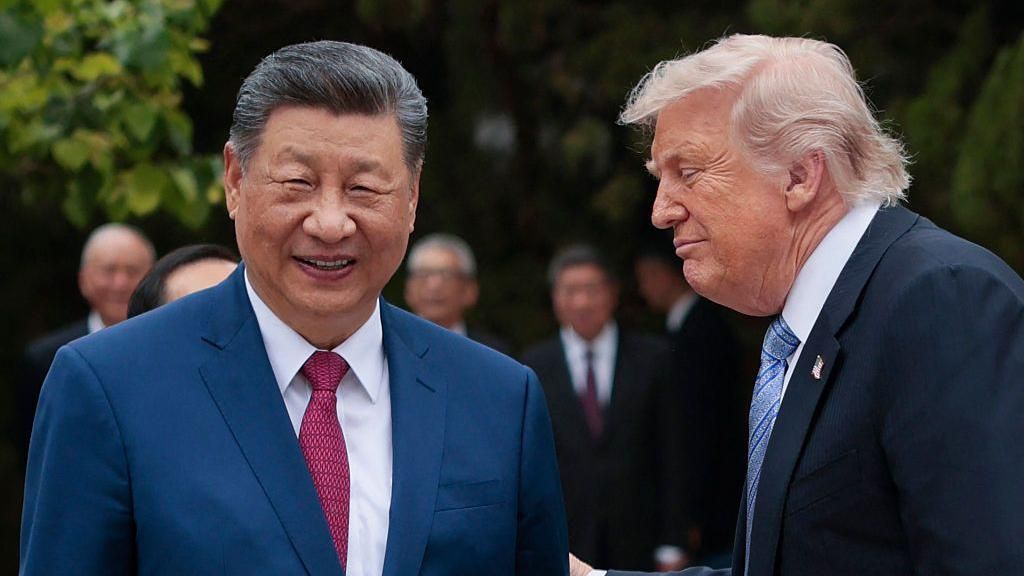
When asked to rate their confidence in each nation’s leader to handle global affairs correctly, overall confidence scores for both Chinese President Xi Jinping and then-U.S. President Donald Trump remained mostly below 50%. Still, a majority of surveyed nations registered higher confidence levels in Xi than in Trump. Xi received his highest confidence rating (83%) from Pakistan and his lowest (7%) from Japan, while Trump earned his highest score (68%) from the Philippines and his lowest (4%) from the West Bank and East Jerusalem. Schulman observed that respondents tended to hold more polarized extreme opinions of Trump, while views of Xi were generally more muted.
On questions of governance and foreign policy, the survey found that while more respondents still believe the U.S. government respects personal freedoms more than China’s government does, the gap between the two has narrowed significantly in recent years. When asked about interference in other countries’ internal affairs, a median of 75% of respondents across middle-income nations said the U.S. interferes a great deal or a fair amount, compared to just 45% who said the same of China.
Pew’s findings align with results from a 2024 Gallup survey, which also found that China had surpassed the U.S. in global approval ratings, marking the largest gap in China’s favor in 20 years. By contrast, a 2025 survey from the U.S.-based think tank Asia Society found that China’s global image, which dipped during the COVID-19 pandemic, has only seen a modest recovery to date.
Chong Ja Ian, a non-resident scholar at Carnegie China, noted that Pew’s latest results are not unexpected. He pointed out that the survey was conducted against a backdrop of highly volatile U.S. foreign policy, including aggressive rhetoric from Trump about annexing Greenland, the U.S. targeting of Venezuelan leader Nicolas Maduro, and the launch of new military conflict with Iran — all events that left many global observers unsettled. “The volatility of U.S. policy, including the use of force and the resulting economic harm, has put many on edge,” he explained.
Chong added that while China’s absolute global popularity remains an open question, it is currently seen as a more predictable actor by many global publics, and Beijing has invested significant effort into improving its global image, particularly in developing nations. He also addressed the disparity between high favorable ratings for China overall and relatively low confidence scores for Xi personally, noting that “whether China is absolutely popular is an open question, but it seems like a more predictable entity at present. […] I suppose people attribute the more coercive and economically less helpful policies to Xi personally but associate more positive elements, such as technological advances, to China more broadly.”