On June 11, as tit-for-tat air strikes between the United States and Iran pushed the two nations to the brink of a catastrophic all-out war, a Qatari mediation jet sat grounded on a Tehran tarmac – its diplomatic passengers trapped mid-mission after hours of grueling overnight negotiations. This quiet, high-stakes standstill captures the chaotic, rollercoaster nature of the cross-regional diplomatic push led by Pakistan and Qatar that ultimately produced last week’s interim deal to end a conflict that has roiled Middle East security and sent shockwaves through the global economy.
This exclusive behind-the-scenes account of the diplomacy leading to the truce is drawn from interviews conducted by the Associated Press with three senior Pakistani officials, two regional diplomatic sources and a diplomat directly briefed on the closed-door talks, all of whom spoke on condition of anonymity to discuss the sensitive negotiations. When approached for comment on Pakistan’s mediation role, the country’s Ministry of Foreign Affairs directed AP to prior public statements, noting it would continue facilitating talks between the two sides. The White House declined to comment, and representatives for Qatar and Iran did not respond to requests for comment.
The most dramatic turning point came on that same June day, when then-US President Donald Trump reignited panic with a public threat of immediate large-scale military action, claiming the US would strike Iran “VERY HARD TONIGHT” and seize full control of Tehran’s oil and gas sector. With conflict on the cusp, regional mediators launched an urgent last-ditch effort to convince Trump to give diplomatic talks more time. According to the briefed diplomat, Qatari Emir Sheikh Tamim bin Hamad Al Thani spoke directly to Trump, urging him to delay planned strikes after confirming a tentative agreement was within reach. The gambit succeeded: Trump announced he was calling off the planned attacks, and just days later, Washington and Tehran signed the interim accord ending the hostilities that erupted after a February joint US-Israeli strike on Iran.
The deal’s core terms center on reopening the Strait of Hormuz – the critical global oil and gas chokepoint Iran closed at the conflict’s opening – and lifting a US blockade to resume Iranian oil exports. It also sets a 60-day deadline to negotiate a wider, permanent agreement addressing Iran’s disputed nuclear program, with additional economic relief for Tehran tied to progress on that front.
Unlike prior US-Iran talks, which relied on mediation from Oman and Qatar, Pakistan emerged as the lead facilitator early in the conflict after Iran harshly criticized Gulf states, many of which host US military forces. Though Pakistan has rarely led high-stakes international mediation, its geographic border with Iran and longstanding positive ties with both Tehran and Washington positioned it uniquely for the role. Negotiators used a secure, encrypted communications network to shuttle proposals between US and Iranian officials, with a Pakistani official confirming all staff were warned that any leak could carry a life sentence. Pakistan’s army chief, Field Marshal Asim Munir, played a particularly central role, maintaining a direct communication line with Trump, officials confirmed.
Charles Lyons-Jones, a former Australian diplomat who served in Pakistan and now works as a research fellow at the Lowy Institute, noted: “As the US-Iran war dragged on and both sides grew eager to reach a settlement, Munir’s unique cross-border connections in both Washington and Tehran became an invaluable asset.” A preliminary truce was reached in April, just weeks after the conflict began, and days later, US and Iranian delegations held their first high-level face-to-face talks in years in Islamabad. Trump later commented of the ceasefire: “I wouldn’t have really been in favor of it, but we did it as a favor to Pakistan, who are terrific people.”
Within weeks, however, the fragile ceasefire began to fray, and Qatar stepped back into the breach. Qatar had initially refused to mediate after facing criticism from Iran, but by mid-May, after strikes targeting the Gulf nation ceased, both US and Iranian officials approached Doha to request help breaking the deadlock, the diplomat said. Qatar brought significant recent mediation experience to the table, having played a central role alongside Egypt in negotiating the Gaza ceasefire and the release of Israeli hostages. Working in lockstep with Pakistan, Qatari officials began making quiet, unannounced trips to Tehran to continue talks.
Meanwhile, Egypt’s intelligence chief Hassan Rashad opened a direct communication channel with Gen. Ahmad Vahidi, head of Iran’s paramilitary Revolutionary Guard and a close confidant of Iran’s Supreme Leader Mojtaba Khamenei, who has remained in deep hiding since the conflict began. Two regional officials confirmed that Egypt and Turkey also played a critical behind-the-scenes role in discouraging a number of Gulf states, including Saudi Arabia, from joining the US-led coalition against Iran.
Key compromises shaped the final interim text: Iran initially sought to delay any discussion of its highly enriched uranium stockpile, but mediators persuaded Tehran to include a commitment to reduce the stockpile in exchange for US promises to waive oil export sanctions and gradually unfreeze billions of dollars in frozen Iranian assets. On financial relief, Iran initially demanded no less than $500 billion in war reparations, but eventually agreed to a pledge of $300 billion in pledged investment tied to a final permanent agreement – though it remains unclear which nations will contribute that funding.
Throughout the negotiations, escalating violence in Lebanon repeatedly threatened to derail the entire process. Tehran-backed Lebanese militant group Hezbollah launched missile attacks on Israel in retaliation for the initial strike on Iran, prompting a devastating Israeli air campaign and ground invasion of southern Lebanon. Iran made a Lebanon ceasefire a non-negotiable condition of any final deal, a stance opposed by Israel and initially by the US, but language addressing the conflict was ultimately added to the draft agreement.
On June 7, as Pakistan’s Interior Minister Mohsen Naqvi was in Tehran delivering a message to Khamenei urging him to sign off on the deal, Israel carried out a strike on Beirut. Iran retaliated with missile strikes against Israel, setting off a new round of tit-for-tat US-Iran strikes that culminated in the June 11 grounding of the Qatari mediation jet. After that crisis was averted, negotiations moved forward rapidly: Trump announced on June 13 that a deal would be signed the following day, and Qatari mediators returned to Tehran for 17 hours of last-minute intensive talks. Just as the parties neared a final agreement, Israel carried out a second strike on Beirut on June 14, crossing a red line Iran had explicitly drawn. Qatari mediators worked frantically to convince Iranian leaders that launching new retaliatory strikes “would only play into the hands of the deal’s opponents,” the diplomat said. Disuading Iran from immediate retaliation, they added, was what ultimately “got the deal over the line.” At Iran’s insistence, an explicit pledge to uphold Lebanon’s sovereignty and territorial integrity was added to the final memorandum, with Tehran demanding a full Israeli withdrawal from Lebanese territory – a step Israel has so far refused to take. The interim Memorandum of Understanding was finally signed on June 17.
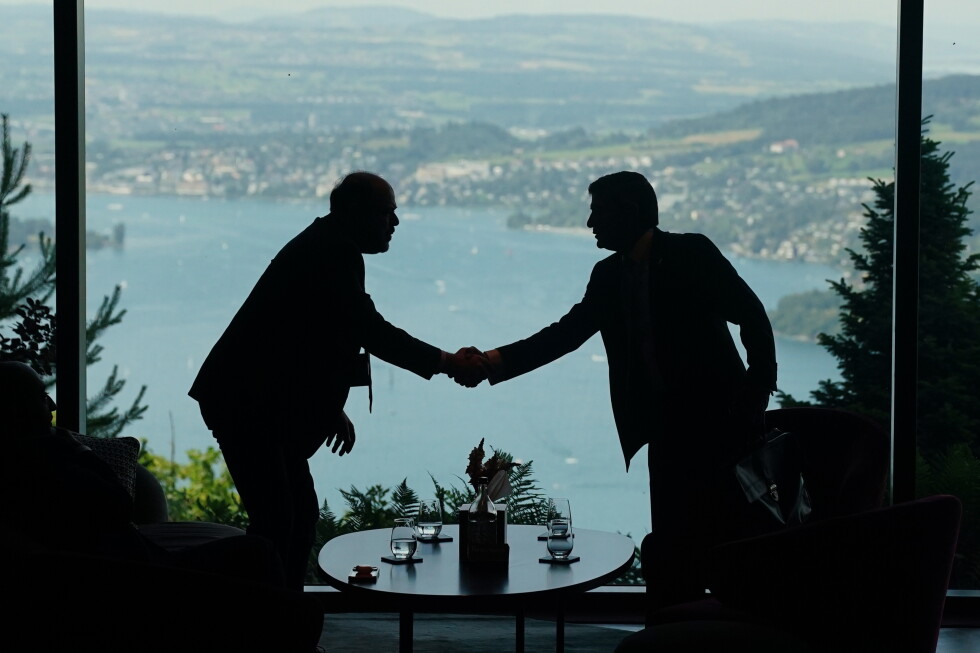
Negotiations for a permanent final agreement, scheduled to conclude by August, have already gotten underway in Switzerland after a brief delay, once again caused by ongoing violence in Lebanon. The diplomat explained that Iran has framed the Lebanon ceasefire as its top priority, noting: “Iran ‘viewed (the Lebanon ceasefire) as point number one, and if you can’t abide by point number one, then why should we discuss two, three, four?’” After the US and Iran brokered a new temporary truce between Israel and Hezbollah, the Swiss talks resumed on Sunday, with an early focus on creating a permanent monitoring mechanism to cement the Lebanese ceasefire. While Trump and Iranian officials have continued to exchange sharp public rhetoric – and Iran briefly paused the Swiss talks after what it called an insulting message from Trump – the diplomat described the current negotiating atmosphere as “quite positive,” noting that US and Iranian delegates have even shared coffee together during breaks in discussions.
The situation remains fragile, with lingering threats of new hostilities both in Lebanon and around the Strait of Hormuz, but the successful brokering of the interim deal marks a rare breakthrough in decades of hostile relations between Washington and Tehran.