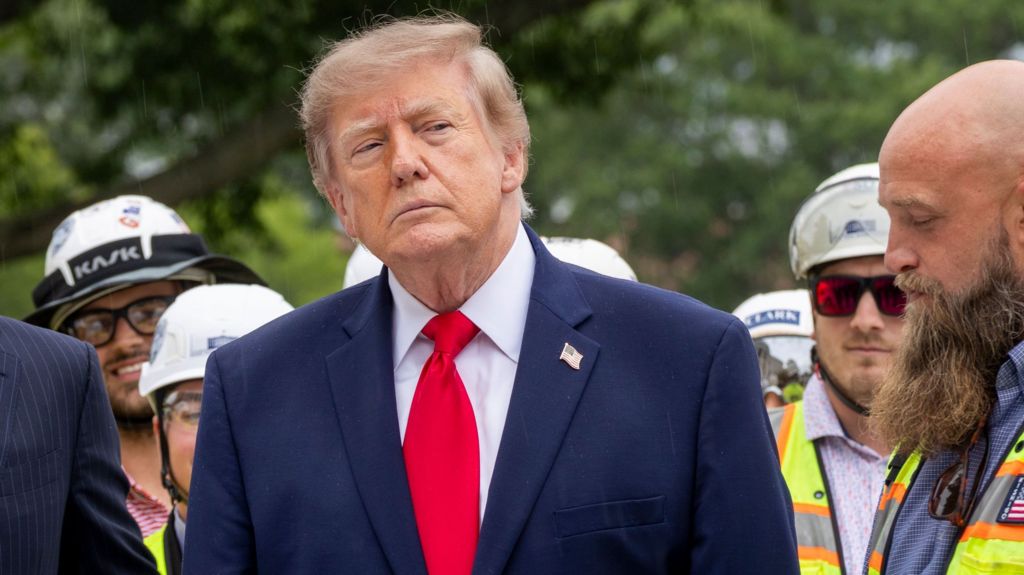
A major standoff between the Trump administration and leading US media outlets escalated on Monday, after major television networks suspended pooled coverage of President Donald Trump in protest of a unilateral access ban targeting three critical news organizations. The conflict traces back to last Friday, when Trump announced he would block CNN, Politico, and MSNBC from White House access, lambasting the outlets for publishing what he falsely claimed was “fiction or lies” about his administration. By Saturday, the barred organizations confirmed their reporters had already been turned away at White House entrances, cementing the administration’s restrictive new policy.
In response to what they call an unprecedented attack on First Amendment press freedoms, the three affected outlets announced on Monday they would take legal action against the Trump administration, arguing the move violates the core principle that the U.S. government cannot dictate what the press can or cannot report to the public.
Almost immediately after the ban went into effect, the White House launched its own 24/7 streaming platform branded as “Trump TV,” which exclusively distributes curated clips of the president to the public without independent editorial oversight. The boycott quickly gained traction beyond the three barred outlets: dozens of other major U.S. news organizations joined the suspension of pooled coverage, including the New York Times and The Washington Post, which opted to stop sharing even still imagery from Trump’s public events on Monday.
The widespread boycott left major gaps in independent public coverage of the president’s schedule. No independent network television footage was captured of Trump boarding Air Force One, or of his arrival in New York ahead of the annual United Nations General Assembly. Even a public ribbon-cutting ceremony for a new Marine One helipad on the White House South Lawn, streamed directly via the White House’s official website, suffered technical failures that left all of Trump’s remarks completely inaudible to viewers.
The crisis was partially interrupted later in the day when Trump appeared on camera following a meeting with New York Mayor Zohran Mamdani, who explicitly extended a public invitation to all members of the media to attend the subsequent press conference. Downplaying the scope of the boycott during the appearance, Trump told reporters: “It’s interesting because, they said they were going to boycott me, but they never boycott me, so I wasn’t very worried about that. Look at all that press.”
For context, the White House press pool system is a longstanding cost- and space-saving arrangement that allows multiple media organizations to share on-the-ground coverage of presidential events for public distribution, ensuring broad access for news outlets of all sizes. Bryan Boughton, Washington bureau chief for Fox News, who currently holds the rotating role coordinating television pool crews for White House coverage, confirmed the suspension in an internal email later obtained by the BBC. Boughton wrote that “effective today, the TV pool will not be covering designated [as] pool coverage” of Trump, noting the decision came directly after the White House blocked CNN from fulfilling its scheduled pool duties for Trump’s New York trip. He added that no replacement pool would be organized to fill the gap.
The three barred outlets officially filed their lawsuit on Monday in the U.S. District Court for the District of Columbia. In a joint statement announcing the legal challenge, the organizations said: “Without notice or process, the White House revoked our journalists’ credentials because it objected to our reporting. Left unchallenged, this threatens press freedom and the public’s right to independent journalism free from government interference.”