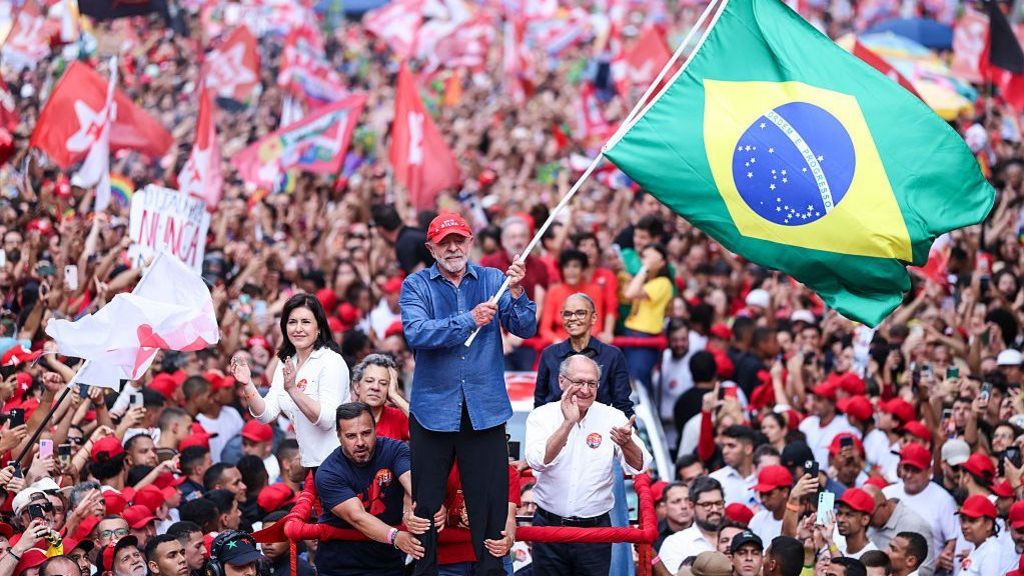
In his decisive 2024 election victory address, Brazil’s veteran left-wing President Luiz Inácio Lula da Silva delivered a pointed, nationalist rebuke to Washington, declaring unequivocally: “Brazil will not accept being anyone’s backyard.” While domestic economic and social policy priorities drove most voter decision-making in the tightly contested race, Lula’s unapologetic pushback against alleged U.S. interference in Brazilian state affairs struck a resonant patriotic chord that became a surprisingly effective campaign asset. Rooted in his decades-long background as a firebrand union organizer, the narrative of standing up to powerful external forces boosted Lula’s public approval sharply, even winning quiet sympathy from segments of Brazil’s traditionally pro-Bolsonaro agricultural lobby, which relies on stable cross-border trade with the U.S.
Against all conventional diplomatic expectations, this combative stance appears to have earned Lula a measure of respect from U.S. President Donald Trump, who publicly remarked, “I like Lula, we get along well” in the immediate aftermath of the Brazilian election, while simultaneously claiming he did not formally endorse Lula’s rival Flávio Bolsonaro – the son of former far-right Brazilian leader Jair Bolsonaro, a longstanding Trump ally who refused to recognize the election result. The seemingly contradictory comments underscore the deeply tangled history between the two heads of state, whose relationship once hit a historic low roughly one year prior to the vote. At that time, Lula told reporters he had “no relationship” with Trump and no intention of initiating contact, after the Trump administration imposed sweeping punitive tariffs on Brazilian imports in protest of Jair Bolsonaro’s high-profile coup trial, which Trump dismissed as a partisan “witch-hunt.”
Unlike many U.S. allied nations that opted for cautious, conciliatory diplomacy to avoid Trump’s ire, Lula leaned into open defiance: he delivered fiery speeches centered on Brazilian national sovereignty, publicly condemned U.S. meddling in Brazil’s independent judicial system, and adopted a signature blue baseball cap emblazoned with the slogan “Brazil belongs to Brazilians.” He also framed the Bolsonaro family’s lobbying for the U.S.-imposed tariffs as a betrayal of national interests, effectively wresting the patriotic rhetorical ground that Brazil’s right wing had long claimed as its exclusive political territory. The pressure campaign worked: the U.S. initially rolled back the punitive tariffs (though they were later reinstated at a higher rate), and diplomatic ties thawed enough for the two leaders to hold a face-to-face meeting at the U.N. General Assembly, followed by a productive Oval Office sit-down that Trump described as “very good” and Lula called deeply satisfying.
The underlying strategic tensions that risk fracturing this tentative detente remain substantial, however. Under Trump, Latin America has drifted sharply toward conservative leadership, with Ecuador, Chile, Colombia, Argentina and Peru all electing administrations closely aligned with Washington’s agenda. Trump has framed this regional shift as part of his self-styled “Donroe Doctrine,” a policy aimed at cementing unchallenged U.S. dominance across the Western Hemisphere, with the stated goal of building a “Shield of the Americas” coalition to combat transnational narco-trafficking. As Chatham House senior Latin America fellow Christopher Sabatini notes, the Trump administration had viewed a Flávio Bolsonaro victory as the “10th and biggest prize” in this regional project: as the largest economy in Latin America, home to the world’s second-largest rare earth mineral reserves after China, Brazil represented a massive strategic win for U.S. interests that would have locked in preferential access to critical natural resources and trade networks.
A series of recent diplomatic skirmishes have already tested the fragile goodwill between the two nations. Earlier this year, Brazil accused the U.S. of orchestrating a covert campaign to discredit the integrity of its national electoral system, and denied entry visas to two visiting U.S. State Department officials. The U.S. condemned the move as “baseless” and retaliated by revoking the Brazilian ambassador’s visa in Washington. Trump’s repeated, unsubstantiated claims that the Brazilian election was “terrible” and “rigged” threaten to spark even wider diplomatic fallout in Lula’s new four-year term.
Additional points of friction stretch across military, tech and financial policy lines. Lula has repeatedly denounced proposed U.S. military interventions in the region, from the forced apprehension of Venezuelan leader Nicolás Maduro to U.S. strikes on alleged drug trafficking vessels in regional waters. He also fiercely pushed back against the Trump administration’s decision to label Brazil’s two largest domestic criminal gangs as global terrorist organizations – a policy he argues was adopted solely at the behest of Flávio Bolsonaro, and one that he warns constitutes a direct threat to Brazilian territorial sovereignty. The issue carries deep historical weight for Brazil’s left, which retains vivid memories of the 20th century’s wave of brutal Latin American military dictatorships, many of which were installed and backed by the CIA under the guise of anti-communist operations.
Even digital and financial policy has become a flashpoint. Lula’s campaign team publicly accused Meta of algorithmic bias that favored Flávio Bolsonaro during the election; while Meta denied deliberate favoritism, it acknowledged that widespread moderation errors had improperly removed or limited the reach of hundreds of Lula’s campaign posts. Lula’s grassroots supporters responded by mobilizing a 10-million-member WhatsApp broadcast network to distribute his campaign materials directly, bypassing the platform’s algorithms entirely. The Trump administration has also raised repeated objections to Pix, Brazil’s wildly popular national instant payment system, which U.S. financial firms Visa and Mastercard complain has eroded their market share in the Brazilian payments space.
The deep political rifts over U.S.-Brazil relations were on full display during the campaign: Bolsonaro supporters waved American flags at rallies, with one protester carrying an inflatable sign reading “Trump Nuke Brazil,” while Lula’s base framed Flávio Bolsonaro as a puppet who prioritized U.S. interests over Brazilian national priorities. For all the public posturing, however, trade ties remain deeply intertwined: the U.S. ranks as Brazil’s second-largest trading partner, only behind China, and the current tentative rapport between Lula and Trump remains intact for the moment. Whether that goodwill persists for the duration of Lula’s new term will depend entirely on how far Washington pushes its interventionist regional agenda, and how aggressively Lula chooses to defend Brazil’s stated commitment to full national sovereignty.