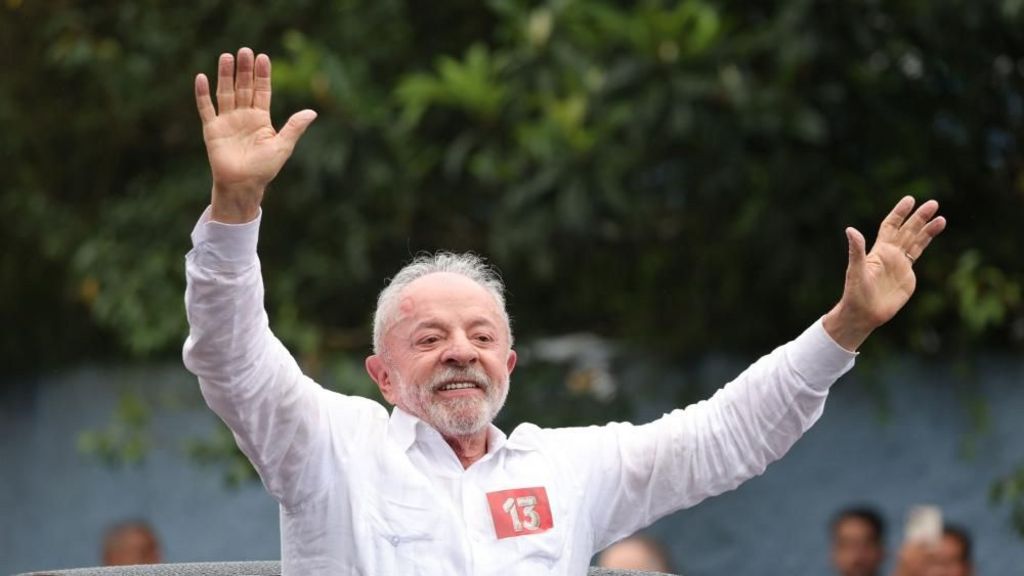
Luiz Inácio Lula da Silva, Brazil’s iconic veteran left-wing statesman, has claimed a landmark fourth presidential election victory after a fiercely contested runoff race that defied widespread political forecasts and a broader regional shift toward conservative governance. The hard-fought contest saw Lula, a former metalworker who has dominated Brazil’s progressive political landscape since his first presidential bid in 1989, overcome right-wing rival Flávio Bolsonaro in a stunning late turnaround that few political analysts predicted after Bolsonaro narrowly edged out Lula in the 4 October first-round vote.
This latest electoral triumph adds to Lula’s prior two consecutive terms in office from 2003 to 2010, and his 2022 electoral comeback that returned him to the presidency in January 2023. The path to this 2026 runoff win was far from straightforward: just three weeks after trailing in the first round, Lula’s campaign reignited through mass grassroots street mobilizations and a sweeping, targeted social media outreach push that galvanized his core base of working-class and progressive supporters. His victory breaks a clear regional trend across Latin America, where electorates across major economies including Argentina, Chile, and Colombia have voted out incumbent administrations to install conservative heads of state in recent election cycles.
Lula is set to be sworn in for his new four-year term on 5 January 2027, facing the most constrained political landscape of his decades-long political career, with overlapping domestic and international hurdles to navigate. On the global stage, the Donald Trump administration in Washington has made no secret of its preference for a conservative leader at the helm of the 213-million-person South American nation, even though it did not formally endorse Flávio Bolsonaro directly – a contrast to its explicit backing of right-wing victors in recent Colombian and Honduran presidential polls. The Trump White House views Latin America as a core sphere of U.S. strategic influence, prioritizing regional allies that align with its defense, security and trade agendas, while actively seeking to curtail Beijing’s growing economic and geopolitical footprint across the Western Hemisphere. Brazil, a major oil producer that hosts the world’s second-largest rare earth mineral reserves, stands as the only large South American nation not led by a conservative administration, with Lula long perceived as a Beijing-aligned leader. During the campaign, Bolsonaro had pledged to tightly align Brazil’s foreign policy with Washington, while Lula publicly warned the U.S. against electoral interference and vowed that Brazil would “never fit into anyone’s backyard.”
While the result is a source of frustration for U.S. policymakers, it has been met with widespread relief from global environmental advocacy groups. Environmentalists had warned that a Bolsonaro victory would hand expanded regulatory power to Brazil’s powerful agribusiness and mining lobbies, rolling back Amazon rainforest protections that Lula’s 2023 administration had worked to enforce. Activists pointed to the record-breaking Amazon deforestation and wildfire rates recorded during the presidency of Flávio Bolsonaro’s father, former far-right leader Jair Bolsonaro, arguing that a return to relaxed environmental regulations would trigger irreversible ecological collapse in the critical rainforest ecosystem, a key global carbon sink. Aerial footage captured by Greenpeace during the 2025 UN COP30 climate summit in Brazil’s Maranhão state had already documented devastating wildfire activity across large swathes of the Amazon, amplifying these concerns.
Despite the celebrations among Lula’s progressive base, the election results lay bare Brazil’s deep societal polarization, with over 48% of participating voters casting their ballots for Bolsonaro. Domestically, Lula will be forced to govern alongside the most ideologically right-wing national congress in Brazil’s post-democratic restoration history, after Bolsonaro’s Liberal Party secured the largest legislative gains in concurrent legislative elections. Even with the Workers’ Party’s proven ability to mobilize massive grassroots rallies and turn out loyal supporters in the runoff, Lula faces a steep uphill battle to deliver on his campaign promises of bridging the country’s bitter partisan divides through an inclusive “new way of governing” that prioritizes equitable economic opportunity for all Brazilians. By the end of his upcoming fourth term, Lula will be 85 years old, making the policy challenges he faces far more daunting than those he navigated in his three prior stints in national office.