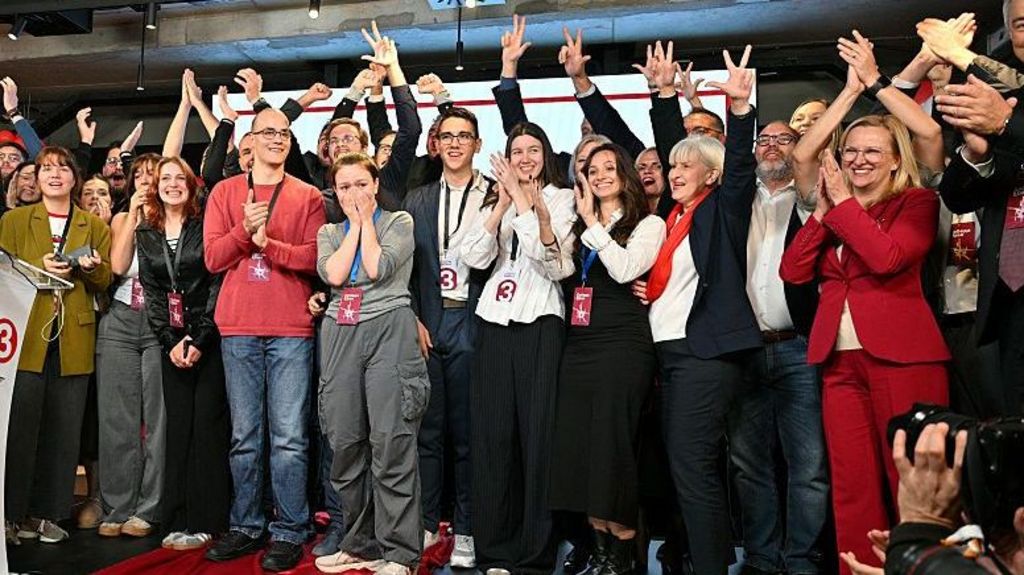
What began as a grief-fueled grassroots student mobilization in Serbia has upended 14 years of unbroken political dominance by Aleksandar Vučić and his Serbian Progressive Party (SNS), in a watershed electoral contest widely framed as a de facto national referendum on the country’s governing future — yet remarkably, no student candidates secured a seat in the new 250-seat parliament. The movement traces its origins to a catastrophic structural failure on November 1, 2024, when a concrete canopy collapsed outside Novi Sad’s main train station, Serbia’s second-largest city, killing 16 people. The tragedy was immediately decried by the public as a damning symbol of systemic corruption, with critics directly tying the shoddy, government-linked renovation of the station to Vučić’s administration, which had publicly aligned itself with the infrastructure project. As Helena Ivanov, a senior analyst at the Henry Jackson Society think tank, noted, the deadly collapse served as the final straw for a population long frustrated by state negligence, sparking a wave of street protests that no established opposition faction had ever managed to galvanize. Starting with small-scale student road blockades, the movement rapidly evolved into near-daily demonstrations that drew cross-society support, uniting farmers, actors, judges, and ordinary working citizens under a shared demand for accountability and an end to institutional graft. By March 2025, the movement organized the largest anti-government protest in Serbian history, as the leaderless network coordinated through open student assemblies and plenums to steer their campaign away from traditional partisan power structures. The once-unassailable SNS began to crack under public pressure that same January, when the sitting prime minister resigned in a stated bid to defuse widespread public tensions. When Vučić called snap national elections last month, the student movement had already translated its grassroots emotional momentum into a disciplined organizational structure, training hundreds of volunteers to monitor polling stations and safeguard electoral fairness against long-documented reports of SNS voter manipulation. The movement, formally branded “Student List-Students Win,” made a deliberate, strategic choice not to field any active students as parliamentary candidates, opting instead to tap widely respected, non-partisan public figures to run on its platform to avoid public skepticism about inexperience among young activists. Their 250-candidate roster, which secured an estimated 135 seats in the new parliament, includes a leading cardiology professor, a celebrated former national basketball star, a prominent stage and screen actor, a renowned opera singer, a former central bank governor, and dozens of university academics. While the list’s top name, Novi Sad-based cardiologist Ilija Srdanović, led the campaign’s public marches and famously declared “the energy is unstoppable” days before the vote, he is not widely viewed as a leading candidate for prime minister; former National Bank of Serbia governor Dejan Šoškić, who has laid out detailed economic reform plans, has emerged as the most frequently discussed pick for the top post. In a defining symbolic moment of the election’s aftermath, the 18-month-old pro-Vučić tent camp dubbed “Ćaciland” that had occupied Pioneers Park in central Belgrade directly across from the national parliament was dismantled by jubilant crowds, who tore down surrounding metal fences while chanting “Vučić is leaving” as the ruling party’s longstanding grip on power dissolved. Supporters packed town squares across Belgrade, Novi Sad, Niš and other urban centers in a state of euphoria, with the student movement’s official social media accounts declaring “Serbia is free” in the immediate hours after results were announced. Even as Vučić formally conceded defeat, he made unsubstantiated claims that the movement had received backing from unspecified European governments and the so-called “American deep state,” and told his own supporters that the student coalition would “be defeated faster than they think” after supposedly wasting two years of national progress. The movement’s formal 11-point governing agenda, which its elected representatives are mandated to implement, includes the creation of a specialized anti-corruption police unit to target high-level graft, a purge of interior ministry officials linked to excessive crackdowns on protesters or organized crime, sweeping media reforms to strip political control from the country’s public broadcaster and dismantle skewed state-aligned media ecosystems, and an end to the long-rampant practice of appointing ruling party loyalists to leadership roles in all state-owned enterprises. Vučić and the SNS have repeatedly denied all allegations of corruption and improper media interference. Though no students will hold seats in the new parliament, the movement’s core leadership remains under immense public pressure to deliver on its promises, noting that the elected non-partisan representatives have been “entrusted with transferring the street struggle of the past year into state institutions” to restore the rule of law that the previous administration had eroded for more than a decade.