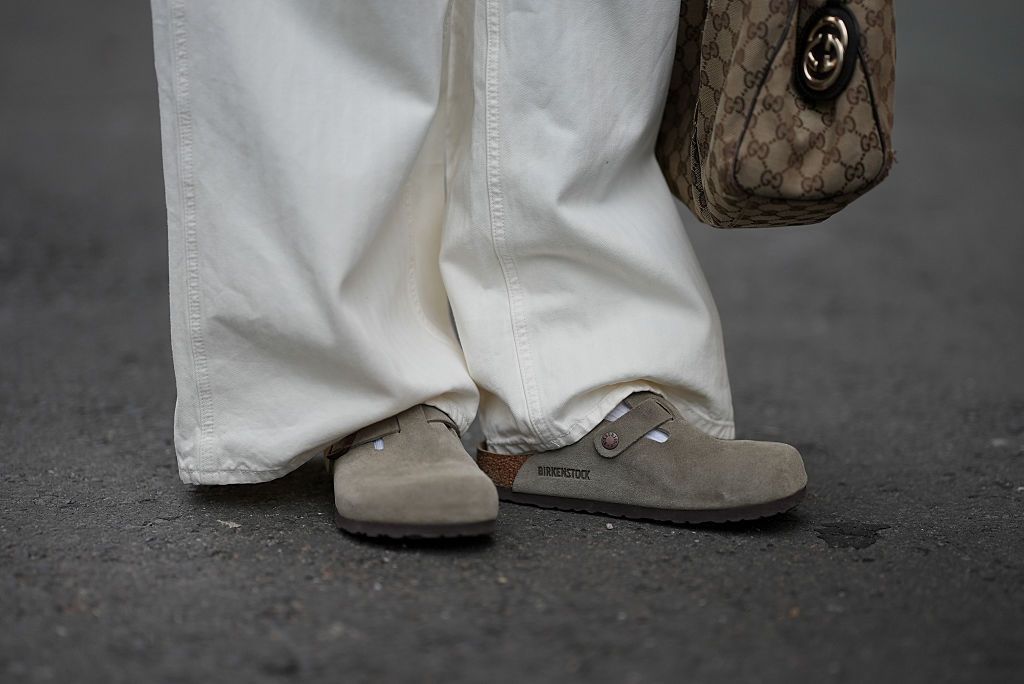
In a landmark intellectual property ruling that strengthens protections for brand design, a Dutch court has ordered discount supermarket chain Lidl to immediately cease selling imitation versions of Birkenstock’s iconic sandals across the Netherlands.
The court’s decision, issued Wednesday, found that Lidl’s lookalike sandal models infringed on Birkenstock’s registered trademark protecting its distinctive footbed design. As part of the ruling, Lidl faces a daily fine of €5,000 (equal to roughly £4,200) if it fails to comply with the sales ban, and is required to turn over all relevant sales data to Birkenstock. The court also ruled that Lidl must pay damages to Birkenstock and cover the premium footwear brand’s legal costs, though the exact total amount of these payments will be determined in separate future proceedings. The ruling remains open to appeal by Lidl, which has not yet issued a public statement on the decision after the BBC reached out for comment.
The prohibited Lidl products include copycat versions of five of Birkenstock’s most popular core models: Arizona, Madrid, Gizeh, Boston, and Florida. This latest decision is part of a growing series of global legal battles waged by Birkenstock to protect its signature sandal designs from unauthorized imitators.
Just months prior, in November 2025, another Dutch court issued a similar sales ban against Dutch retailer Scapino for selling lookalike Birkenstock sandals, a ruling that is currently going through the appeal process. The following month, Europe’s highest court handed down a broader ruling that clarified commercially distributed everyday products can qualify for copyright protection so long as they reflect original, creative design choices. Birkenstock has noted this broader decision strongly supports its ongoing efforts to defend its “iconic” sandal designs.
Birkenstock has not seen universal success in its legal fights, however. Earlier in 2025, Germany’s highest court delivered a setback to the brand, ruling that its popular sandals qualified as practical commercial goods rather than protected works of art. At the time, Birkenstock publicly described the outcome as a “missed opportunity” for intellectual property protection. The brand’s sandals earned widespread mainstream attention in 2023 after being worn by actress Margot Robbie in the global blockbuster *Barbie*, boosting their already strong popularity.
Following this week’s positive ruling from the Dutch court, Birkenstock reaffirmed its commitment to aggressive protection of its intellectual property. “We will continue to defend our rights vigorously and will use all available legal means to combat imitations of our iconic products,” a company spokesperson said. The brand added that its actions are intended to protect both its network of retail partners and end consumers, noting that counterfeit and copycat products unfairly profit from Birkenstock’s decades of design innovation and brand investment.
Birkenstock’s legal campaign against copycat sellers is far from unique in the global fashion and footwear industry. Major brands have increasingly turned to the courts to block mass retailers and online marketplaces from selling imitation designs that undercut their sales and dilute brand value. Footwear brand Dr. Martens, for example, has repeatedly launched legal action against large online retailers over copied boot designs, while luxury shoe house Christian Louboutin waged a years-long global legal fight to protect its trademarked signature red soles from high-street copycat manufacturers.