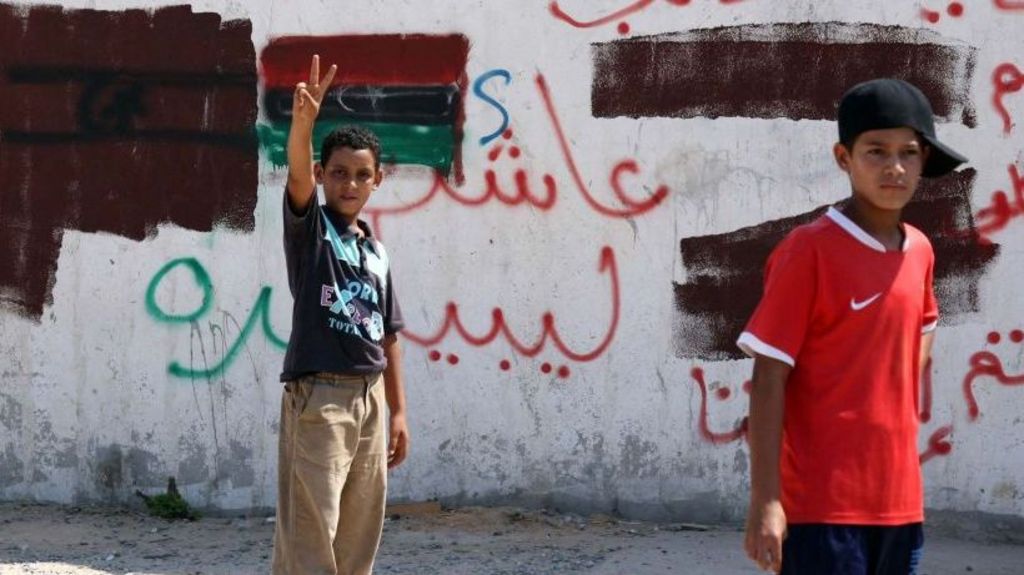
Libya’s most prominent state-affiliated religious body, the Tripoli-based Dar al-Ifta, has formally released a new Islamic legal ruling (fatwa) prohibiting Muslim residents across the country from purchasing, selling, or wearing any apparel emblazoned with the iconic Nike swoosh logo. The edict, officially signed off by Libya’s Grand Mufti Sadiq al-Gharyani, grounds its argument in the origin story of the global sportswear brand: it notes Nike was named for the ancient Greek deity of victory, with its signature curved logo directly inspired by the goddess’s wings, framing public display of the mark as a form of endorsing symbols tied to polytheistic, multi-god worship that runs counter to Islamic monotheistic teachings. The institution also points to Libya’s own local historical heritage as context, highlighting the well-preserved ruins of the ancient Greek city of Cyrene, where a surviving statue of the same Greek victory goddess remains a prominent archaeological landmark. Beyond the religious symbolism claim, the Dar al-Ifta ruling ties the prohibition to broader regional tensions tied to the ongoing Gaza conflict, referencing a November 5, 2023, statement from its internal Council for Research and Sharia Studies that called for a widespread boycott of all Western corporations deemed to provide material or public support to Israel. It explicitly counts Nike among these targeted firms. Crucially, the fatwa is not a formal government-issued legal ban, and no official penalties have been outlined for people who continue to buy or wear Nike-branded goods. As a politically divided nation split between rival governing blocs in its eastern and western regions in the years following the 2011 ousting of long-time autocrat Muammar Gaddafi, Libya has no unified national legal framework that would automatically enforce religious edicts, even as rulings from the influential Dar al-Ifta carry significant social sway among devout segments of the population. This is far from the first controversial symbolic edict the body has released: in 2023, it issued a similar fatwa targeting products from French luxury brand Van Cleef & Arpels, arguing its signature four-leaf clover motif was tied to Christian traditions and secular luck-seeking practices that conflict with Islamic doctrine. Public reaction across Libyan social media platforms has been deeply split: a subset of users praised the ruling as a faithful adherence to core religious principles, while a large contingent of critics dismissed it as an ironic, misplaced distraction from far more urgent crises facing the war-torn nation, from crumbling public infrastructure to ongoing political instability. The announcement lands amid a steadily growing public debate over the rising tide of religious conservatism seeping into Libyan public life. Earlier in 2025, authorities in eastern Libya rolled out sweeping restrictions on rap music, public theatre productions, and dance performances, citing violations of public morality and Islamic values, rules that were later extended to territory under western Libyan control; the Dar al-Ifta has previously issued separate edicts criticizing public musical performances, though no direct link to the 2025 entertainment restrictions has been formally documented. Notably, Nike has no official corporate retail presence or authorized distributor network operating within Libya. Despite that, the brand’s athletic apparel and footwear remains extremely popular with local consumers, sold widely through independent local sportswear shops, alongside a thriving market for low-cost counterfeit Nike goods that are ubiquitous in open-air markets across the country, a pattern mirrored across much of North Africa where major international sportswear labels have massive grassroots consumer demand.