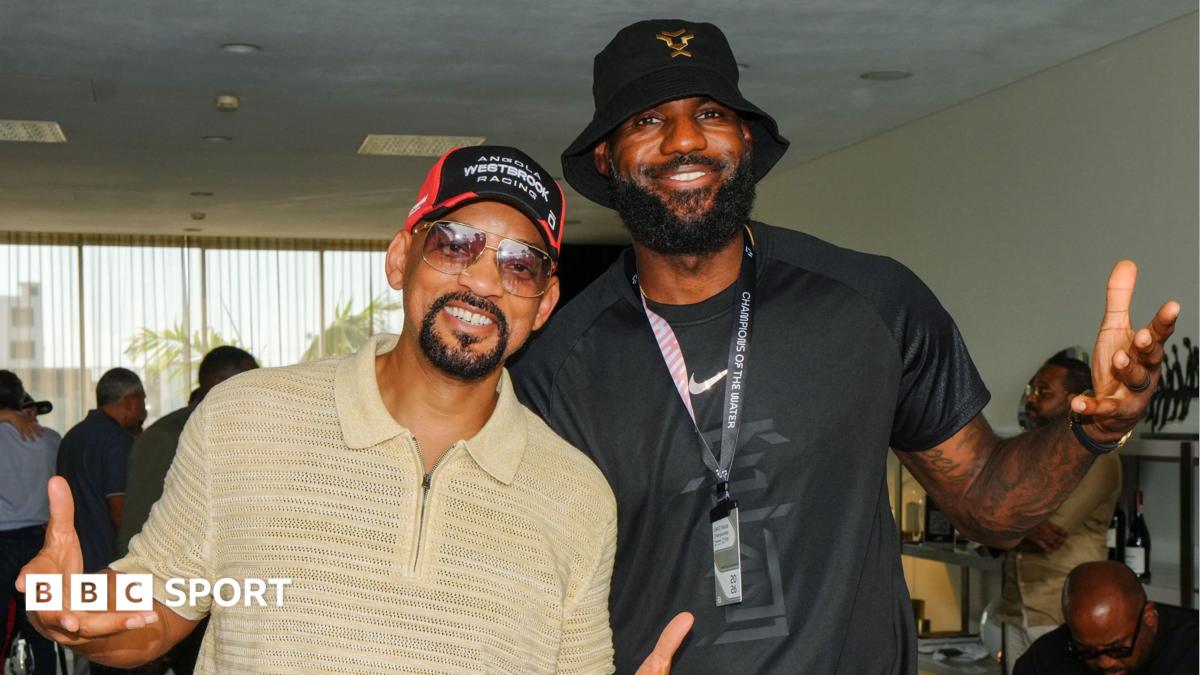
Against a backdrop where football and basketball reign as the undisputed most popular sports among Angolan audiences, a groundbreaking new motorsport event has made its southern African debut, drawing massive crowds thanks to the star power of two global icons. The first-ever E1 World Championship race on Angolan soil kicked off over the weekend in Luanda, marking the series’ second stop on the African continent after its 2025 debut in Lagos, Nigeria, and the fifth stop of the 2026 global calendar following events in Jeddah, Lake Como, Dubrovnik and Monaco.
This innovative racing series, modeled after the land-based Formula E circuit, combines high-octane motorsport with a core mission of advancing sustainability and promoting green marine technology. Counted among the league’s team owners are a roster of A-list celebrities and sporting legends: alongside NBA megastar LeBron James and Hollywood A-lister Will Smith, the group includes tennis great Rafa Nadal, NFL icon Tom Brady, soccer legend Didier Drogba and cricket star Virat Kohli. Both James and Smith traveled to Luanda for the inaugural event, turning a niche motorsport race into a major cultural moment for the southern African nation.
E1 chief executive Jamie Copas emphasized that the presence of high-profile owners is far more than just a marketing gimmick. “It’s not a short trip to get here, but LeBron committed to coming because he believes in the work we’re building,” Copas shared in an interview with BBC Sport Africa on location in Luanda. “You can’t overstate how valuable their support is. They bring massive global fanbases that would never otherwise pay attention to our sport.”
For James, the trip marked his first visit to Angola, and he called the local reception “super welcoming” after a stop at the country’s National Museum of Slavery. Speaking to local media following the visit, the recently signed Philadelphia 76ers forward noted the deep historical ties between Angola and the African diaspora in the United States: “There’s so much rich history here, history that doesn’t just stay within Angola’s borders—it connects directly to the story of Black people in America too.”
James’ star power was impossible to miss along Luanda’s waterfront: Angola’s men’s national basketball team is the reigning African champion, having claimed a record 12th continental title on home soil in 2025, and local spectators crowded the Clube Naval de Luanda race venue just to catch a glimpse of one of the sport’s most recognizable figures. Local journalist Omar Prata, covering the event for Jornal de Angola, admitted he had paid little attention to E1 until Will Smith’s team, Westbrook Racing, announced a three-year race hosting deal with Luanda back in March, with the team backed by the Angolan tourism board.
“ This event has real potential to put Luanda on the global map at a time when the government is actively working to grow the tourism sector,” Prata explained. “And having LeBron here means everything. Angolans have watched him for years on TV, they emulate his game on local street courts, fans all over the country have his posters on their walls.”
For local resident Edson Cabeta, who watched the race from the event’s public fan zone, the event was a completely new experience. “I’ve never seen anything like this in my life,” he said. “Today all the competitors are from other countries, but maybe one day we’ll have our own Angolan E1 team competing on home water.”
Angolan tourism officials are clear about their long-term goals for hosting the race: turning international attention into increased visitor arrivals, foreign investment and economic opportunity. Tourism minister Marcio de Jesus Lopes Daniel described growing global awareness of Angola as the “first critical step” of the country’s long-term tourism development strategy. “Our goal isn’t just to make Angola a well-known name,” Daniel told the BBC. “We want to make Angola a more desirable destination for visitors, for investors, and for businesses looking to grow.”
This isn’t the first time Angola has invested in high-profile international events to boost its global profile: last November, the country hosted Lionel Messi’s Argentina national team for a friendly match to mark the 50th anniversary of its independence. While it’s still too early to measure the full economic impact of the Luanda E1 race, Daniel noted that large-scale events create immediate ripple benefits across multiple local sectors. “We want to turn the global attention E1 brings into future trips, overnight stays, private investment and new jobs for Angolans,” he added. “That’s the real return we’re working toward.”
Beyond the fanfare and economic goals, sustainability sits at the core of E1’s identity, just as it does for other electric racing series. For the Luanda race, event organizers included local mangrove restoration projects as part of their marine conservation commitments. The series’ focus on sustainability has drawn scrutiny, however, especially as it hosts races in major oil-producing nations including Saudi Arabia, the United States, Nigeria and now Angola.
Copas pushed back on that criticism, framing E1’s presence in these markets as part of a global transition toward cleaner energy. “The whole world is on a journey to decarbonize,” he said. “We’re welcomed in countries that do have extensive fossil fuel infrastructure, and every one of these markets is conscious of the need to transition and wants to do more on green innovation. If we can help move that process forward, why wouldn’t we?”
Copas added that E1 prioritizes low-carbon logistics, only using air freight to transport teams and equipment as a last resort, and that the series works to demonstrate that electric propulsion is a viable alternative to diesel for marine vessels. Even so, E1’s own annual sustainability report shows that as the series expanded to 10 teams and seven races in 2025, its total annual emissions rose from 1,672 tonnes of carbon dioxide equivalent in its inaugural season to 4,049 tonnes in its second year. Copas acknowledged the growth in emissions, but argued that the long-term impact of E1’s sustainability mission outweighs the series’ current footprint.
“We have to travel to meet new audiences and share our message, which we believe creates greater benefit than the carbon we emit along the way,” he explained. “We work very hard to offset all of our emissions and make every step of our logistics chain as sustainable as possible. It would be nonsensical to say we won’t travel or race at all, because that would mean we can’t do the work we set out to do.” E1 leadership acknowledges that their work to cut emissions is ongoing, and that deeper reductions remain a key priority for the series moving forward.
The series has already faced growing pains on the African continent: a planned return race to Lagos, Nigeria scheduled for October was canceled earlier this month, a reminder that E1 is still working to establish its long-term footprint in emerging markets. That means the full long-term impact of the series in southern Africa will take years to assess, but the immediate impact of its celebrity ownership was impossible to miss across the Luanda paddock.
After checking in with his Westbrook Racing team, Will Smith stopped to take selfies and shake hands with hundreds of cheering fans, telling the crowd it was a privilege to be in Luanda. On the water, however, Smith’s team did not get a fairytale result: a last-minute mechanical fault knocked Westbrook Racing out of contention for the win, and Tom Brady’s Team Brady claimed the title of the first E1 Luanda race.
While it would take a miracle from Kianda, the traditional Angolan mermaid water spirit that protects fishermen, for electric powerboat racing to overtake football and basketball as Angola’s favorite sport, Copas says E1 is focused on building a different kind of legacy in the country. “For us, this partnership is about helping share Angola’s story with the world, and Angola helping us share our story of sustainable innovation,” he said. “We’re coming back next year, and the year after that. This isn’t just a few days of racing and then we leave. We want to walk alongside Angola as it grows, and play a small part in that journey.”