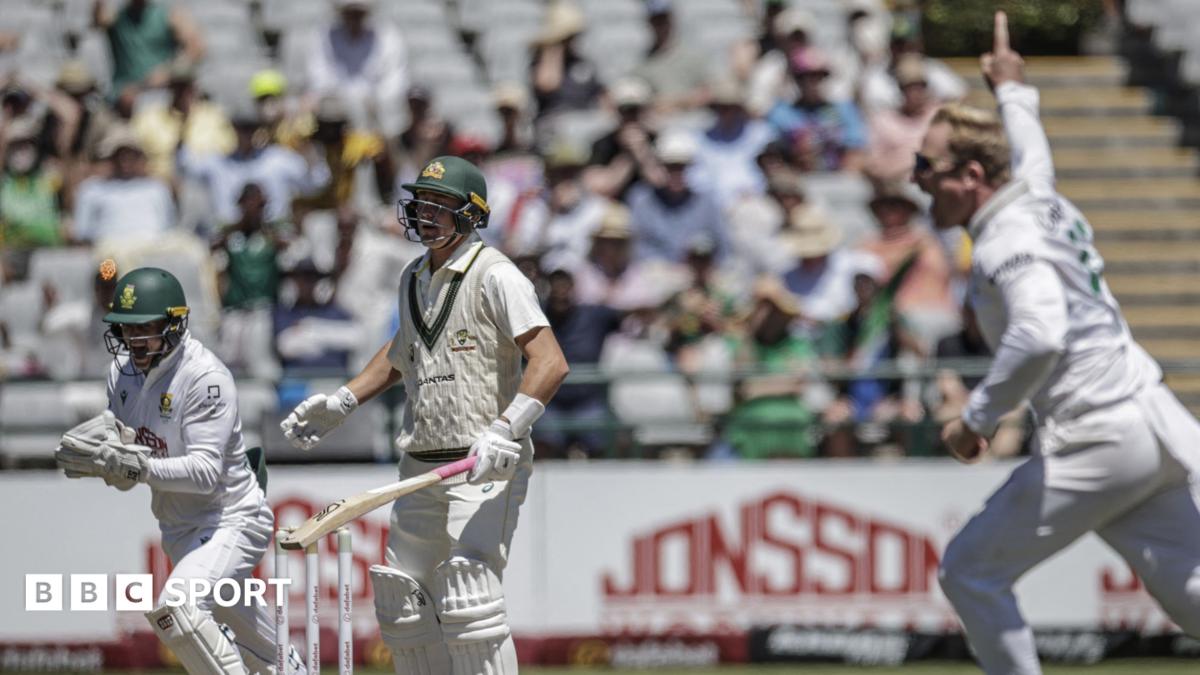
On day two of the pivotal five-day third Test in Cape Town, a defining chapter in Australian men’s Test cricket unfolded, as long-serving top-order batter Marnus Labuschagne etched an unwanted new national record amid a seismic shift in the team’s generational transition. The match opened with South Africa posting a competitive first-innings total of 329, propped up by a gritty 95 from opening batter Dean Ackerman, before Australia’s veteran fast bowler Mitchell Starc delivered a dominant 6-wicket haul for just 72 runs to keep the visitors firmly in the contest.
Heading into their batting response, Australia was dealt a major blow when star batter Steve Smith was sidelined with a neck injury, leaving the number three batting spot open for Labuschagne – a player who had been under intense scrutiny for nearly 18 months after his last Test century came at Old Trafford during the 2023 Ashes. Once lauded as one of the most consistent batters in modern cricket, with a staggering 65 Test average between his 2019 Ashes debut as a concussion substitute and the end of the 2023 English Ashes campaign (a mark only surpassed by the legendary Sir Donald Bradman’s historic 99.94 career average), Labuschagne had seen his form collapse to a dismal 24.77 average across all innings since that 2023 century.
The pressure came to a head in Cape Town, when the 32-year-old faced just five deliveries at the crease and failed to score a single run, extending his streak of innings without a Test century to 48 – a new all-time record for the longest consecutive dry spell by any batter in Australia’s top four. Former Australian fast bowler Jason Gillespie, speaking to ABC broadcasters, remarked that the record would likely never be broken, noting that no modern player would ever be afforded such an extended run of selection to chase a return to form.
Critics and former teammates have long dissected the technical flaws in Labuschagne’s game, with Australian cricket great Ricky Ponting – a former long-serving number three for the national side – publicly calling for his axing back in August, pointing out his persistent inability to score effectively off the back foot. Former batter Simon Katich, speaking on SEN Radio, attributed the slump in part to the selectors’ failure to make a timely call to rest Labuschagne, allowing the weight of public and internal pressure to erode his confidence to breaking point.
While Labuschagne’s brief, disappointing innings appeared to signal the end of his tenure in the top order, three of Australia’s younger fringe stars stepped up to completely shift the momentum of the match, dragging the side to 330-4 at stumps and a razor-thin one-run lead over South Africa. Matt Renshaw, the Middlesbrough-born opener who had been sidelined for months as selectors persisted with Labuschagne in a brief experimental opening role, followed up his career-best 190 score in Durban with a steady 74. Tall all-rounder Cameron Green, long viewed as Australia’s golden generational prospect but previously inconsistent at Test level, posted a composed 65 to steady the innings after two early wickets left Australia reeling at 58-2. Most impressively, Yorkshire-born wicketkeeper-batter Josh Inglis – who had not faced a red ball in competitive play since March and was recovering from a broken finger – finished unbeaten on 85, anchoring an unbroken 145-run stand with Alex Carey to shut down South Africa’s late bowling momentum.
The standout performances from the trio have sparked a clear reckoning for Australian selectors, who now face a crossroads as they balance the pending return of the injured Steve Smith with the need to reward emerging talent. Even as the side looks ahead to their next Test fixture against New Zealand in December, the events of day two in Cape Town have made it abundantly clear that Labuschagne’s days in the Australian Test top order are almost certainly numbered, as the team accelerates a long-awaited generational handover.
Labuschagne’s form hits record low but Australia hint at future