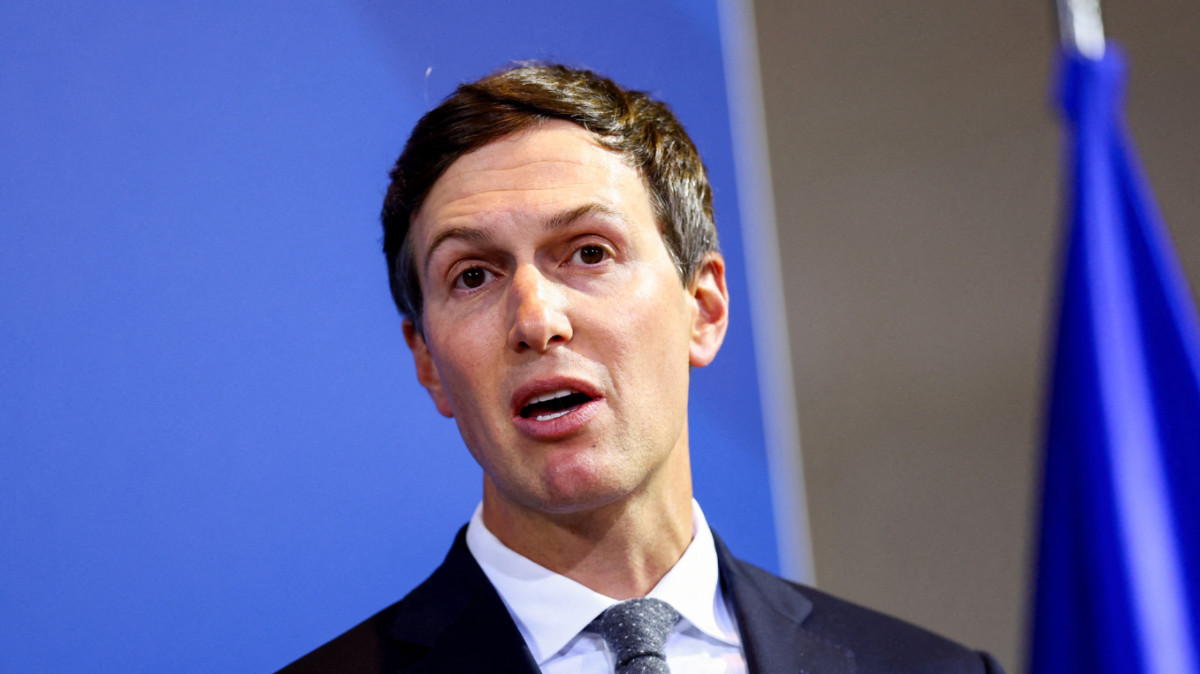
In a newly released Monday interview with New York Magazine, Jared Kushner, former U.S. President Donald Trump’s son-in-law and long-serving diplomatic envoy for Middle East affairs, issued a stark public warning that Israel is at serious risk of becoming a “global pariah” over its ongoing military campaign in the Gaza Strip. Kushner laid out two divergent paths for the nation: one where it emerges from the trauma of the October 7 attacks far more secure and deeply integrated into the global community, and a second that follows its current operational trajectory straight toward international pariah status.
These public remarks carry unusual weight given Kushner’s decades-long track record as a staunch advocate for Israel, and his years of policy work that sought to position the country as a core pillar of a new regional security framework across the Middle East. A close personal family friend of Israeli Prime Minister Benjamin Netanyahu, Kushner previously spearheaded the creation of the controversial Board of Peace, a body initially tasked with overseeing all post-conflict reconstruction efforts in Gaza.
To date, the full impetus behind Kushner’s unusually critical public comments remains unconfirmed, but they arrive against the backdrop of the total collapse of his long-touted vision as a Middle East peace architect. Since the Hamas-led October 7, 2023, attack on southern Israel, the Gaza enclave has been subjected to massive Israeli military bombardment that the original text frames as a genocide of Palestinian residents, leaving more than 70,000 Palestinians dead. Even after the October 2025 ceasefire that Kushner himself helped broker, an additional 1,679 people have been killed in ongoing Israeli strikes on the territory.
The United Nations estimates that full reconstruction of Gaza will cost a total of $70 billion, but Kushner has been unable to get even a modest $2.45 billion, 66-project small-scale rebuilding initiative off the ground. During a September presentation held on the sidelines of the UN General Assembly in New York City, Kushner vaguely attributed the stalled progress to “different delays on different things, for whatever reason.”
Kushner’s original blueprint for the Board of Peace placed the body in full administrative control of Gaza, with operations funded by Gulf state capital, supported by supranational technical advisers, run by a small cohort of Palestinian technocrats, and secured by an international external security force. Every component of that plan has since unraveled: Gulf nations have entirely withheld pledged funding, and now face widespread economic contractions driven by the U.S.-Israeli military campaign targeting Iran. Middle East Eye previously revealed in May that Aryeh Lightstone, a senior U.S. official leading Washington’s post-war Gaza planning team, traveled to Saudi Arabia that spring to lobby for financial commitments, but returned to the U.S. with no secured funding at all.
The proposed international stabilization force that was supposed to deploy to Gaza has never entered the besieged enclave, and the Palestinian technocrats selected to manage day-to-day local governance have remained stranded in Cairo. Reporting from the Times of Israel confirms that less than 2% of the $17 billion in total pledges initially committed to the Board of Peace have actually been disbursed. In a clear sign of the body’s growing desperation, senior Board of Peace envoy Nickolay Mladenov traveled to Moscow on the same day Kushner’s interview was released, publicly stating that Russia could step in as a contributing stakeholder by virtue of its status as a permanent member of the UN Security Council.