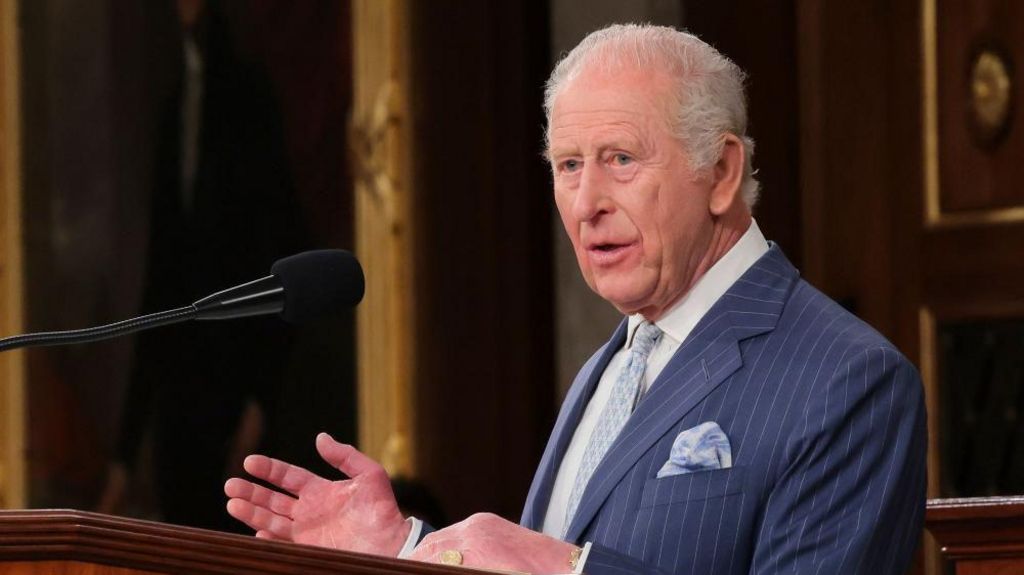
On a landmark diplomatic visit to Washington D.C., King Charles III delivered a historic address to a joint session of the U.S. Congress, where he emphasized the irreplaceable, enduring nature of the partnership between the United Kingdom and the United States — and earned a dozen standing ovations from the assembled crowd of lawmakers and senior political figures. The moment marked the first address to a full Congress by a reigning British monarch in 35 years, coming at a time of growing geopolitical instability and festering diplomatic tensions between the two allies.
Addressing the packed chamber of the domed Capitol Building, King Charles opened against a backdrop of heightened uncertainty, noting that the world faces new, profound challenges from spreading conflict across Europe and the Middle East. In an era he described as “more volatile, more dangerous” than many have known, he stressed that the UK and U.S. cannot afford to step back from their shared commitments. The royal visit carried high stakes: after months of strained transatlantic relations, the King’s core mission was to rekindle the long-standing alliance rooted in shared defense of democratic values, a bond once taken for granted that now requires intentional renewal.
In his speech, drafted in close coordination with the UK Foreign Office, King Charles laid out clear cornerstones for the bilateral partnership. He reaffirmed unwavering support for NATO, noting the alliance’s critical role in protecting North American and European nations from shared adversaries, and doubled down on backing for Ukraine and its courageous people resisting invasion. Directly responding to calls from U.S. President Donald Trump for allied nations to increase their own defense investment, the King confirmed the UK has committed to the largest sustained increase in defense spending since the end of the Cold War, positioning the country to meet future security threats.
Beyond security and diplomacy, the address carried strong moral undertones tailored to the current moment. Speaking amid heightened tensions in the Middle East and uncertainty around conflict with Iran, the King drew on his personal Christian faith to call for interfaith respect and global peace. “I am inspired by the profound respect that develops as people of different faiths grow in their understanding of each other,” he said, a remark that earned loud applause. His observation that “words carry weight and meaning” was widely interpreted as a quiet rebuke to the culture of incendiary political rhetoric that has grown in many Western democracies, another line that drew warm applause from the chamber.
The address also touched on sensitive, contemporary issues that have overshadowed the royal visit. Amid ongoing fallout from the Andrew Mountbatten-Windsor scandal and public calls for the King and Queen Camilla to meet with survivors of Jeffrey Epstein’s abuse, the monarch made a coded, compassionate reference to supporting “victims of some of the ills that so tragically exist in our societies today.” He also addressed the recent attempted assassination of Donald Trump over the weekend in Washington D.C., which triggered a massive escalation of security across the U.S. capital. “Let me say with unshakeable resolve: such acts of violence will never succeed,” he stated, drawing a renewed round of applause.
In a nod to shared history, King Charles noted that 35 years have passed since his mother, Queen Elizabeth II, addressed a joint session of Congress in 1991 — a far different moment, when the Berlin Wall had just fallen, the Cold War was declared over, and liberal democracy stood at the peak of its global influence. Today, he framed the address as a defense of democratic values that face new threats, pushing back against rising isolationism in Western nations and emphasizing shared commitment to the international rule of law. Drawing a lighthearted joke to ease the formality of the moment, he marked the U.S.’ upcoming 250th anniversary: “That’s 250 years, or as we say in the United Kingdom, just the other day,” a quip that drew hearty laughter from the assembled lawmakers.
King Charles’ mission came on the heels of months of rocky relations between the UK and the Trump administration, and the royal relied on his personal prestige and shared transatlantic history to rebuild trust. Early signs of progress emerged ahead of the speech, when President Trump struck a notably positive tone in remarks at the White House, celebrating shared UK-U.S. history and reaffirming the value of the bilateral military alliance. That positive momentum carried into the congressional address, where the crowd delivered a standing ovation before the King even spoke, and interrupted his remarks more than a dozen times with thunderous applause. For the UK delegation, including Foreign Secretary Yvette Cooper, the warm reception signals a potential turning point in transatlantic relations, marking a shift away from the awkward political frictions that have marked recent interactions with the unpredictable U.S. administration. Closing his address, King Charles framed the relationship between the two nations as a “story of reconciliation, renewal and remarkable partnership,” before departing the chamber to sustained cheers and handshakes across the aisle.