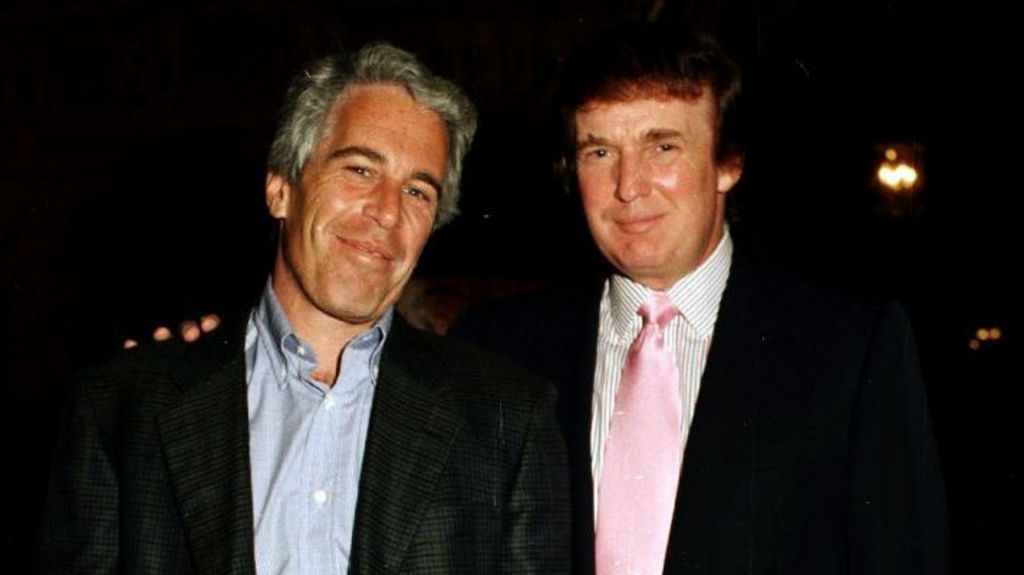
A federal judge in the United States has formally rejected former President Donald Trump’s $10 billion defamation lawsuit against The Wall Street Journal, its parent firm Dow Jones, and media magnate Rupert Murdoch, dismissing the case with a scathing assessment that the legal action amounted to “grasping at straws” to invent non-existent flaws in the outlet’s reporting. The ruling, issued by Judge Darrin Gayles, marks a final end to the litigation, as the dismissal is entered “with prejudice”, barring Trump’s legal team from refiling any related claims on the same matter. The origins of the dispute stretch back to a 2022 Wall Street Journal investigation that uncovered materials from disgraced convicted sex offender Jeffrey Epstein’s 2003 50th birthday commemorative book, including a purported letter addressed to Epstein that bore Donald Trump’s signature. The document in question contained suggestive language, including a line referencing “enigmas never age” and a closing message framing friendship as a source of shared private moments, alongside a hand-drawn outline of a woman’s nude body. Trump has repeatedly denied writing or signing the letter, claiming it was a fabricated forgery designed to defame his reputation. Initially, Trump filed a $20 billion damages suit over the report, which Judge Gayles first dismissed before the former president’s legal team refiled the claim with a reduced $10 billion damages demand. In his 20-page formal ruling, Gayles emphasized that the Journal’s reporting was the product of a rigorous, thoughtful, and detailed investigative process that met standard journalistic ethics. He further clarified that Trump’s legal team had completely failed to meet the steep legal threshold of proving “actual malice”, the mandatory standard for public figures bringing defamation suits under U.S. law. To demonstrate actual malice, a public figure must provide concrete evidence that the media outlet either knew the statements in question were false at the time of publication, or acted with reckless, deliberate disregard for verifying the truth of their claims. Gayles pushed back explicitly against the argument put forward by Trump’s legal team, which claimed that the Journal should have scrapped its entire months-long investigation immediately after Trump issued a verbal denial of the letter’s authenticity. The judge noted that such a legal standard would directly undermine First Amendment free press protections, effectively barring journalists from publishing any critical or contradictory reporting about public figures the moment the subject of the story issues a denial, a outcome that directly contradicts longstanding U.S. legal precedents upholding the public’s right to a free and unfiltered press. The initial Wall Street Journal report was published at a moment when the sitting Trump administration was facing fierce, bipartisan backlash from lawmakers over its opaque handling of previously sealed court documents related to Epstein’s extensive sex trafficking operations. The high-profile legal battle also drew widespread public attention, with protest art installations, including a 10-foot-tall public exhibit on the National Mall in Washington DC, mocking the alleged contents of the purported Trump-Epstein letter earlier this year, while archival Getty Images footage dates back to a 1997 photograph showing Trump and Epstein posing together at Trump’s Mar-a-Lago private resort in Florida.
Judge dismisses Trump’s lawsuit against Wall Street Journal over Epstein birthday book