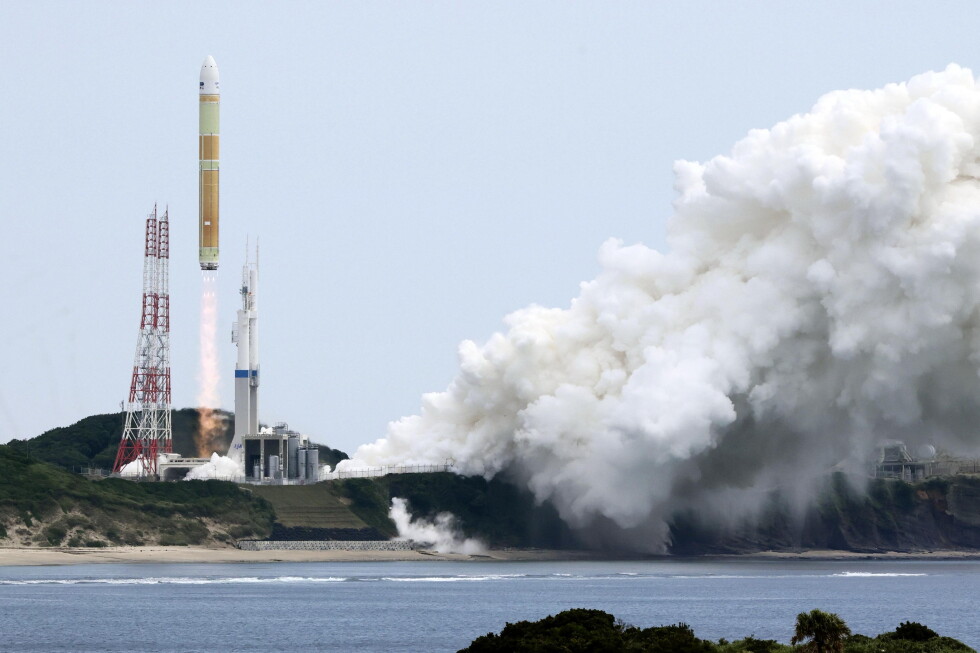
Japan’s long-troubled next-generation flagship H3 rocket has notched a pivotal victory for the country’s commercial space ambitions, as its new low-cost variant successfully completed its debut flight and reached its targeted orbital destination on Friday.
Lifting off from the Tanegashima Space Center, located on a remote island in southwestern Japan, the mission unfolded without incident during live broadcast coverage from the Japan Aerospace Exploration Agency (JAXA). Confirmations from the agency indicate that the rocket’s second stage properly inserted itself into the planned orbit, and all six small research satellites carried onboard — developed by Japanese universities and independent research institutions — successfully separated from the launch vehicle as scheduled.
Friday’s flight marked the first operational deployment of the H3’s new 30 configuration, a cost-optimized variant fitted with three liquid-fueled LE-9 main engines and no supplemental solid rocket boosters. Designed as the most affordable option in the H3 product line, this new variant is one of three modular configurations engineered to meet diverse payload demands from commercial and government customers around the globe, boosting the rocket series’ competitiveness in a crowded global launch market.
This successful flight comes after two costly early failures that grounded the H3 program for the better part of a year, and delivered a much-needed win for the program that was built to replace Japan’s workhorse H-2A rocket — a launch vehicle that boasted an almost unbroken record of successful missions over its decades of service. The H3 program’s core mandate is to deliver dramatic cost reductions that let Japan compete in a global launch market currently dominated by Elon Musk’s SpaceX, which has upended the industry with its low-cost reusable rocket technology. For Japanese policymakers and space industry leaders, a reliable, commercially competitive domestic launch capability is viewed as a critical strategic asset for both the nation’s long-term space exploration plans and national security.
The H3’s development has been marked by early setbacks. During its maiden flight in March 2023, the rocket failed to ignite its second-stage engine, forcing a planned destruction of the vehicle mid-flight. A second attempt in December 2023 successfully launched, but a second-stage malfunction left the rocket unable to insert its navigation satellite payload into the correct orbit, resulting in another total mission failure. The rocket has remained grounded while engineers investigated and corrected the flaws that caused those failures, and a third consecutive failure on Friday would have delivered a devastating setback to Japan’s upcoming space initiatives — including the country’s planned 2028 robotic Mars exploration mission. Japan’s other small-lift rocket program, the Epsilon S, has also faced delays after a test firing accident in early 2024.
Co-developed by JAXA and Mitsubishi Heavy Industries, the H3 program aims to eventually reach a cadence of six to eight launches per year once the design is fully mature and operational. Friday’s successful debut of the low-cost 30 configuration puts the program back on track to meet that goal, opening the door for future commercial and scientific missions.