On Thursday, both the United States and Iran sent optimistic signals that a breakthrough had been reached in ceasefire negotiations aimed at ending ongoing open hostilities, with top leaders from both sides hinting a formal agreement could be finalized as early as the coming weekend.
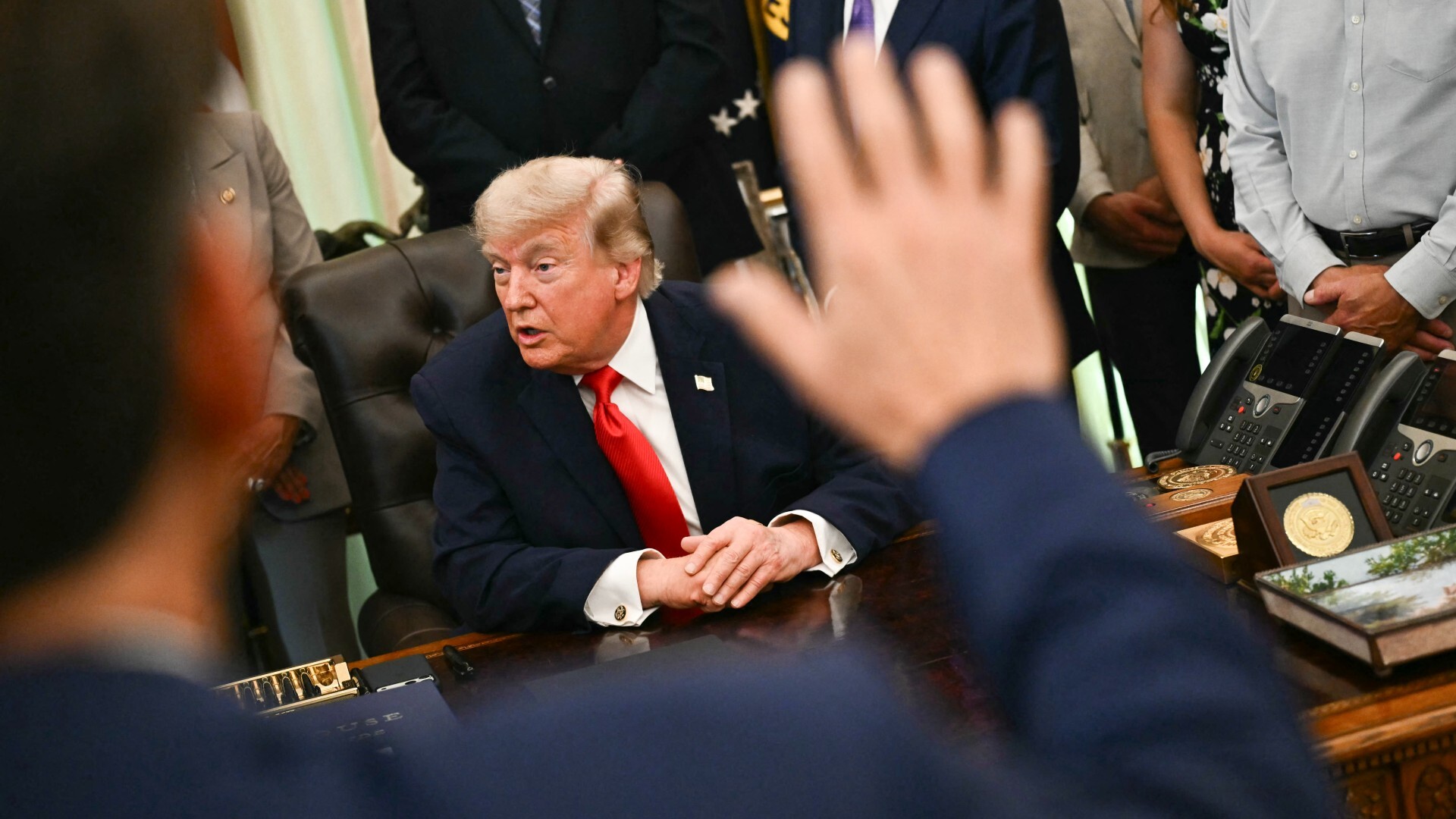
Speaking to reporters from the Oval Office, former US President Donald Trump announced that a broad framework to end the conflict and open the door to wider comprehensive negotiations was nearly complete. “We just made a great settlement of the war with Iran,” Trump stated, adding that once final documentation is wrapped up over the next few days, a signing ceremony will likely be held, potentially on European soil. Trump also confirmed he plans to send Vice President JD Vance to represent the US in his absence, noting “I won’t be able to be there, but JD Vance will.”
The announcement comes amid a well-documented pattern for Trump: the president has repeatedly claimed a deal with Iran was imminent in recent months, only for high expectations to collapse and armed clashes to reignite shortly after. Even so, Iran’s semi-official Fars News Agency offered a similarly upbeat assessment Thursday, reporting that the text of the agreement accepted by the US has already been approved by Iranian negotiating teams, and Tehran is highly likely to formalize the deal in the coming days, though no official formal response has been released to the public yet.
Israel’s Prime Minister Benjamin Netanyahu also weighed in through a muted official statement that acknowledged a tentative agreement was taking shape. “President Trump spoke this evening with Prime Minister Netanyahu about the emerging memorandum of understanding with Iran for entry into negotiations,” the statement read. While Israel is not a direct signatory to the preliminary ceasefire document, the statement added, Netanyahu expressed gratitude for Trump’s commitment that any final long-term agreement will include strict provisions: the removal of all existing Iranian enriched nuclear material, the dismantling of Iran’s uranium enrichment infrastructure, caps on Iranian ballistic missile production, and a full end to Iran’s financial and military support for regional armed proxies that Israel has labeled terrorist organizations.
Not all Iranian outlets echoed the optimistic tone, however. Tasnim News Agency, a media outlet closely aligned with Iran’s powerful Islamic Revolutionary Guard Corps (IRGC), pushed back against Trump’s announcement, pointing to his history of unfulfilled deal claims. “Until Iran announces the matter of a potential understanding, any news from Trump on this subject should be regarded as his previous messages,” the outlet noted in its coverage.
Trump doubled down on his prediction regardless, repeating his claim that the final agreement will guarantee “Iran will never have a nuclear weapon” — though he offered no specific details on the enforcement mechanisms that would make that guarantee binding. He also highlighted one key immediate outcome of the deal: the full reopening of the strategically vital Strait of Hormuz, through which roughly 20% of the world’s global oil supplies pass daily. “The whole Middle East is happy, and long beyond the Middle East,” Trump added.
Thursday’s dramatic shift in tone capped a day of whiplash changes in US policy toward Iran. Early in the day, Trump threatened to seize Iran’s key Kharg Island oil export terminal, only to walk back the threat hours later, claiming the American public “don’t have the stomach” for a large-scale land invasion of Iran.
Iranian leaders issued sharp, direct warnings in response to Trump’s initial threat of escalation. Mohammad Bagher Ghalibaf, Iran’s parliamentary speaker and chief nuclear negotiator, warned that “Wrong strategies and impulsive decisions will reset the entire board for the worse, explode energy infrastructure and markets and create an endless quagmire that you will be stuck in for years.” General Ali Abdollahi, commander of the Iranian military’s central headquarters, echoed that warning, adding that any US attack “will receive a harsher response than before, and the flames of war, in addition to creating insecurity in the region, will become more widespread and far-reaching.”
Shortly after the warnings, Trump took to his social media platform Truth Social to formally walk back his threat of offensive strikes. “Based on the fact that discussions with the Islamic Republic of Iran have been brought to the highest level of Iranian leadership and approved, I have…cancelled the scheduled strikes and bombings against Iran,” Trump wrote. He added that “all parties involved” in the talks — including Israel, Saudi Arabia, the UAE, Qatar, Turkey, Pakistan, Bahrain, Kuwait, Jordan, Egypt and other regional stakeholders — had already agreed to the final terms of the tentative ceasefire.
The optimistic breakthrough comes after days of escalating cross-border fire between the US and Iran, even after a fragile temporary ceasefire agreed to in April. Iran has responded to US strikes on maritime vessels in the Strait of Hormuz and attacks on Iranian land forces by targeting US regional Arab allies, including Kuwait, Bahrain and Jordan. On Thursday, Kuwaiti officials confirmed that an Iranian strike on its territory earlier that day caused multiple injuries and damaged airport radar systems, forcing a temporary closure of Kuwait’s airspace. The New York Times also reported Wednesday that US forces had bombed civilian water storage facilities in southern Iran — attacks that are widely classified as potential war crimes under established international law.
Despite the public escalation, behind-the-scenes diplomatic efforts have been moving at a rapid pace to de-escalate tensions this week. According to Reuters, Qatari mediators traveled to Tehran on Wednesday to finalize the text of the US-Iran ceasefire agreement. Bloomberg also reported that the United Arab Emirates dispatched senior diplomats to hold direct talks with top Iranian officials this week to lower tensions. A Gulf diplomat told Middle East Eye that regional governments believe the talks were held in Tehran, citing open-source flight tracking data on X that showed an Emirati government aircraft, regularly used to carry senior officials, landing in the Iranian capital earlier this week. Middle East Eye also reported this week that US Secretary of State Marco Rubio is scheduled to travel to the Gulf region in the coming days, with stops planned in Bahrain, the UAE and Kuwait — a trip that would almost certainly be canceled if hostilities were set to resume.
If the ceasefire is signed, the tentative agreement is structured as a temporary 60-day truce, designed to give both sides time to negotiate a broader, long-term deal addressing two core sticking points: Iran’s nuclear program and the status of the Strait of Hormuz, which has been the site of competing blockades imposed by both Iran and the US in recent weeks. According to Axios, a outlet with close ties to the Trump administration that has previously incorrectly predicted an imminent deal multiple times, the final text still requires formal approval from Iran’s Supreme Leader Mojtaba Khamenei. The negotiated text narrows longstanding differences on two key issues: a mechanism to unfreeze billions of dollars in Iranian assets held in foreign banks and clear parameters for the full reopening of the Strait of Hormuz to global commercial shipping.