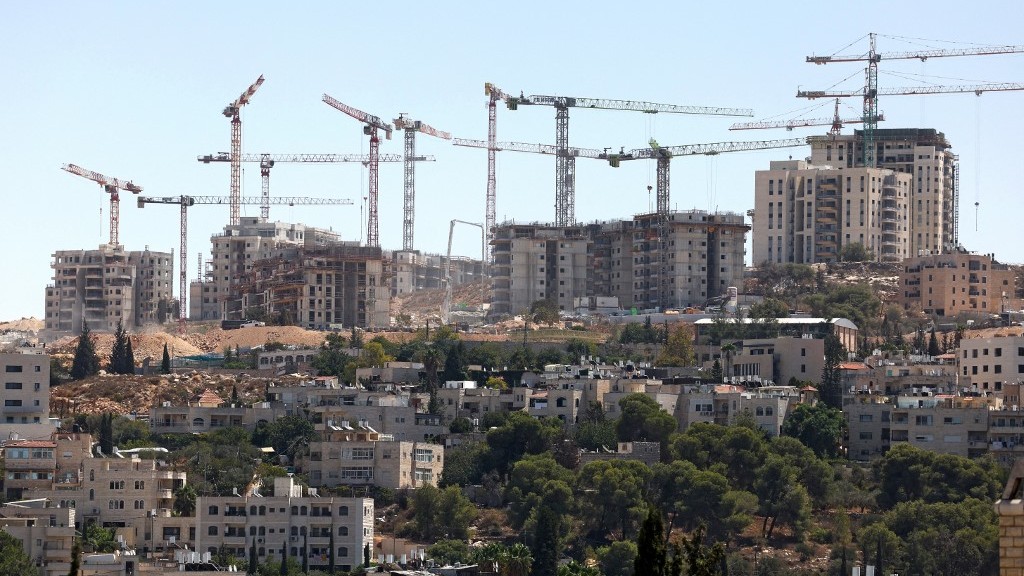
A damning new report from prominent Israeli human rights organization B’tselem has accused the Israeli government of pursuing a deliberate, state-backed campaign to eliminate livable conditions for Palestinians residing in the Israeli-occupied West Bank. Titled *The Elimination Project*, the investigation frames ongoing violence by Israeli settlers and military forces not as isolated incidents or a temporary crisis, but as a core component of a long-running political project operating within what B’tselem terms an Israeli apartheid regime rooted in settler-colonial ideology.
The report details a widespread intensification of harm that touches every sphere of daily Palestinian life, from basic access to employment, education, and medical care, to the ability to maintain social connections, cultivate agricultural land, and participate in cultural and community life. In its analysis, B’tselem defines “elimination” not solely as mass physical violence, but as the systematic erosion of the conditions that allow Palestinians to exist as a cohesive people with their own territory, institutions, culture, language, collective history, and political future. The campaign, the report argues, is designed to restructure the region’s geography and social order: it consolidates contiguous, permanently institutionalized Jewish control across the territory while fragmenting Palestinian communities, rendering their existence precarious and dependent on Israeli goodwill. For Palestinians in the West Bank, B’tselem outlines only three stark outcomes under this project: surrender national claims to live under permanent Jewish supremacy, leave the occupied territory entirely, or face violent military crackdown for resistance.
The release of B’tselem’s report coincides with a rapidly shifting international landscape, as a growing coalition of Western nations have recently announced new trade restrictions or bans on goods originating from Israeli settlements in the occupied West Bank. Last week alone, 12 countries including Canada, Denmark, France, Spain, and the United Kingdom confirmed they were either implementing new bans or considering formal sanctions on settlement trade, a move that aligns with longstanding international legal consensus that Israeli settlements built on occupied Palestinian territory violate the Fourth Geneva Convention.
Top European Union foreign policy official Kaja Kallas has thrown her weight behind an EU-wide trade ban on settlement goods, drawing a parallel between the international response to Russian occupation of Crimea and the need for a unified European stance on Israeli settlements. Speaking to *The Irish Times* on Friday, Kallas argued the EU’s credibility on global rule of law is at stake as long as member states remain divided, urging nations to adopt a unified principled position. While the total volume of EU trade with settlements is currently small, Kallas emphasized that the policy would carry significant symbolic weight. Crucially, Kallas has proposed advancing the ban as a trade measure rather than a formal foreign policy sanction, a procedural change that would only require a majority vote of EU member states to pass — avoiding the unanimous approval requirement that has stalled past action due to opposition from countries including Germany, Hungary, the Czech Republic, and Slovenia.
In the United Kingdom, the new government’s recent sanctions announcement has already drawn criticism from more than 130 British lawyers, former judges, and legal academics. In a formal six-page letter sent to Prime Minister Andy Burnham this week, the legal experts welcomed the government’s decision to align with international partners but argued the measures announced by Foreign Secretary Ed Miliband fall far short of the UK’s legal obligations under a 2024 International Court of Justice ruling ordering states to oppose Israel’s occupation of Palestinian territory.
Last week, the UK government formally declared Israel’s occupation of Palestinian territory illegal, with Miliband telling parliament he agrees that ethnic cleansing is currently unfolding in the West Bank. Government sources have confirmed that the UK’s new restrictions will not be limited to the West Bank, and will also cover Israeli settlements in the Golan Heights and East Jerusalem.
Since the outbreak of the Israel-Hamas war in October 2023, at least 1,107 Palestinians have been killed by Israeli soldiers and settlers in the occupied West Bank, according to on-the-ground casualty tallies, underscoring the escalating violence documented in B’tselem’s new report.