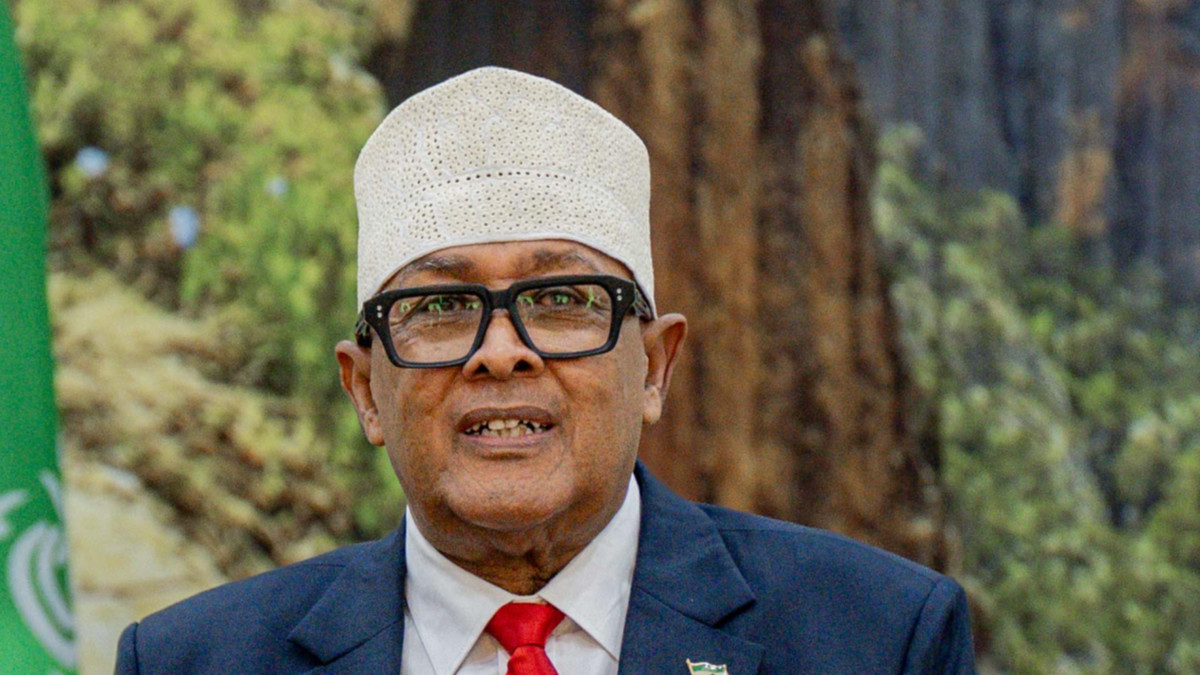
A high-stakes diplomatic push by Somaliland to secure formal United States recognition has been derailed by a viral, widely panned interview performance by the breakaway region’s president that has drawn sharp criticism both online and from regional affairs experts. Abdirahman Mohamed Abdullahi, president of the self-declared independent state that remains unrecognized by most of the international community except Israel, faced widespread backlash after a recent on-stage discussion at the Hudson Institute, a Washington DC-based think tank long seen as open to Somaliland’s sovereignty bid.
Footage of the conversation, shared to the social platform X on Monday, captured Abdullahi appearing unprepared and flustered through most of the event, with visible moments of nervous giggling, incoherent mumbling, and long awkward pauses. The interview took place at the center of a planned visit to the US that regional and international media have framed as a make-or-break moment: Abdullahi arrived in Washington ready to present a sweeping offer of trade and strategic access to the Trump administration, including opening access to Somaliland’s ports and untapped mineral reserves for American investors, all in exchange for formal US recognition of the territory’s independence. For years, backers of Somaliland’s sovereignty have framed the region as a stable, reliable partner for Western and Gulf powers seeking to shore up security around the strategic Red Sea shipping lane.
Yet when pressed by the moderator to name what specific critical minerals Somaliland could offer the US as part of this proposed deal, a cornerstone of the region’s offer, Abdullahi laughed off the question, admitting he had no expertise in the area. “I don’t know… maybe everything,” he chuckled. He stumbled even more noticeably when the discussion turned to the ongoing devastating civil war in Sudan, a conflict that has increasingly drawn in competing regional powers. The Sudanese regular army receives backing from Egypt, Saudi Arabia and Turkey, while the rival Rapid Support Forces (RSF) paramilitary group is supported by the United Arab Emirates – Somaliland’s closest patron in the Gulf.
Rather than offering any comment on the conflict, which has killed hundreds of thousands and displaced millions, or clarifying his administration’s position amid the regional power dynamics at play, Abdullahi attempted to dismiss the conflict as too distant from his territory. He even compared Sudan’s distance from Somaliland to that of Venezuela – a comment that carried notable awkwardness, given Sudan’s northern border sits less than 750 kilometers from Somaliland. An visibly uncomfortable moderator quickly moved on from the topic after noting the discrepancy.
Cameron Hudson, a former United States intelligence official focused exclusively on African affairs, summarized the broad reaction to the interview in a viral post on X: “This was a frail and ageing leader not fully able to deliver the brief that he came here to deliver to a skeptical Washington audience. It was like watching an African Biden.” Abdullahi’s inconsistent answers extended to the core question driving his entire visit: when asked why the United States should formally recognize Somaliland’s independence, he gave a meandering, contradictory reply. “Practically [Somaliland] is not part of Somalia,” he said with a laugh, before adding, “Somaliland theoretically is part of Somalia.”
To understand the context of this sovereignty push, it is important to trace Somaliland’s modern political history. The territory gained independence from British colonial rule in 1960, just five days before neighboring Somalia secured its own independence from Italian colonial control. The two newly independent states quickly united to form the Somali Republic, but tensions between the two former colonial territories simmered almost from the start. These tensions boiled over into open conflict in the late 1980s, when then-Somali dictator Mohamed Siad Barre launched a brutal military crackdown on Somaliland. After a decade of armed conflict, Somaliland declared full independence in 1991, a move that allowed it to escape the widespread civil war and persistent instability that has plagued the rest of Somalia in the decades since. It has operated as a de facto independent state ever since, but has failed to secure recognition from most of the international community.
Recently, Somaliland has reemerged as a focal point for great power competition in the Red Sea and Gulf of Aden, thanks to its long, strategically valuable coastline across from Yemen. In January 2026, Israel became only the second United Nations member state to formally recognize Somaliland’s independence, and Israeli officials have publicly explored establishing a military base at the key port of Berbera, where the UAE already maintains an active military presence. When asked about the diplomatic agreement with Israel during the think tank interview, Abdullahi again offered no substantive strategic context, framing the recognition as nothing more than a routine diplomatic exchange. He added only that Israel was the only country that responded to his requests for recognition sent to nearly every head of state around the world, before breaking into nervous giggles.