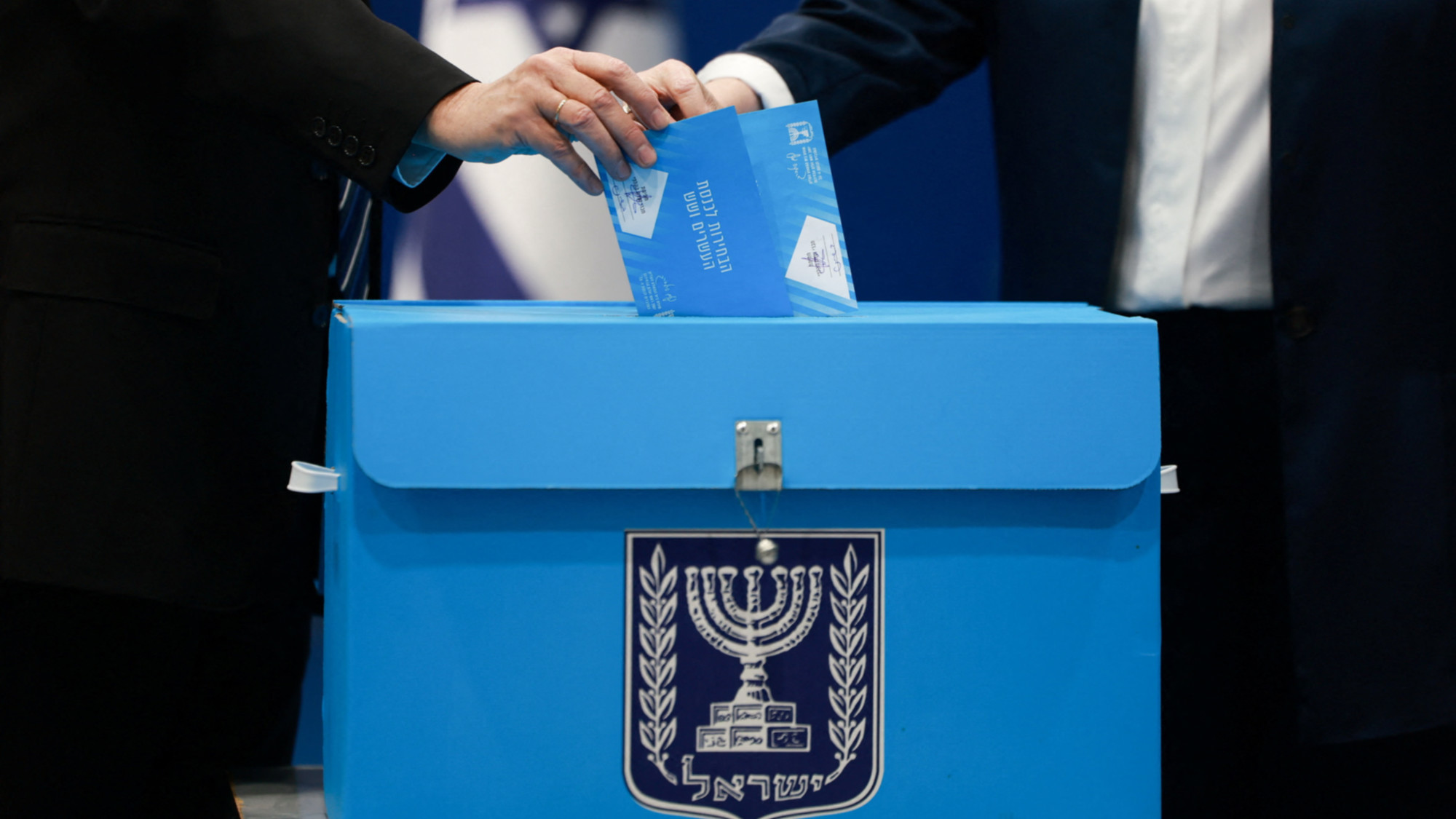
On Tuesday, Israeli citizens cast their ballots in a landmark parliamentary election, the first national vote held in the country since the devastating October 7, 2023, attacks that reshaped Israel’s security and political landscape. The high-stakes contest pits long-serving incumbent Prime Minister Benjamin Netanyahu against formidable opposition candidate Gadi Eisenkot, a retired top military commander, in a race where pre-election polling indicates neither major bloc is on track to lock in a clear governing majority.
Polling stations across the nation opened promptly at 7 a.m. local time (5 a.m. GMT) and are scheduled to remain accessible to voters until 10 p.m. local time (8 p.m. GMT). Thirty-six distinct electoral lists are vying for the 120 seats in the Knesset, Israel’s legislative body, with competing factions aiming to assemble the nation’s 38th governing coalition after votes are fully tallied.
Netanyahu’s existing ruling bloc, a coalition of right-wing, far-right, and ultra-Orthodox religious parties that took power in December 2022, made history as the first Israeli government since 1988 to serve out a full consecutive four-year term. However, recent pre-election surveys project the prime minister’s traditional alliance will fall well short of the 61 seats required for a Knesset majority, with most estimates putting his Likud-led bloc at roughly 50 seats total.
Eisenkot, the former Israel Defense Forces chief of staff who now leads the centrist Yashar party, has rapidly emerged as the primary threat to Netanyahu’s decades-long dominance of Israeli politics. Netanyahu, the country’s longest-serving prime minister, has accumulated more than 19 years in office across three separate stints: his first term from 1996 to 1999, a lengthy consecutive run from 2009 to 2021, and his most recent tenure that began in late 2022. Pre-election polling shows Eisenkot’s Yashar party edging out Netanyahu’s Likud in direct voter support, but projections confirm neither the incumbent’s right-leaning bloc nor the unified opposition camp is positioned to hit the 61-seat majority threshold on its own.
Palestinian-led electoral factions are projected to secure a combined 14 to 16 seats in the Knesset, a haul that would theoretically grant them significant kingmaker leverage during post-election coalition negotiations, though both major competing blocs have publicly pledged to exclude Palestinian-aligned parties from any formal governing partnership. Voter turnout among Palestinian citizens of Israel, who make up roughly 18 percent of the total eligible electorate totaling around 1.17 million registered voters, has emerged as one of the election’s most unpredictable variables. Local Arabic-language news outlet Arab48 reported unusually robust early turnout in Palestinian-majority towns on election day, and pollsters note that a 60 to 70 percent turnout rate among this demographic — a marked rise from the 53 percent recorded in the 2022 election — would allow the two main Palestinian-aligned parties, Ra’am and the Joint List, to hit their projected 14 to 16 seat target.
Major Israeli broadcast networks are set to release full exit poll data immediately after polling stations close, with unofficial partial vote counts expected to trickle in through the overnight hours. Electoral officials project the complete preliminary vote tally will be finalized by October 30, and official, certified final results will be formally published on November 4.
Israel elections: Polls open as Netanyahu attempts to fend off challenge from Gadi Eisenkot