Just hours after the United States unveiled a sweeping new round of economic sanctions targeting Iran, long lines of vehicles snaked out of petrol stations across the Iranian capital of Tehran on Tuesday, as residents braced for deeper economic pain amid a months-long military stalemate that has already shut down critical shipping through the Strait of Hormuz.
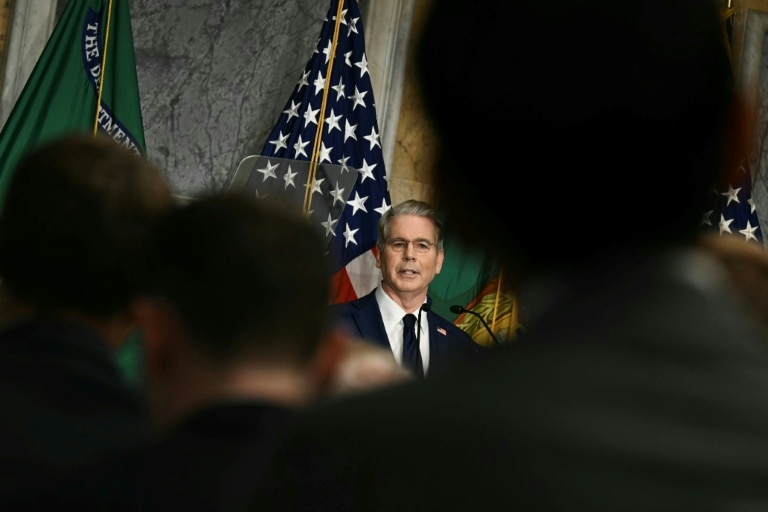
Six months into a conflict that has left peace negotiations deadlocked, Washington is doubling down on economic coercion to force Iran into policy concessions. On Monday, US Treasury Secretary Scott Bessent laid out the administration’s strategy of what he called “economic asphyxiation”, framing the goal as cutting off every financial and trade lifeline that supports Iran’s ruling government.
For Iranians, who have already weathered decades of successive US sanctions, the latest measures have stoked immediate anxiety over rising costs and supply shortages. Even as Tehran’s leadership has dismissed the new sanctions as nothing new, everyday residents across the capital are already feeling the impending squeeze. “People are being hurt, both those who are financially well-off and those who are financially weak,” 55-year-old realtor Mehdi Yazdian told reporters, calling on Iranian authorities to implement price controls to cushion the blow. He added, “Yes, these sanctions are having an effect, but naturally, our people are resilient.”
Iran’s economy was already grappling with crippling sky-high inflation long before the current conflict broke out, conditions that fueled a nationwide anti-government protest movement that reached its peak in January. Iranian authorities responded to the unrest with a harsh crackdown that foreign human rights groups estimate has killed thousands of people. Tehran has repeatedly blamed the violence on what it calls “terrorist acts” orchestrated by the United States and Israel.
Many Iranians worry the added economic pressure from new sanctions could reignite the mass unrest that swept the country earlier this year. “I personally am not afraid of war at all because this is our land,” said 45-year-old English teacher Kia Farahani. “But I think that this war will be more economic and will cause people to feel a lot of pressure, and now maybe there will be protests again.”
The Trump administration has condemned Tehran’s crackdown on protestors, with former President Donald Trump saying Iran is “killing protesters, even when they are not protesting, at levels not seen before.” Writing on his Truth Social platform, Trump called the situation “a humanitarian crisis of epic proportions, and must be stopped, NOW.” Iran has also carried out dozens of executions linked to the winter protest movement, drawing further international condemnation.
The new petrol rationing announcement from Iranian officials compounded public anxiety this week. Mohsen Haji-Mirzaei, chief of staff to Iran’s president, confirmed to state television that the country would cut official petrol quotas while leaving subsidized prices unchanged; consumers who want to purchase more fuel than their allotted quota will have to pay a higher market rate. The announcement came just hours after the US sanctions reveal, prompting the long lines seen at Tehran filling stations on Tuesday.
The expanded US sanctions cast a wide global net, targeting entities across the Middle East, Asia and Europe. The new measures impose expanded secondary sanctions on Iran’s digital assets sector, technology industry, gold trade, aviation and shipping networks, affecting entities based in the United Arab Emirates, Hong Kong, China, Singapore and multiple European nations. In his announcement, Bessent warned that any country that refuses to back Washington’s economic pressure campaign would “share in the isolation” of Iran, and did not rule out eventually targeting Chinese financial institutions for non-compliance.
China, which remains one of Iran’s largest and most steadfast oil customers, rejected the new sanctions Tuesday, saying it would “take all necessary measures to firmly safeguard its own rights and interests.”
Tehran has remained outwardly defiant in the face of the new measures, with senior officials predicting the US effort will end in “another defeat” for Washington. “We’ve been waiting for these plans for a long time, and the government is and was ready and has a two-year plan to manage these events,” said Iranian Economy Minister Ali Madanizadeh.
Tehran-based independent economic analyst Saeed Laylaz noted that the new sanctions align with the Trump administration’s long-running “maximum pressure” strategy against Iran. “The United States of America has nothing that it can do that it had not done before,” Laylaz told AFP, pointing out that decades of international isolation have forced Iran’s economy to build greater self-sufficiency over time. Still, he expressed skepticism about Iranian authorities’ ability to address longstanding domestic economic challenges, including persistent runaway inflation.
Global oil markets responded to the latest developments with growing stability, with international benchmark Brent crude falling roughly 3 percent to below $90 a barrel on Tuesday, marking the second consecutive day of declines. Traders judged that the risk of direct military strikes between the US and Iran had receded in recent weeks, even as the ongoing conflict has disrupted one of the world’s most critical energy chokepoints. When Iran first blockaded the Strait of Hormuz at the start of the conflict, crude prices spiked dramatically, sending shockwaves through the global economy. As of Tuesday, Iran and neighboring Oman, another key coastal state for the strait, have been working to negotiate a framework to reopen navigation. The two countries’ foreign ministers met in Tehran Tuesday, confirming after their talks that they had agreed to a plan to establish a joint temporary navigation corridor through the strait and launch a joint demining project to clear the waterway for commercial traffic.