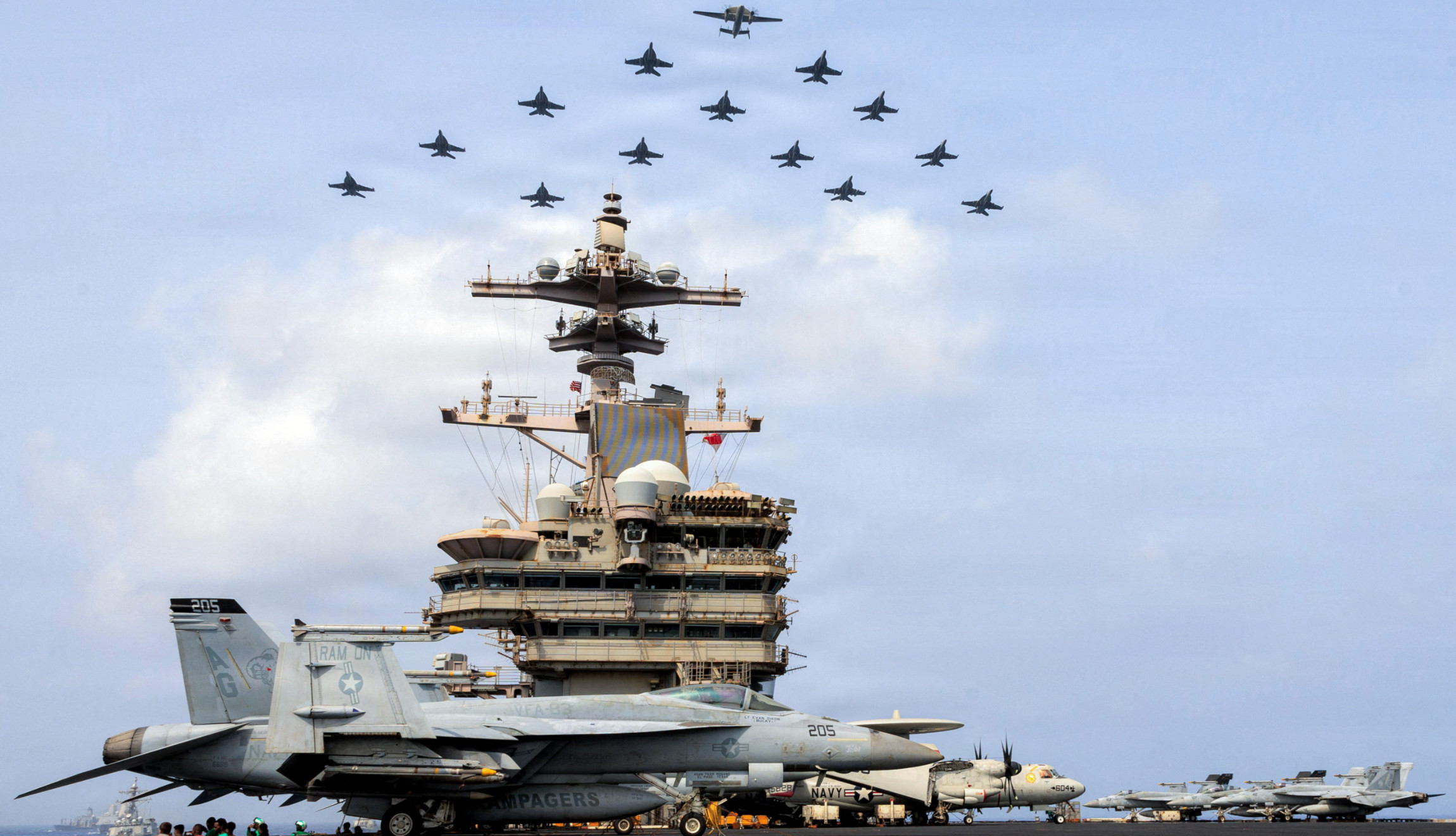
Against a tense backdrop of post-June 2025 military exchanges between Iran, the United States and Israel, a broad cross-section of current and former Iranian political leaders have converged on one key assessment: a full-blown, prolonged military conflict between Tehran and Washington is highly unlikely, though low-intensity confrontation and pressure will persist. This consensus emerged from a Tuesday interview conducted by Khabar Online with five political figures spanning Iran’s ideological spectrum, who found common ground despite divergent views on the long-term trajectory of bilateral relations.
Ali Motahari, a former moderate Iranian lawmaker, framed the current escalation as unlikely to spiral into broader war, noting that neither side has a strategic interest in open, large-scale conflict. “I don’t think the current exchanges will lead to a full-scale war because neither side wants one,” Motahari stated. His assessment was echoed by Mohsen Kouhkan, a conservative Iranian politician, who argued that Washington has no preparedness for a drawn-out military engagement. Kouhkan emphasized that recent U.S. threats are primarily a tool to ramp up political and economic pressure, not a precursor to launching a wider war.
Even as political leaders rule out all-out conflict, Tehran’s municipal government is moving forward with sweeping civil defense preparations to protect the capital’s population amid ongoing tensions. The Tehran City Council is drafting a new mandate that would require mandatory bomb shelters in all new construction projects, and retroactively repurpose existing public infrastructure — including metro stations and public underground parking garages — as emergency shelters for civilian populations during attacks. The policy shift comes after widespread criticism from residents, civil society activists and urban planning experts, who highlighted the critical lack of civilian protection infrastructure following two consecutive military campaigns launched by the U.S. and Israel against Iran starting in June 2025.
According to reporting from Shargh Daily, the proposal would task Tehran Municipality with both constructing new dedicated public shelters and retrofitting existing underground public spaces to serve emergency functions. For all new development projects, the mandate would require developers to include military-attack-rated shelter space in their blueprints; completion permits for new buildings will be denied to projects that fail to meet this safety requirement.
Amid internal debate over how to respond to ongoing tensions, Masih Mohajeri — a cleric and reformist-aligned politician — has publicly called out Iranian pro-war factions, urging decision-makers to reject pressure to escalate conflict. In an op-ed published in Abrar Daily, Mohajeri criticized hard-line groups that refuse to de-escalate military confrontation with the U.S., instead demanding immediate revenge for the killing of former Iranian supreme leader Ayatollah Ali Khamenei. Mohajeri argued that extending open conflict would actually undermine the goal of holding those responsible for Khamenei’s killing accountable, noting that prolonged war plays directly into the strategic aims of Washington and Jerusalem.
Mohajeri described the U.S. and Israeli governments as “fascist and racist,” arguing that limited military action alone cannot address the long-term threat they pose. “To save contemporary humanity from the crimes of these two criminal regimes, we must think strategically. If we speak of revenge, it must be revenge against the structure [of their ideology] so that the roots of the conspiracies and crimes are eradicated,” he wrote. “Continuing the war is what Israel and hard-line groups in the United States want and said it would ultimately harm Iran. Decision-makers must act wisely and make careful decisions, not allowing the country to fall into the trap of war. Iran must, with patience and perseverance over the long term, build itself in such a way that it can burn out the roots of these two criminal regimes.”
The reporting also sheds light on internal Iranian power dynamics, following extensive international coverage of recent comments by Mohsen Rezaei, an adviser to Iran’s current supreme leader and former commander of the Islamic Revolutionary Guard Corps (IRGC). Rezaei’s remarks describing the Strait of Hormuz as “more important than dozens of atomic bombs” garnered prominent headlines outside Iran, but received almost no coverage within the country. A prominent Iranian domestic political analyst, Ahmad Zeidabadi — a former political prisoner who has been jailed multiple times for his public commentary — pushed back on the international framing of Rezaei’s comments, arguing that the former IRGC commander holds little to no actual sway over Iran’s national and regional policy decisions.
Writing on his Telegram channel, Zeidabadi questioned why the Times of Israel, which first picked up the comments from Iran’s ISNA news agency, elevated Rezaei’s remarks to front-page news. “Is Mr Rezaei’s role in the Islamic Republic’s decision-making system important enough for his comments to become the front-page story of a major Israeli newspaper? It is not,” he wrote, adding that “The Israeli press is making major stories out of events in Iran that are not really major.” While Rezaei holds the official title of adviser to the supreme leader, Zeidabadi’s analysis aligns with the structure of Iranian politics: many advisory positions for former senior officials are largely ceremonial, designed to preserve the standing of past leaders while all core decision-making authority remains concentrated in the country’s central leadership.
This report is compiled as part of an Iranian press review, and has not been independently verified for accuracy by Middle East Eye.