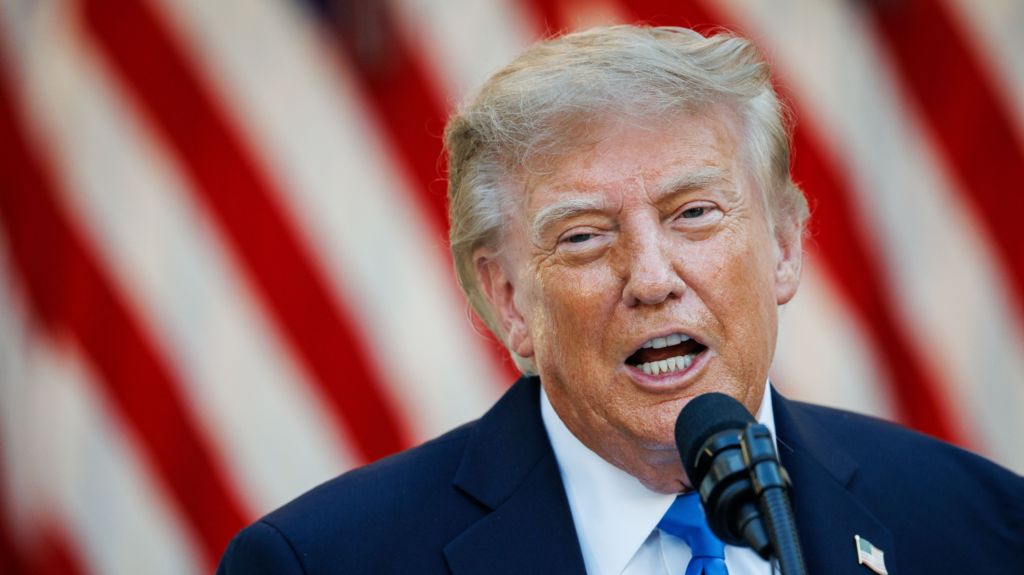
As the U.S. enters the final stretch of campaigning ahead of November’s pivotal midterm elections, sitting President Donald Trump has made a bold prediction: the seven-month-long conflict with Iran will wrap up instantly once voting concludes, and global oil prices will plummet shortly after.
Speaking to reporters Wednesday during a trip to Texas ahead of the first Republican Party convention ahead of the midterms, Trump laid out his timeline for the end of hostilities.
“I think the war’s going to end immediately after the election because they can’t hold out any longer,” Trump stated, referring to the Iranian government. He doubled down on his projection for energy markets, adding that “Right after the election, oil prices are going to be tumbling downward. I think it’s going to take a little bit longer than the midterm.”
The midterm elections carry high stakes for American governance, as control of both chambers of Congress could shift from Republican to Democratic hands. Currently, Trump faces slumping public approval ratings driven in large part by voter frustration over the conflict’s ripple effects, which have pushed up prices for everything from gasoline to household groceries. He has also faced growing pressure from within his own party to wind down the war, which he initially predicted would last only a matter of weeks when it launched.
Trump accused Iran of deliberately prolonging the conflict to sway the election outcome in favor of the Democratic Party, claiming Tehran wants “a nice weak group of people in there” that would allow Iran to pursue a nuclear weapon. Iranian officials have repeatedly and categorically denied that they are seeking to develop nuclear weapons, a rebuttal that has stood for years. When asked about the potential for new diplomatic negotiations with Iran to end the fighting sooner, Trump acknowledged that talks were a possibility, but stressed that “it’s not something we’re looking at” right now.
The remarks came amid a sharp escalation of hostilities across the Middle East that has sent global oil prices surging. On Wednesday, benchmark crude prices climbed above $100 per barrel for the first time since July, driven by sustained attacks on regional energy infrastructure. The latest upsurge in fighting follows the expiration of a 60-day ceasefire between the U.S. and Iran late last month, ending a brief period of relative calm.
In the most recent wave of clashes, the U.S. military announced Wednesday it had carried out strikes on five Iranian-linked oil tankers. Iranian state media reported that in retaliation, Tehran launched attacks on two U.S. Navy destroyers and eight commercial oil tankers operating in the Strait of Hormuz, one of the world’s most critical energy chokepoints, inflicting what the outlet called “heavy damage” to the vessels. A day earlier, the Iran-aligned Houthi movement in Yemen launched a series of strikes on oil facilities in Saudi Arabia that sparked large fires at key energy sites.
Beyond the immediate human and energy costs, the renewed conflict has stoked economic fears in the U.S. Analysts and policymakers now widely predict that sustained high fuel prices will push the Federal Reserve to raise interest rates further, increasing borrowing costs for homes, vehicles, and consumer debt across the country.