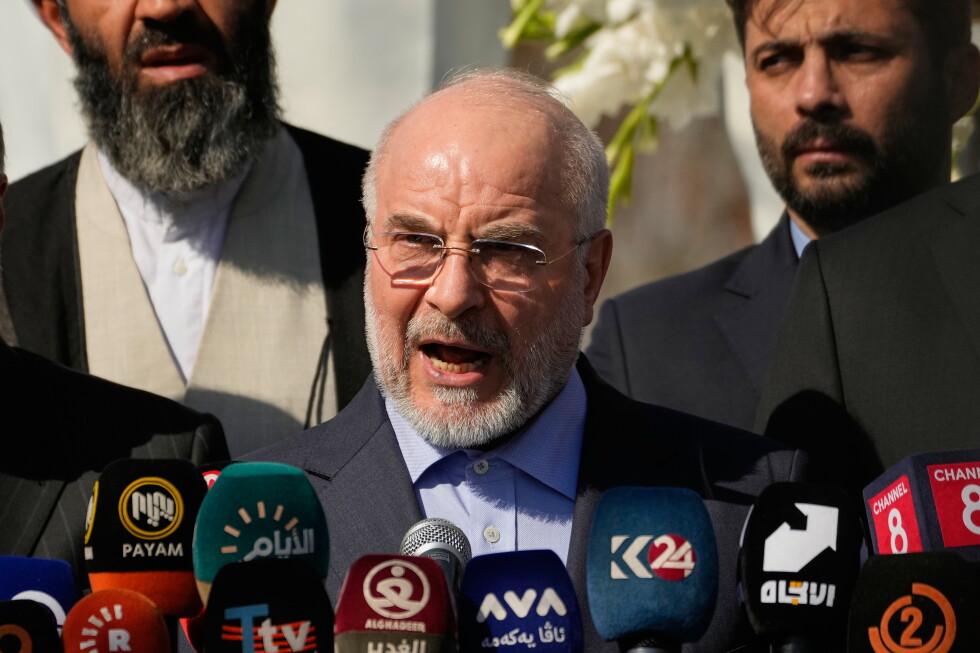
A wave of escalating geopolitical friction rippled across the Middle East on Wednesday, as three interconnected developments deepened uncertainty over regional stability amid already heightened hostilities between Iran and Western-aligned powers. The latest unrest comes weeks after the United States and Israel launched military operations against Iran starting February 28, with no diplomatic breakthrough between Tehran and Washington on the horizon to de-escalate broader tensions. The most acute new clash emerged between Iran and the United Arab Emirates, after Abu Dhabi accused Tehran of launching two ballistic missiles aimed at commercial maritime navigation that ultimately landed in the Persian Gulf on Tuesday. The alleged incident marked the first reported attack targeting UAE territory in several weeks, following a sustained period of frequent missile and drone strikes on Emirati assets by Iranian-aligned forces in the wake of the U.S.-Israel campaign against Iran. Within hours of the accusation, the UAE government announced an immediate suspension of all bilateral trade with Iran, framing the move as a necessary response to regional escalations that threaten both international and regional peace and security. This suspension came less than a week after Abu Dhabi had already accused Iran of launching drone attacks on two state-owned Emirati oil company tankers transiting the critical Strait of Hormuz, one of the world’s most vital oil chokepoints. Iran has forcefully rejected the latest missile accusation, with Foreign Ministry spokesperson Esmail Baghaei condemning the UAE’s claim during his weekly press briefing on Wednesday. Baghaei argued that the Emirati accusation violates core principles of good neighborliness, and undermines ongoing diplomatic efforts to build mutual trust between regional states and prevent further expansion of hostilities across the Middle East. Parallel to the UAE-Iran rift, a diplomatic standoff between France and Iran escalated into reciprocal expulsions of diplomatic personnel this week. On Wednesday, the French Foreign Ministry announced it would expel two Iranian embassy staff based in Paris, a direct response to Iran’s expulsion of two French diplomats from Tehran just two days prior. French Foreign Minister Jean-Noël Barrot accused Iranian authorities of premeditated action, saying Tehran fabricated false claims of foreign interference against the expelled French diplomats to justify their expulsion. Barrot added that Iranian security forces carried out a deliberate assault on the two French diplomatic staff last month, and criticized Tehran for failing to launch a credible investigation into the incident. Iranian state media, meanwhile, reported that the expelled French diplomats had been caught participating in a secret meeting with individuals linked to a major foreign infiltration and interference case in the country. The two Iranian diplomats ordered expelled by Paris are scheduled to leave the French capital in the coming days. Amid these cross-regional tensions, Iran’s top parliamentary speaker and chief nuclear negotiator Mohammad Bagher Qalibaf touched down in Baghdad Wednesday for a scheduled three-day official visit, where he is set to hold talks with senior Iraqi government officials and leaders of Iran-aligned political factions. Iraq has walked a precarious diplomatic tightrope for years, seeking to maintain functional diplomatic and economic ties with both Washington and Tehran, a balancing act that has grown far more complicated amid the latest escalation of open conflict between the U.S. and Iran. Iran-aligned Iraqi militias have claimed and carried out repeated drone attacks targeting U.S. military bases and diplomatic assets across Iraq and neighboring regions, putting enormous political pressure on the Iraqi government to respond. During his first public remarks in Baghdad Wednesday, Qalibaf praised Iran-aligned militias — which he referred to as the “Iraqi resistance” — framing them as a core pillar of Iraq’s national power. “After years of experience in Iraq, the resistance has gone beyond the borders of the two countries and has become an influential force at the regional and global levels,” Qalibaf told reporters. The comments underscore Iran’s long-standing strategy of building influence across the Middle East through allied armed groups and political proxies, including Lebanon’s Hezbollah and Yemen’s Houthi movement, which have played key roles in regional conflicts for decades. The latest round of tensions has fueled widespread international concern that the region could slide back into full-scale open conflict after weeks of relative quiet in attacks on Gulf states. Diplomatic efforts to restart nuclear talks between Iran and the United States remain stalled, with no formal negotiations scheduled in the near term. The Associated Press contributed reporting from correspondents based in Beirut, Tehran, Paris and Baghdad.