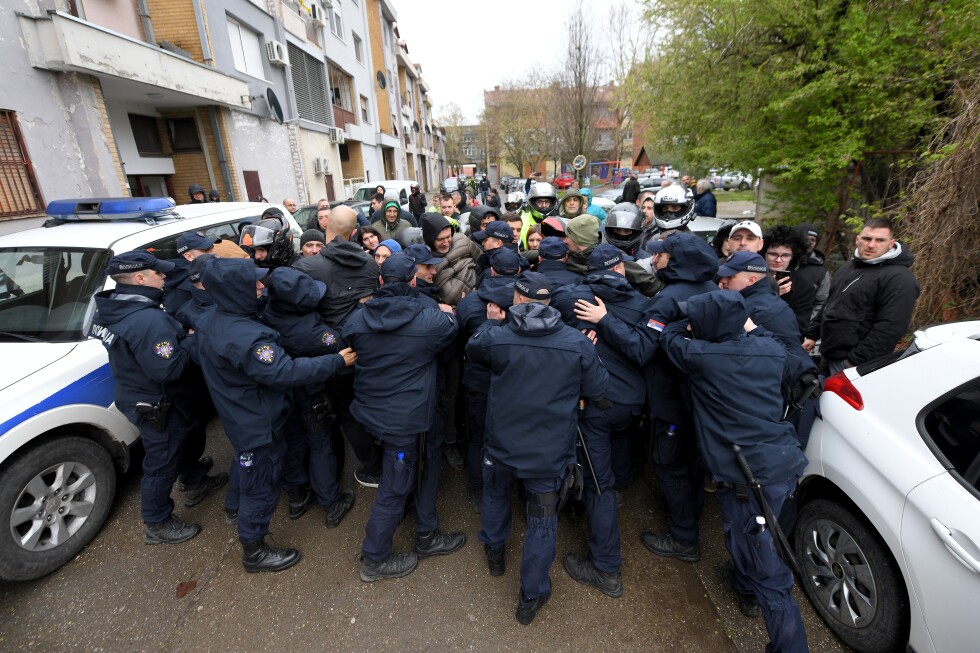
BELGRADE, Serbia — International election monitors have issued a damning assessment of Serbia’s municipal elections, documenting widespread violence, voter intimidation, and procedural irregularities that marred the democratic process. The Congress of Local and Regional Authorities of the Council of Europe reported that while voting procedures inside polling stations were largely compliant, the environment outside was characterized by alarming acts of aggression and coercion.
According to the official observer statement, monitors witnessed ‘acts of violence’ and ‘the threatening presence of large groups of people, often unidentified and sometimes masked’ in nearly all visited municipalities. The elections, held across 10 Serbian towns on Sunday, represented a critical test for President Aleksandar Vucic’s administration following over a year of youth-led protests challenging his authoritarian governance.
Despite the turbulent circumstances, Vucic has claimed comprehensive victory for his right-wing populist Serbian Progressive Party in all contested municipalities. The president personally led the campaign effort, seeking to reassert his political dominance after protests triggered by a November 2024 train station tragedy in northern Serbia.
Violent incidents erupted in at least three towns, with student activists and independent observers reporting attacks by masked supporters of Vucic. The president’s party conversely accused opposition groups of instigating conflicts. International monitors emphasized that ‘violence and coercion are unacceptable barriers to the free expression of the will of all voters’ and that ‘no voter should feel threatened when exercising his or her democratic right.’
Additional concerns included serious breaches of voting secrecy, with numerous voters photographing their ballots—a practice that monitors described as ‘highly worrying.’ The pre-election period was characterized by extreme polarization and focus on national rather than local issues.
Serbian independent monitoring organization CRTA (Center for Research, Transparency and Accountability) corroborated the international assessment, documenting scores of violent incidents and voting irregularities. The group stated that the proceedings ‘can hardly be called an election,’ citing organized voting violations, physical altercations involving state institution employees, and the deployment of riot police in several locations.
Jovana Djurbabic of CRTA told The Associated Press: ‘The whole atmosphere was marked with high intensity of tensions, violence, pressures. I would not call these elections free, they are not free at all.’
The electoral controversy has further strained regional relations, with Vucic alleging ‘logistical support’ to his opponents from neighboring Croatia. In response, Croatian President Zoran Milanovic canceled an upcoming regional meeting scheduled for May, stating that hosting Vucic would be ‘impossible’ following his inflammatory comments. Milanovic’s office stated that Vucic’s ‘political statements and actions…inflict damage on relations between the states and jeopardize peace and stability in southeastern Europe.’
The tensions reflect historical animosities dating to the 1991-95 Croatian War of Independence, during which Serbia backed a Croatian Serb rebellion that resulted in over 10,000 casualties.