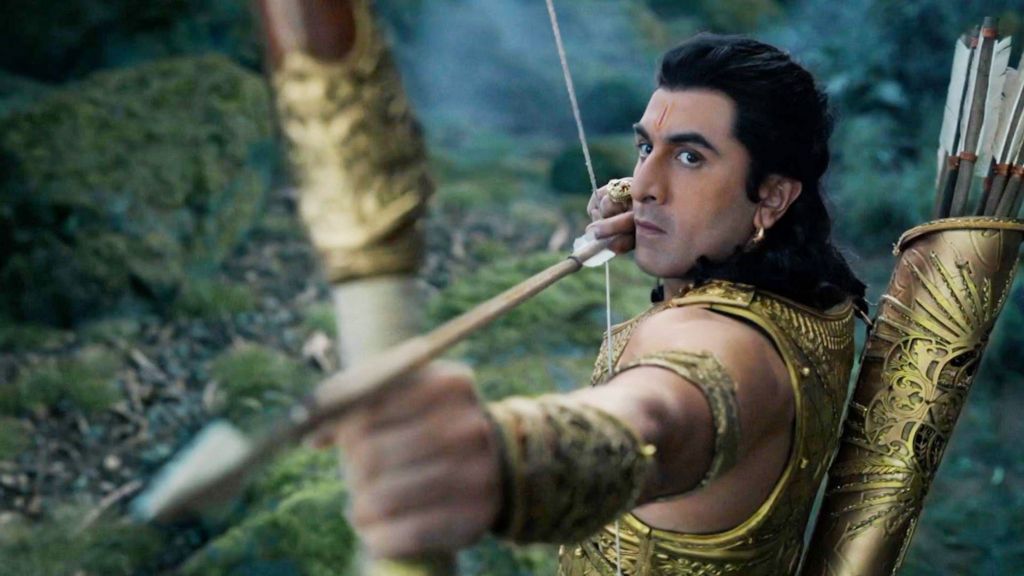
Billed as the most expensive film ever produced in Indian cinema history, the two-part, $500 million lavish adaptation of the revered Hindu foundational epic Ramayana has made its worldwide theatrical debut, riding on massive public anticipation while earning sharply divergent critical feedback. Helmed by acclaimed director Nitesh Tiwari, *Ramayana: Rise of a Legend* represents the first installment of the ambitious duology, assembling a star-studded cast of India’s A-list performers, Oscar-winning creative talent, and Hollywood-grade visual effects expertise to bring the millennia-old cultural narrative to a global mainstream audience.
For well over 2,000 years, the Ramayana has permeated across South Asian and broader global cultural landscapes, reimagined through poetry, temple carvings, traditional shadow puppetry, folk theatre, and intergenerational oral storytelling. It has outlasted dozens of kingdoms and empires, shaped religious devotion, fueled social and political movements, and repeatedly found new iterations for modern audiences through television and cinema. Tiwari’s latest retelling revisits the timeless core narrative of virtue, filial duty, 14-year forest exile, and epic war, set against a mythic universe of celestial deities, fearsome demons, divine weaponry, and sprawling ancient kingdoms. The cast features Ranbir Kapoor in the iconic role of Lord Ram, the exiled virtuous prince of Ayodhya; Sai Pallavi as his devoted wife Sita, who is abducted by the 10-headed tyrant king of Lanka Ravana; and top southern Indian superstar Yash as the arrogant, formidable warrior Ravana, whose climactic battle with Ram will be reserved for the second installment slated for release in 2026.
The production’s unprecedented creative firepower includes producer Namit Malhotra, who leads Oscar-winning VFX studio DNEG – the team behind Hollywood blockbusters including *Dune* and *Interstellar*. Its original score is a historic collaboration between two Academy Award-winning composers: Indian legend AR Rahman, celebrated for his work on *Slumdog Millionaire*, and Hans Zimmer, whose iconic soundtracks for *Gladiator*, *The Dark Knight*, and *Dune* have defined the sound of modern global cinema. The film’s theatrical rollout was strategically timed to land just days before Diwali, the Hindu Festival of Lights that commemorates Ram’s triumphant return to Ayodhya after his 14 years of exile and the eternal victory of good over evil.
Critical reception across domestic and international markets has been far from uniform. NDTV’s Saibal Chatterjee awarded the film 3 out of 5 stars, arguing that its overwhelming visual opulence often overshadows narrative depth, noting that its massive scale is the most memorable element while performances are wildly inconsistent. Hindustan Times critic Rishabh Suri was far more enthusiastic, granting 4 stars and praising that every dollar of the massive budget translates to stunning on-screen imagery, though he noted a sluggish first act and underwhelming musical execution. The Indian Express’s Shubhra Gupta, who also gave 3 stars, admitted she entered the screening with significant misgivings about the over-the-top production scale, but was gradually won over, calling it a satisfying, well-executed epic that balances sprawling scope with coherent storytelling.
International critics also delivered split verdicts. The Guardian’s Peter Bradshaw hailed the film as a rousing, thoroughly engaging epic melodrama, drawing parallels between its royal intrigue and Shakespearean drama, its cross-continental rescue quest and Homer’s Odyssey, and its sweeping mythic imagery to *The Lord of the Rings* and *The Lion King*, awarding it 4 stars. Conversely, IGN’s Siddhant Adlakha gave it a mere 4 out of 10, deriding clunky action sequences and low-quality CGI he described as an “eyesore”. Next Best Picture’s Giovanni Lago scored it 5 out of 10, praising Yash’s magnetic portrayal of Ravana and the Rahman-Zimmer collaborative score, but arguing that the sprawling, layered narrative would have been far better served by a serialized *Game of Thrones*-style television format rather than a standalone feature. The production’s use of AI to rework actors’ lip movements for the English dub to improve global accessibility also drew widespread mockery, with Adlakha comparing the uncanny, exaggerated mouth movements to cheap comedy sketch effects.
The new adaptation has drawn inevitable comparisons to Ramanand Sagar’s legendary 1987 78-episode television *Ramayan*, which became a nationwide cultural phenomenon in an era when TV ownership was still a luxury for most Indian households. At its peak, the series drew 80 to 100 million weekly viewers: entire streets emptied, shops shut down, and even public buses and trains would stop so passengers could gather around roadside television sets to watch the broadcast. Many devout viewers would perform pre-screening religious rituals, bathing, lighting incense, and garlanding their TV sets before each episode. The actors became objects of widespread public reverence, and the production has leaned into this nostalgia by casting Arun Govil – the star who played Ram in the 1980s series – as King Dasharatha, Ram’s father, in the new film. Other beloved prior iterations include the 1992 Indo-Japanese hand-drawn animated feature *Ramayana: The Legend of Prince Rama*, which brought the epic to life through intricate traditional artistry.
Unlike earlier adaptations, Tiwari’s production arrives at an unusually politically charged cultural moment in India, where the figure of Ram has emerged as a central, divisive symbol of Hindu national identity. Recent years have seen multiple high-profile Ramayana retellings mired in widespread controversy, most notably 2023’s big-budget *Adipurush*, which faced mass calls for boycotts from Hindu groups for perceived disrespect to sacred religious figures, accusations of anti-Muslim stereotyping through its depiction of Ravana, and widespread mockery for its shoddy dialogue and low-quality visual effects. This heavy cultural weight weighed heavily on the lead cast: Ranbir Kapoor shared that he felt overwhelming fear taking on the role of Ram, a figure worshipped by hundreds of millions, noting that the part offered almost none of the creative freedom he enjoyed in his earlier roles, even as he called it the “opportunity of a lifetime”. Sai Pallavi, who portrays Sita, described the performance as a deeply spiritual personal journey rather than just a professional acting gig, shaped by her own religious upbringing.
As audiences across India and the world begin to fill cinemas to see the film, its long-term commercial and cultural fate remains to be seen. But regardless of final audience and critical scores, the unprecedented production stands as a landmark cultural milestone for Indian cinema, bringing one of humanity’s oldest continuously living epic narratives to global audiences on a scale never before attempted.