The ongoing political drama surrounding the Trump administration’s newly announced interim Iran deal has thrust Vice President JD Vance into the center of a high-stakes controversy, as he navigates conflicting messaging from the top of his own administration, intraparty opposition, and growing speculation about his own 2028 presidential ambitions.
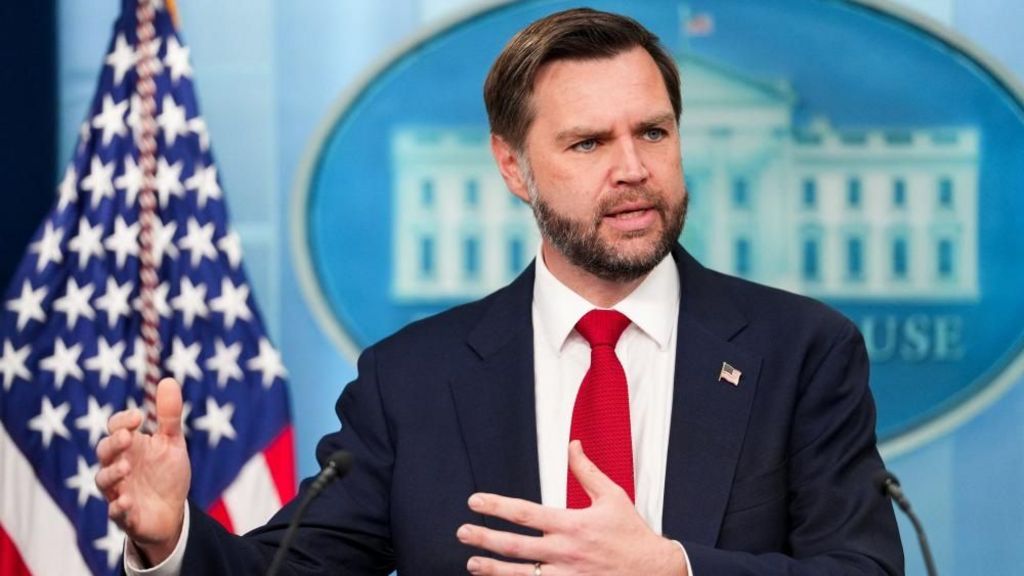
During a Thursday White House press briefing, Vance pushed back against widespread suggestions that President Donald Trump had positioned him as the political fall guy for the broadly unpopular agreement, telling reporters Trump’s recent comment about blaming the vice president if the deal collapses was nothing more than playful banter. “I think the president was joking,” Vance stated, as he defended the framework of the memorandum of understanding (MoU) reached with Iran earlier that week.
Vance has led the administration’s public outreach for the Iran deal all week, but his role has been marked by repeated contradictions from Trump and persistent uncertainty over his planned diplomatic trip. Just days ago, Vance was scheduled to travel to Switzerland for a formal signing ceremony with Iranian leaders, but he admitted he had little clarity on key event logistics, a revelation that laid bare his limited control over the defining policy assignment of his vice presidency. By late Thursday, the White House officially announced Vance would not make the trip, at least for the time being, citing unresolved logistics for upcoming negotiations.
Despite the cascading challenges, Vance has stood firm in his defense of the interim agreement, even breaking new ground by issuing a sharper rebuke of Israel’s response to the deal than Trump has publicly offered in recent days. That same week, he also launched a new memoir about his religious conversion, a release that only amplified chatter about a potential 2028 White House run, putting his handling of the Iran deal under even closer political scrutiny.
The deal has split the Republican Party, creating a no-win situation for Vance as he tries to sell the agreement to two opposing factions: anti-interventionist Make America Great Again (MAGA) supporters who opposed the Iran war from its start, and hardline conservative Iran hawks who argue the Trump administration has surrendered critical leverage to Tehran. Unlike Vance, other top administration officials have managed to avoid the political heat: Secretary of State Marco Rubio, a fellow potential 2028 Republican presidential contender, has deliberately stepped back from the spotlight on the Iran file, while Defense Secretary Pete Hegseth has remained a vocal backer of the military campaign without taking ownership of the diplomatic push for peace.
Many Republican insiders say Trump’s decision to put Vance front and center on the unpopular deal is a deliberate political move. “It’s not in the president’s nature to cede the limelight and he’s done that here,” noted Republican strategist Matt Mackowiak, adding that the choice felt intentional. One anonymous longtime Republican operative and Trump critic put it more bluntly: “It’s classic Trump to throw JD under the bus.”
Still, the political outcome for Vance is not predetermined. If the two sides can reach a final, long-term agreement that successfully curbs Iran’s nuclear program – a long-sought goal for U.S. and Middle Eastern allies – Vance could claim credit for a landmark foreign policy victory. But there are no guarantees: negotiators have 60 days to resolve a host of deeply technical sticking points, and even a final deal may fail to win over skeptical critics at home and abroad. “Vance being connected to the Iran war is one more way [that critics will] hold him accountable for Trumpism,” explained veteran Republican consultant Terry Holt.
The past week’s shifting messaging around the deal has only underscored Vance’s difficult position. When the MoU was first announced on Sunday, the White House released no text, sparking widespread confusion over the agreement’s terms. Vance attempted to clarify details in a series of media interviews, telling CBS News that Iran could gain access to a $300 billion reconstruction fund if it abided by the deal’s terms. Just hours later, Trump contradicted him outright, dismissing the $300 billion figure as “Fake News” on social media and telling reporters the U.S. would not contribute “10 cents” to any such fund. When the full text was eventually released, it confirmed Vance’s initial framing: the deal commits the U.S. to work with regional partners to develop a $300 billion reconstruction plan for Iran.
On the core issue of Iran’s nuclear program, Vance aligned with Trump’s framing that the interim deal is a meaningful first step toward blocking Tehran from developing nuclear weapons. But the agreement leaves all detailed nuclear restrictions to be negotiated in the next round of talks, failing to lock in concrete limits immediately.
The chaos around the deal followed Vance even during media appearances for his new book. During a televised interview on ABC’s *The View*, where he clashed with co-host Whoopi Goldberg, Trump was already overseas at the G7 summit in Evian-les-Bains, France, undercutting Vance’s position. During a Wednesday press conference, Trump repeated his “joke” about blaming Vance if the deal fails, and even downplayed the MoU’s significance, questioning whether it was important enough for him to sign. Hours later, however, Trump signed a physical copy of the deal on camera during a formal dinner with French President Emmanuel Macron at the Palace of Versailles, which immediately raised questions about why Vance would need a separate signing event in Geneva – a question answered by the White House’s announcement that Vance would skip the trip.
Even with Trump overseas, congressional Republicans have not held back on their criticism. “Iran’s nuclear ambitions were not curbed, and they have learned that threatening the Strait of Hormuz works and will undoubtedly leverage it in the future,” Republican Senator Bill Cassidy of Louisiana wrote in a social media post Thursday. Senate Armed Services Committee Chairman Roger Wicker of Mississippi added that the deal is “completely out of step with the president’s own goals.”
Vance pushed back on that criticism at Thursday’s briefing, pointing to falling U.S. gasoline prices as early proof the deal is already delivering benefits for American households. He expressed confidence that the agreement would deliver long-term gains if Iran holds to its commitments and negotiators reach a final deal: “If they change their behaviour, big things are going to happen. If they don’t, no skin off our backs. Either way, we win.”
For now, however, the political stakes remain entirely clear: as Trump has repeatedly emphasized, Vance is the public face of these negotiations, meaning his political future will be closely tied to whether the deal succeeds or fails.