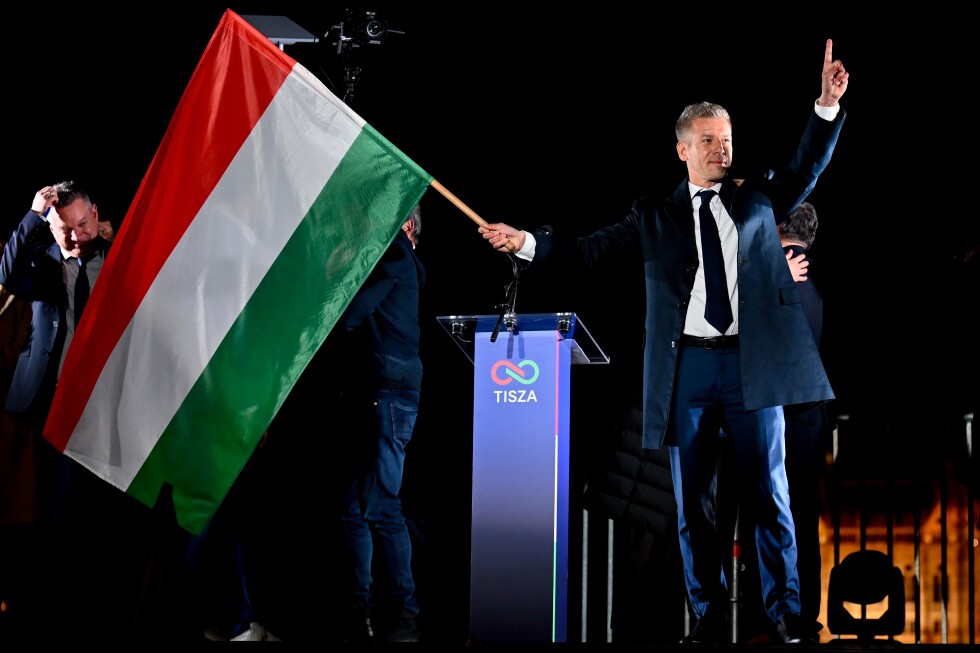
BUDAPEST, Hungary – On Saturday, a historic political transition will unfold in Hungary’s capital: incoming center-right Prime Minister Péter Magyar will take his oath of office inside the country’s iconic neo-Gothic parliament building, while thousands of supporters gather on the adjacent square to celebrate the close of Viktor Orbán’s 16 years in power.
Last month, Magyar’s newly formed Tisza party delivered a stunning rebuke to Orbán’s nationalist-populist Fidesz party, securing a landslide electoral victory unmatched in Hungary’s post-Communist era. The mandate, widely described as a political earthquake, clears the way for Tisza to reverse the controversial policies that led critics to label Orbán a far-right authoritarian, and to dismantle the economic network that enabled massive wealth accumulation among the outgoing prime minister’s close allies and family. Ahead of assuming governing duties, Magyar has called on all Hungarians to join an all-day “regime change” celebration to mark both his inauguration and the definitive end of the Orbán era. “We will step through the gateway of regime change with a huge party. Come along, and invite your family and friends!” Magyar shared in a social media post over the preceding weekend.
A 45-year-old lawyer who built Tisza in 2024 after years as an insider within Orbán’s own party, Magyar has centered his incoming administration on undoing the harm he says the previous regime inflicted on Hungary and its people. Top of his policy agenda is unlocking roughly €17 billion (US$20 billion) in frozen European Union cohesion funds, which Brussels blocked during Orbán’s tenure over widespread rule-of-law breaches and corruption. This capital infusion is widely seen as critical to reversing four straight years of economic stagnation that has held back living standards for ordinary Hungarians.
Magyar has also pledged to repair Hungary’s frayed relationships with EU partners, which Orbán pushed to near collapse during his final years in office, and to restore the country’s standing as a committed member of the community of Western democracies – a status that came under intense scrutiny as Orbán increasingly aligned Hungary with the Kremlin amid Russia’s full-scale invasion of Ukraine. In a tangible early signal of this new commitment, Tisza party officials confirmed that the European Union flag will return to the parliament building’s facade starting Saturday, 10 years after Orbán’s government ordered its removal.
For the nearly 3.4 million Hungarians who cast ballots for Tisza, the transition comes with high expectations that the new administration will hold outgoing Fidesz officials and their business associates accountable for years of alleged misconduct. In response, Magyar plans to launch the National Asset Recovery and Protection Office, a dedicated new agency tasked with investigating and clawing back public funds misappropriated during Orbán’s tenure. He has also promised to suspend operations at Hungary’s public broadcaster – long derided as a partisan mouthpiece for Fidesz – until sweeping reforms can guarantee independent, objective news coverage.
A full structural overhaul of Hungary’s government is also on the immediate agenda, with Tisza set to re-establish standalone cabinet ministries for health, environmental protection and education, all of which were merged under Orbán’s administration. To deliver on his promise of restoring professional competence to government, Magyar has nominated a slate of internationally recognized experts to top cabinet posts. Among them are veteran diplomat and foreign policy analyst Anita Orbán – who is not related to the outgoing prime minister – tapped for foreign minister; former Shell executive István Kapitány, selected to lead the economy and energy portfolio; and prominent economist András Kármán, nominated for finance minister.
Saturday’s inauguration is scheduled to begin with Magyar’s oath at approximately 3 p.m. local time, followed by an address to the crowd gathered outside parliament, where the celebration will include live artistic performances and unannounced special guests. Separately, Gergely Karácsony, the liberal mayor of Budapest, has organized a parallel “system-closing” celebration along the banks of the Danube River, designed to honor Hungarians who spent years organizing opposition to Orbán’s government. “Teachers fired, civilians and journalists humiliated, small churches torn apart,” Karácsony wrote in his social media invitation. “We can finally leave this era behind us — but first, let us remember the everyday heroes and express our gratitude with a farewell to the system.”