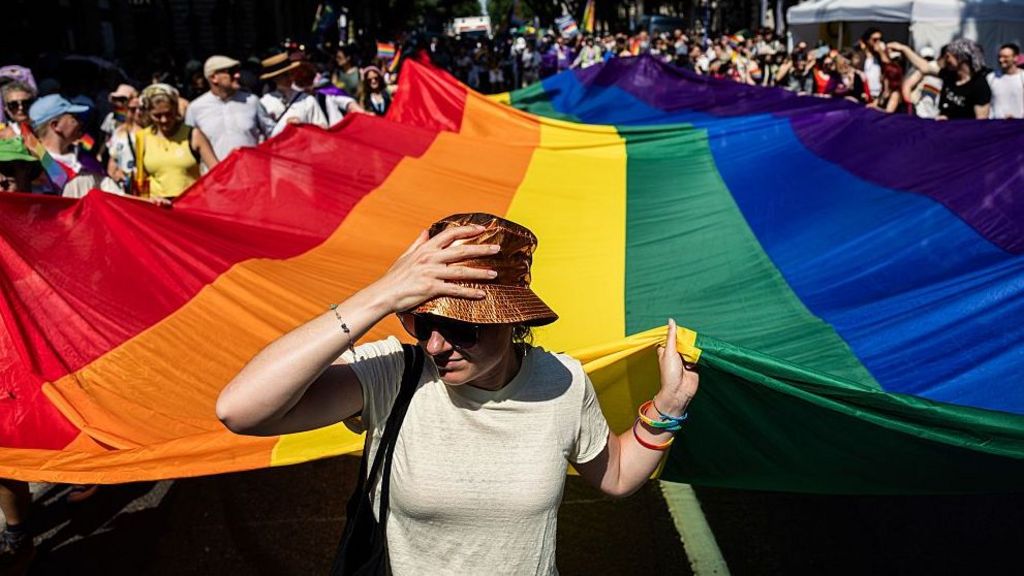
In a landmark legislative shift marking a sharp break from Viktor Orbán’s 12-year conservative administration, Hungary’s new parliament has voted to repeal the most stigmatizing provisions of the 2021 Child Protection Law that banned the portrayal or promotion of homosexuality and transgender identity nationwide. The rollback comes six months after Prime Minister Péter Magyar’s Tisza Party won April’s general election, ousting Orbán’s Fidesz party and moving quickly to dismantle the previous government’s restrictive legacy.
The 2021 law, ramrodded through parliament by Fidesz’s then two-thirds supermajority, cast a wide regulatory chill across sectors, restricting access to inclusive education, limiting freedom of assembly for LGBTQ groups, and triggering repeated clashes between the Orbán government and the European Union over rule of law and fundamental rights. Under the new administration, which also holds a two-thirds legislative majority, Tuesday’s amendments were bundled into a broader legislative package designed to unwind key Fidesz-era policies. Within minutes of the final vote confirmation, Budapest announced the European Commission had formally approved the release of €4.2 billion (£3.5 billion) in cohesion funds that had been frozen for years over concerns about rule of law breaches linked to the previous government’s policies.
The unlocking of funds had been flagged last month, when the European Commission concluded the Magyar administration had addressed core deficiencies tied to the EU budget, and recommended that Hungary be readmitted to two flagship EU programs: the Erasmus+ student exchange initiative and the Horizon Europe research and innovation framework. The legislative change has been broadly welcomed by LGBTQ and human rights organizers across the country, who have waged a five-year campaign against the 2021 law.
Tamás Dombos, a leading figure with Hungarian civil rights group Háttér Society, told reporters that while the original bill submitted for amendment contained unresolved flaws, most concerns had been addressed during the legislative process. “We are very happy that this got adopted,” Dombos said. “We’ve been fighting this so-called child protection law for five years.” He noted that the new approach marks a tangible improvement from the Orbán era, when the LGBTQ community was targeted as a persistent political scapegoat, but emphasized that the fight for full equality is far from over. Remaining priorities for activists include full legal recognition of same-sex marriage, adoption rights for same-sex couples, and the restoration of transgender people’s right to officially change their legal names. “We are still knocking on a closed door,” Dombos said, “but at least they are listening on the other side.”
The shift in policy comes as the governing Tisza Party navigates a careful political balance: both Fidesz and Tisza have positioned themselves as defenders of child protection, but the two parties have taken sharply different approaches to LGBTQ rights. While Orbán’s Fidesz courted conservative voters by framing queer and transgender people as an inherent threat to public morality, Magyar’s administration has moved to roll back the most restrictive laws while stopping short of openly embracing a liberal pro-equality agenda, to avoid alienating right-leaning voters.
The turning point for the original child protection law came in 2024, when a pardon scandal fatally undermined Orbán’s narrative: the public learned that the Fidesz government had pardoned the deputy director of a state children’s home, who had been convicted of covering up his supervisor’s child abuse offenses. What had long been a winning electoral issue for Orbán turned into his political Achilles heel, clearing the way for Magyar’s electoral upset. During his election campaign, Magyar positioned his party as a champion for children in state care, while deliberately avoiding explicit discussion of LGBTQ rights to retain support from conservative voters.
In a recent interview with Finnish daily Helsingin Sanomat, Magyar emphasized his cautious approach to divisive social issues. “As prime minister, it’s my duty to represent all Hungarians, and we have sensitive issues, such as the situation of sexual minorities,” he said.
The shift has already been visible on the streets of Budapest: in June 2025, the annual Budapest Pride march drew an estimated 250,000 participants, held without the official restrictions that marred the 2024 event, when Orbán had promised to block the march entirely. Last year, despite an official ban, police declined to intervene to stop the event, and all legal proceedings against Budapest’s mayor and event organizers were later dropped.
Opposition to the new amendments remains unified on the right: both Fidesz and its coalition partner the Christian Democrats voted against the changes this week. In an official statement posted to its website, the Christian Democrats reaffirmed their position that “there is no place for the promotion of LGBTQ content in schools or the media.”