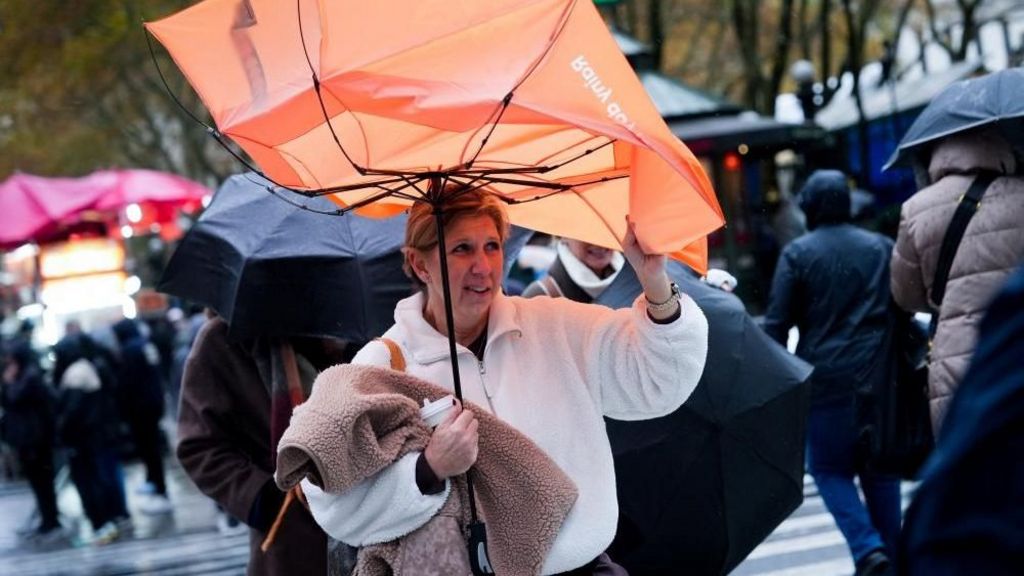
A cascade of extreme weather events battered both the Atlantic and Pacific coasts of the United States during the peak Thanksgiving holiday travel window, triggering widespread power outages, transit chaos, and localized structural damage that upended plans for millions of celebrants. On the Eastern Seaboard, a ferocious fast-moving storm system swept through on Thanksgiving Day, bringing destructive gusts, torrential downpours, and life-threatening coastal flooding that tore shingles and entire roof sections off residential and commercial buildings, submerged urban and rural roadways, and forced emergency closures of critical infrastructure. By early Friday, data from power tracking platform Poweroutage.us ranked Pennsylvania as the hardest-hit state in terms of utility disruptions, with peak outages across the broader East Coast nearing 1 million households at the storm’s Thursday evening apex. Neighboring states including Virginia, Maryland, and New Jersey also faced catastrophic service interruptions, prompting Maryland officials to issue an unprecedented public advisory urging nearly 2 million customers to restrict water usage to only essential needs amid intermittent failures at water treatment facilities tied to power grid instability. Maryland authorities also closed multiple vehicular bridges over safety concerns from wind gusts exceeding 60 miles per hour, while Delaware’s coastal boardwalks were overrun by churning surf that spilled sand and seawater onto pedestrian promenades. Washington D.C. recorded its wettest Thanksgiving on meteorological record, with tidal surges creeping onto the runways at Reagan Washington National Airport, while New York state declared formal states of emergency for multiple affected counties, forcing organizers of the iconic Macy’s Thanksgiving Day Parade to reschedule the annual event to Saturday to avoid exposing participants and spectators to hazardous conditions. Pennsylvania Governor Josh Shapiro publicly confirmed that utility crews were working around the clock in rotating shifts to restore grid service, with U.S. President Donald Trump signaling his administration was actively reviewing requests to unlock federal emergency relief funds to support local recovery efforts. The storm system also threw national air travel into disarray at one of the busiest travel periods of the year: flight tracking service FlightAware documented more than 2,500 domestic, incoming, and outgoing U.S. flight delays on Thursday alone, alongside 450 formal cancellations, with further widespread disruptions persisting through Friday. One traveler bound for Chicago to visit friends shared his experience of being trapped at New York’s LaGuardia Airport for 13 consecutive hours as crews struggled to clear weather-related backups. Compounding East Coast travel headaches, a FedEx cargo jet overshot the runway at Miami International Airport late Wednesday, sending plumes of displaced dirt and debris across the tarmac; the incident forced all but one of the airport’s runways to shut down temporarily, creating ripple delays that lingered into Thursday. No crew members sustained injuries in the landing mishap, per FedEx’s official statement, and the Federal Aviation Administration has launched a full investigation, with anonymous airport staff telling CBS News that saturated, rain-soaked runway conditions may have been a contributing factor. On the opposite side of the country, a separate weather system brought record-breaking king tides to the entire West Coast, with San Diego and Los Angeles both registering high tide levels exceeding 8 feet (2.4 meters) earlier in the week. Local public safety agencies issued mandatory advisories warning beach visitors to steer clear of unprotected shorelines, after dramatic footage captured an Oregon man and his dog being swept into roiling surf by an unexpected massive tide surge; local police confirmed both managed to escape the powerful current unharmed. The Amtrak Pacific Surfliner coastal rail route, which operates along California’s scenic shoreline, announced multiple service cancellations across its network, citing hazardous washout conditions caused by the extreme high tides. The American Automobile Association had projected that 81.5 million U.S. residents would travel at least 50 miles from home over the seven-day Thanksgiving holiday window, making the weather-related disruptions all the more impactful for families planning long-awaited gatherings. While the National Weather Service confirmed that weather conditions are steadily improving across most affected regions, agency forecasters cautioned that full recovery of power grids, transportation networks, and damaged public infrastructure would require several days of coordinated work from emergency response teams.
Hundreds of thousands still without power after storms hit US on Thanksgiving