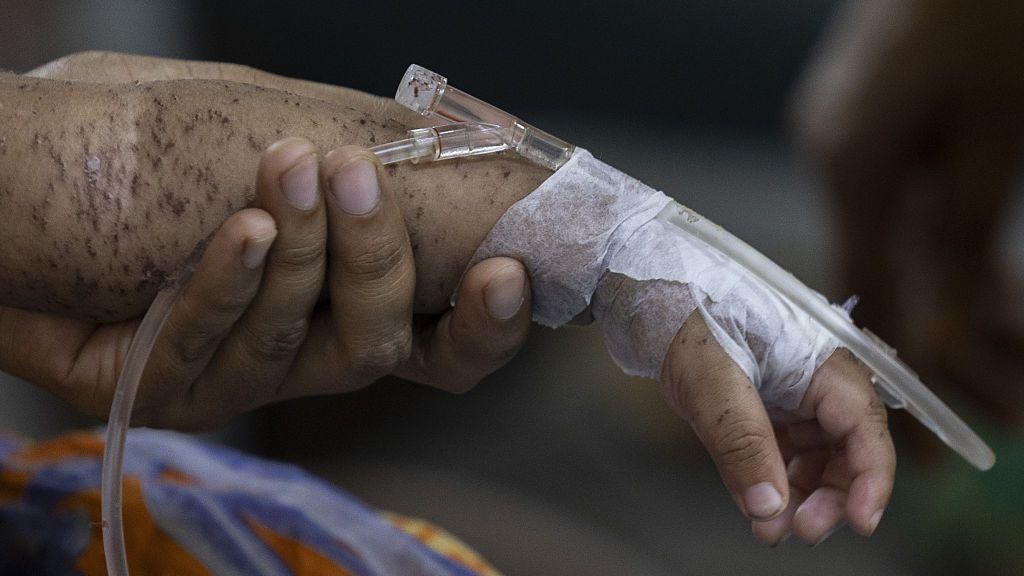
For Al Amin, a Dhaka resident, the memory of his 4-year-old daughter Akira remains unbearably vivid. He remembers how quickly she learned to speak, how she had already begun picking up English words before her fourth birthday, how she was the beloved center of both sides of their family. But that bright light was cut short by a preventable disease: measles.
Akira’s parents did everything right, Al Amin says. They tried four separate times to get her the routine measles vaccine that could have saved her life. The first two attempts were called off – health workers turned them away because Akira had a cold, assuring the family the shot could wait until she turned five. On the third and fourth trips, they were met with a different barrier: the vaccine was simply out of stock.
In early March, Akira developed what Al Amin thought was a routine fever. After an initial hospital visit, she was sent home, only to develop the hallmark signs of measles: a spreading rash, soaring temperature, and painful mouth sores. She was admitted and discharged five times before clinicians finally diagnosed her with the highly contagious viral illness. By then, it was too late. Akira was placed on life support, and died 27 days after she first sought care.
Akira’s death is far from an isolated tragedy. Since the start of March, Bangladesh’s Ministry of Health confirms more than 500 children with confirmed or suspected measles have died across the country. Official data puts total suspected cases at more than 60,000, with thousands of results still pending laboratory confirmation.
Measles spreads rapidly through respiratory droplets from coughs and sneezes, and poses the deadliest risk to unvaccinated children under the age of five. Right now, Bangladesh’s healthcare system is buckling under the weight of the outbreak: multiple reports confirm parents are struggling to secure hospital beds for their sick children, and UNICEF field teams found hospitals across the country are overwhelmed. UNICEF staff have been deployed to help implement patient isolation and triage protocols at facilities that lack these critical systems. For many families living in rural areas with underresourced local clinics, the only option is to travel to major urban centers in search of care – a journey that often comes too late for low-income families who delay care to avoid the cost of private medicines and tests, according to Dr. Mushtaq Husain, former Principal Scientific Officer at Bangladesh’s Institute of Epidemiology Disease Control and Research. If local care had stronger resourcing, he noted, far fewer children would require emergency hospitalization.
UNICEF’s Bangladesh country head Rana Flowers described the crisis as a “perfect storm” of overlapping risk factors. Public health officials first detected small clusters of measles cases in 2023, but a series of factors allowed the virus to spiral into a full outbreak. These include long-running gaps in routine vaccination that date back to the COVID-19 pandemic, when door-to-door vaccine outreach was halted to prevent viral spread, and many parents avoided hospital visits out of fear of contracting COVID. High population density in urban centers like Dhaka and refugee-hosting Cox’s Bazar, plus large population movements around major holidays, have also accelerated transmission.
But Flowers emphasized one factor stands out above the rest: procurement delays for routine vaccines. Following 2024 political upheaval that saw long-time ruler Sheikh Hasina flee the country and an interim government take power ahead of February 2026 elections, the interim administration moved to restructure Bangladesh’s vaccine purchasing process, a change that UNICEF repeatedly warned carried major risk. “I sat with the interim advisor and staff on at least ten occasions,” Flowers said. “Saying we are worried, look at my face, I am worried you are going to face an outage.”
Md Sayedur Rahman, former Special Assistant to the interim chief advisor for health, pushed back against this claim in a social media post, saying “no change was implemented in the vaccine procurement process during the tenure of the interim government” and that a “regular and consistent collaborative relationship regarding vaccine matters was maintained with UNICEF.”
After the outbreak escalated, Bangladesh launched a mass emergency vaccination campaign in early April, with support from UNICEF and other international aid groups. So far, the campaign has shown early success: new infections have begun to decline in the hardest-hit regions that were prioritized for vaccination, and case numbers are plateauing in those areas. But public health experts note it takes three to four weeks for vaccine-derived immunity to build, so full national impact will take time to materialize. Bangladesh’s Health and Family Welfare Minister Sardar Sakhawat Hossain told the BBC he expects nationwide case numbers to drop soon. “It takes three to four weeks after the vaccination to create antibodies in the babies. We expect by next week, Inshallah, it will come down,” Hossain said. The minister also rejected calls to declare a national public health emergency, saying district-level facilities are prepared to support intensive care units in remote regions, and that “Bangladesh is able to handle.”
Still, many experts remain concerned that upcoming Eid holiday travel could fuel a new wave of transmission, as millions of people travel across the country to gather with family. “Thousands of children will travel with their parents from town to village, village to town,” Husain warned. “There will be mixing of children with a fever, with the virus.”
To prevent further spread, the government has already cancelled all scheduled Eid holiday leave for doctors and nurses working on outbreak response. For families who have already lost children, though, no action can bring back their loved ones. Al Amin still blames himself and the healthcare system for Akira’s death, saying the family suspects she contracted the virus in a hospital waiting room, where measles patients were mixed with other patients. “From the ticket counter line to the x-ray room, there was a measles patient everywhere,” he said. Today, he still visits Akira’s grave regularly, and relies on prescription sleeping pills to get through the night. “Today I cried for over an hour beside her graveyard,” he says. “I have so many questions inside me.”