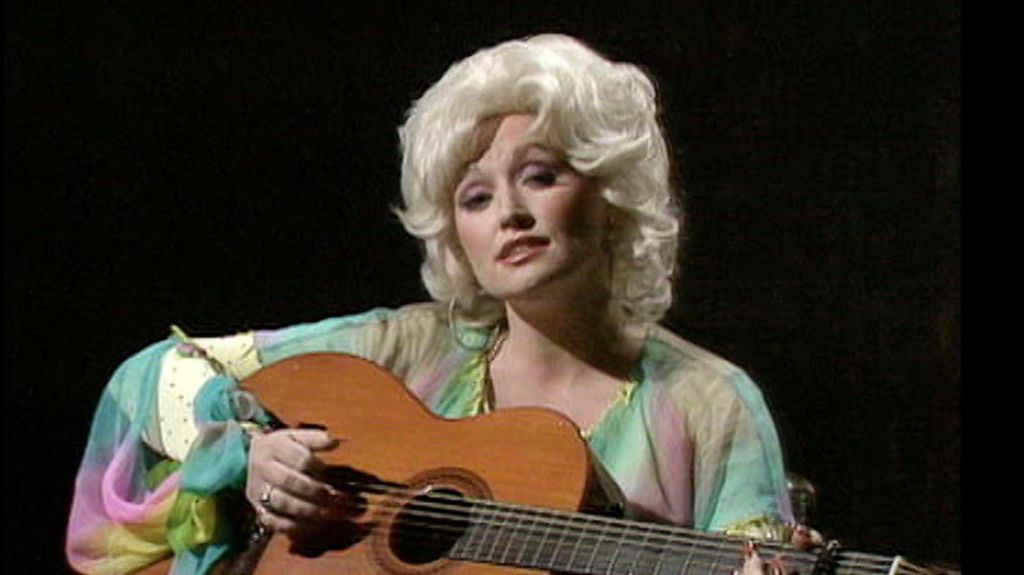
Legendary American country music icon Dolly Parton, whose decades-long career reshaped the genre and won the hearts of millions across the globe, has died at the age of 80. Born into a working-class family of 12 children in rural Tennessee, Parton rose to stardom in the late 1960s, crafting a signature sound that blended heartfelt country storytelling with accessible pop sensibilities. Her discography explored deeply personal themes from growing up in poverty to love, loss, female empowerment, and spiritual faith, cementing her status as not just a musician, but a cultural icon. To mark her passing, we look back on her extraordinary life and legacy through the lens of six of her most beloved and defining songs.
First among these is the 1971 autobiographical classic *Coat of Many Colors*, which Parton herself often named as her personal favorite. The gentle acoustic country-folk track pulls back the curtain on her impoverished childhood, framing her family’s lack of material wealth through the boundless love her mother gave her. Woven into the narrative are timeless lessons about bullying, acceptance, and the power of parental love, which Parton once described as a “little story” that covers “a world of things. The iconic lyrics, “Now I know we had no money, but I was rich as I could be / In my coat of many colors my momma made for me,” have resonated with generations of listeners. The track has been covered by stars ranging from Shania Twain to Eva Cassidy, and ranked second on Rolling Stone’s 2023 list of Parton’s 50 greatest songs. The outlet noted that even if Parton had never written another song, this track alone would have secured her an “indelible legacy” for its raw expression of both overwhelming pride and quiet anguish. Beyond the song, *Coat of Many Colors* became the title of Parton’s children’s book and a 2015 TV movie about her early life. The original hand-stitched coat’s legacy lives on at the Dollywood theme park museum in Tennessee, where her mother Avie Lee Parton later created a new patchwork coat for public display.
Next comes *Jolene*, one of Parton’s most iconic and enduring hits, inspired by her early marriage to Carl Dean, her husband of 60 years who passed away in 2025. Parton wrote the track after a young red-headed bank clerk openly flirted with Dean early in their marriage, turning a small, relatable moment of jealousy into one of country music’s most memorable stories. Instead of leaning into anger or vengeance, the song puts Parton’s vulnerability front and center, with its narrator begging the captivating Jolene not to take her man. It became Parton’s second number one on the Billboard Hot Country Singles chart in 1974, earned her a Grammy nomination, and marked her first entry into the all-genre Hot 100 chart. Parton later joked that the story was never a serious threat to her marriage, telling the BBC’s *The One Show* in 2023 that “there’s always a Jolene in somebody’s life,” and quipped that as an older woman, she would gladly joke that Jolene could have her sleeping husband. Today, *Jolene* remains Parton’s most streamed track, with more than 913 million plays on Spotify, and critics from *Rolling Stone* to *The Guardian* universally name it her best work. In 2024, Beyoncé reimagined the track for her *Cowboy Carter* album, revising the iconic opening plea to a firmer warning: “I’m warning you, don’t come for my man.”
Parton’s 1974 hit *I Will Always Love You* holds a unique place in music history, despite its romantic title, the track was never a romantic breakup ballad: it was a tender farewell to her mentor and musical collaborator Porter Wagoner, as she asked for his blessing to pursue a solo career. Parton joined Wagoner’s variety television show at 21, and the pair toured and recorded a string of popular duets that turned her into a rising star, but as her fame grew, their relationship grew complicated. Parton later recalled that Wagoner viewed her rising success as a threat to his own status, and she needed to make a clean break to grow as an artist. The track’s raw, bittersweet lyricism won immediate acclaim, with Rough Trade’s music blog describing it as “heartwarming in its sentiment, crushing in its delivery.” When Elvis Presley sought to cover the track in 1974, Parton made the difficult decision to walk away from the deal after Presley’s manager demanded half of the songwriting royalties, a choice she said left her heartbroken but certain she had made the right call. Parton re-recorded the track for her 1982 film debut in *The Best Little Whorehouse in Texas*, but the most famous version came from Whitney Houston, who recorded a powerhouse cover for the 1992 film *The Bodyguard*. Houston’s version remains the best-selling single by a female artist in US history, and Parton once recalled that she first heard the cover while driving, and had to pull over to avoid crashing her car, overwhelmed by how Houston turned her “little country song” into something far greater.
The freedom Parton gained after splitting from Wagoner inspired her 1977 track *Light of a Clear Blue Morning*, which she called her “song of deliverance.” Fresh from negotiating her exit, Parton drove home through a heavy rainstorm, and when the clouds parted to reveal bright sunlight, the idea for the hopeful, spiritual track came to her. Raised singing in church as a child, Parton wove themes of new beginnings and spiritual freedom into the track, which became a personal anthem for her next chapter as a solo star. The lyrics were later reworked for the soundtrack to her 1992 romantic comedy *Straight Talk*, and earlier in 2026, Parton released a new charity version of the track to benefit pediatric cancer research, featuring her goddaughter Miley Cyrus, Lainey Wilson, Queen Latifah, and Reba McEntire.
The 1980 anthem *9 to 5* marked a major turning point in Parton’s career, catapulting her from country star to mainstream global icon. Written as the theme song for the comedy film of the same name, the track saw Parton make her big-screen acting debut alongside Jane Fonda and Lily Tomlin, telling the story of three overworked office women pushing back against their rude, bigoted boss. The song’s iconic opening tapping beat is not a drum machine: it is the sound of Parton’s own acrylic nails, which she realized mimicked the click of typewriter keys as she wrote the lyrics on set. The defiant track about workplace female empowerment topped charts around the world, earned Parton two Grammys, an Oscar nomination, and later inspired a hit Broadway musical and a documentary.
The final of Parton’s six iconic tracks is her 1983 duet *Islands in the Stream* with legendary country star Kenny Rogers, written by the Gibb brothers of the Bee Gees as a Motown-inspired love song. The track became a massive cross-over hit, topping both the country and pop charts and selling millions of copies worldwide, and it remains one of the most popular karaoke and duet tracks of all time. Speaking to Smooth Radio in 2023, 40 years after the track’s release, Parton called her collaboration with Rogers “another thing I’m as proud of as anything I ever did in my musical career,” adding, “You want to do well and keeping up with the likes of Barry [Gibb] and Kenny [Rogers], but I just figure I’ll just always be me and do me and that seems to work.”
Beyond these six defining tracks, Parton’s discography holds countless other fan favorites, from the controversial 1970 story of grief *Down from Dover*, which Wagoner urged her not to release, to the lyrical meditation on love and loss *The Bargain Store* (1975), and her first major crossover pop hit *Here You Come Again* (1977), which proved her range far beyond traditional country. Across more than 50 years in the public eye, Dolly Parton’s legacy is defined not just by her chart-topping music, but by her ability to turn personal experience into universal stories that have resonated across generations and genres.