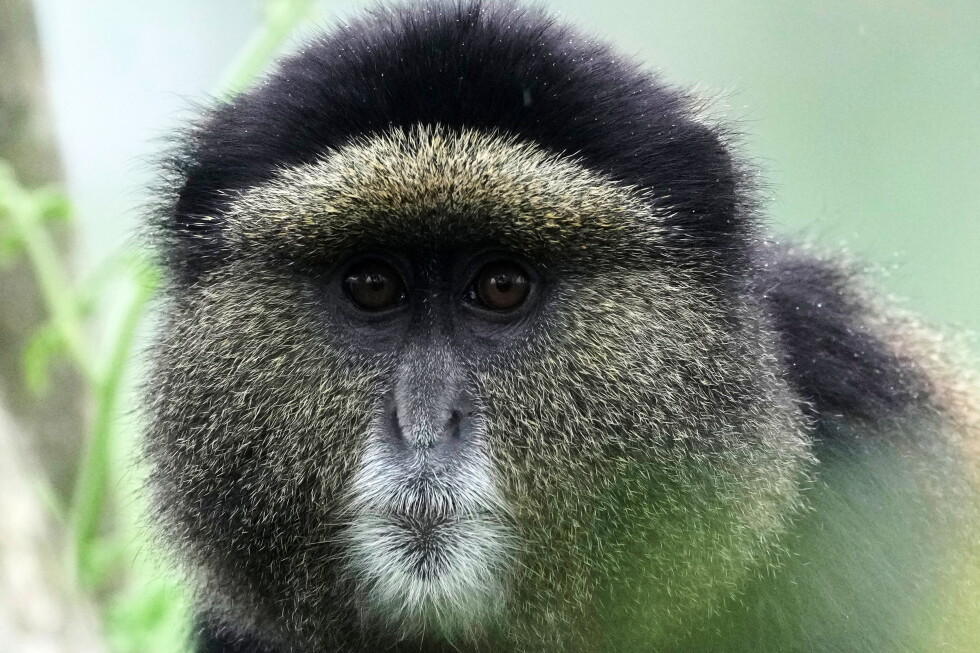
Nestled in the mist-shrouded slopes of Rwanda’s Volcanoes National Park, conservationists have long faced a daunting challenge: tracking and protecting endangered wildlife, from the iconic mountain gorilla to the vivid golden monkey, across rugged, vegetation-choked terrain that often hides even the largest animals from view. Now, a cutting-edge tool is transforming how experts safeguard biodiversity across the park, part of the transboundary Virunga Mountain range shared by Rwanda, Uganda and the Democratic Republic of Congo. The new approach, environmental DNA (eDNA) monitoring, is being rolled out by the African Wildlife Foundation in partnership with the Rwandan government, bringing a technique more commonly used in marine conservation to one of Africa’s most important terrestrial conservation sites.
eDNA works by collecting and analyzing tiny fragments of genetic material that animals leave behind in their environment—from shed fur and feces to skin cells left in soil or water. For decades, biodiversity monitoring in the region relied on two core approaches: camera traps, which activate when animals cross their sensor path, and direct observations by trained rangers. But both methods have critical limitations in the Virungas: steep ridges, dense fog and thick vegetation make on-the-ground surveys slow and dangerous, while periodic insecurity along the shared Congo-Uganda-Rwanda border restricts ranger access to remote areas. Camera traps also only capture species that pass directly in front of their lenses, leaving gaps in population data.
Conservation leaders say eDNA addresses many of these gaps, while acting as a complement—not a replacement—for traditional monitoring techniques. “We selected eDNA as a new technology to bring solutions and to complement existing methods used in ecological monitoring,” explained Patrick Nsabimana, country manager for the African Wildlife Foundation in Rwanda. Unlike traditional surveys that focus on a small number of target species, eDNA can identify dozens of species from a single soil or water sample, including mammals, birds, amphibians and reptiles. Samples can be collected easily from downstream ponds, which accumulate genetic material from animals ranging across higher slopes, cutting down on the need for researchers to trek into inaccessible, dangerous terrain. The method is also far more cost-effective for large, rugged ecosystems like the Virungas than sustained on-the-ground monitoring.
A core goal of the current eDNA project is to build a complete inventory of all species living in Rwanda’s protected areas, a critical foundation for protecting biodiversity that faces growing threats from climate change and rapid human population growth around park boundaries. This work comes at a key moment for Rwanda’s conservation sector, as the country expands its national park network by restoring previously cultivated agricultural land to wild habitat. With eDNA monitoring, conservationists can track how endangered and rare species are colonizing these newly restored areas over time, measuring the success of restoration efforts and spotting invasive species before they can spread. The technology also delivers a practical security benefit: by creating more accurate maps of where endangered species live, park managers can better target anti-poaching patrols to high-risk areas.
Despite its promise, the technology still faces notable challenges, particularly for conservation work in Africa. First, eDNA can confirm a species is present in an area, but it cannot reliably estimate the size of the local population. Genetic material can also linger in the environment for weeks or months after an animal has left the area, meaning positive detections do not always confirm a current population. More structural barriers also remain: early samples collected in the Volcanoes project had to be shipped all the way to Europe for processing, a time-consuming and costly step. Maintaining the cold storage required to preserve eDNA samples before testing is also a major challenge across many parts of the continent, and contamination of samples during collection can skew results.
The largest gap facing the project is the lack of region-specific genetic reference data. Most existing genetic libraries that researchers use to match eDNA samples to known species were built from specimens collected in Europe and North America, leaving critical gaps for African biodiversity. This makes it much harder to correctly identify less-studied local species from collected samples. To address this, researchers on the project are now working to build the first dedicated regional genetic reference library for the Virunga ecosystem.
An important part of the initiative is also building local capacity: the project team is currently training local community members and park rangers to collect eDNA samples, expanding monitoring capacity and creating opportunities for local stakeholders to participate in conservation. Combined with traditional monitoring methods, project leaders say eDNA will help fill long-standing gaps in species data, strengthening conservation efforts for the Virungas’ most iconic endangered wildlife for decades to come.
This reporting was supported by private foundation funding for AP’s climate and environmental coverage, with AP retaining full editorial control over all content.