Last week, international headlines focused on Israeli forces intercepting a sea-bound pro-Palestinian aid flotilla heading to Gaza. What gained less immediate attention, however, was a parallel disruption 2,000 kilometers to the west, where a land-based wing of the same Global Sumud solidarity movement saw its journey to the besieged enclave collapse into detention and chaos.
More than 200 activists with the Global Sumud Convoy pushed into the 5+5 security zone outside the Libyan city of Sirte, a buffer zone established under the country’s 2020 ceasefire agreement that has remained a contested flashpoint. The group’s goal was simple: negotiate safe passage through eastern Libya to Egypt’s Rafah crossing, the primary entry point for aid into blockaded Gaza.
After days of camping in the zone, armed forces arrived at the encampment and broke up the convoy. Most participants were forcibly escorted back to the capital Tripoli under armed guard, but 10 international activists from Spain, Poland, the United States, Argentina, Uruguay, Portugal, Tunisia and Italy were taken into custody and remain held by Libyan authorities.
Speaking to Middle East Eye from her home in Johannesburg, South Africa, activist Jessica Breakey, who returned after the dismantling, described the group’s reluctance to leave their detained comrades behind. “We just didn’t want to leave without them,” she said. “It was always like we were in this together, like this convoy was moving together – and I think the worst part about the camp being dismantled and us having to go back was that we were going back without them.”
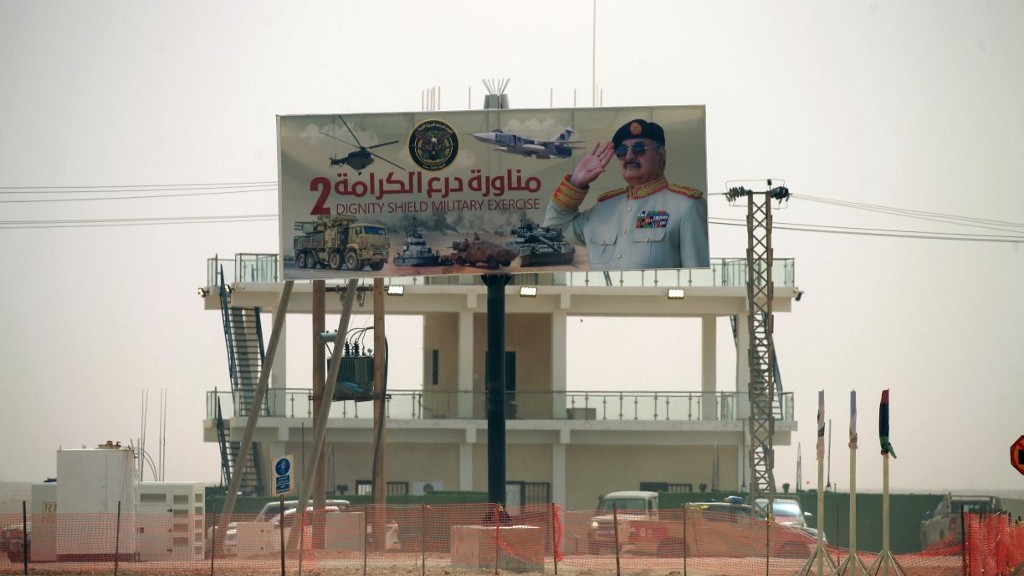
Libya has been fractured along political and geographic lines since the 2011 NATO-backed overthrow of former ruler Muammar Gaddafi. Eastern Libya is controlled by the Libyan Arab Armed Forces (LAAF) led by commander Khalifa Haftar, backed by Egypt and the United Arab Emirates, while a UN-supported unity government governs the western half of the country, including Tripoli.
The Global Sumud Convoy, launched by North African activists and later joined by hundreds of international participants, set out from Mauritania with a clear mission: deliver tangible, practical aid to Gaza that would go beyond the largely symbolic impact of previous sea-based flotillas. The convoy carried seven ambulances, 10 aid trucks, 20 mobile homes, and a team of medical professionals, engineers, educators and legal observers. Its progress across North Africa was largely uneventful until it reached the Sirte security zone.
Negotiations for onward passage hit a breaking point on Sunday, when the convoy’s negotiating team was arrested. The following day, security forces arrived at the camp, forced the remaining activists onto buses at gunpoint, and even fired tear gas into a nearby mosque where some activists had taken shelter. It remains unclear which authority the security forces were directly affiliated with.
Breakey noted that the treatment in Sirte stood in sharp contrast to the warm welcome and widespread public support the convoy received from Libyan civilians on its journey from Tripoli westward. She also criticized the Libyan Red Crescent, which had publicly expressed support for the convoy but failed to attend planned negotiations with Haftar’s representatives, effectively going “missing in action” as the crisis unfolded. “It’s crazy looking back at a time when we actually were very, very hopeful,” she added.
Shortly after the raid, the eastern Libyan government’s foreign ministry announced new restrictions barring non-Libyan and non-Egyptian travelers from moving onward to Egypt. The ministry defended its actions, saying it handled the situation “within the framework of legal and humanitarian responsibility,” and claimed all detainees “are receiving the necessary care and medical and humanitarian follow-up.” It also reaffirmed Libya’s formal support for the Palestinian cause, but stressed that “respect for national sovereignty and the legal regulations governing the movement of individuals across borders is non-negotiable.”
Human rights monitors have repeatedly documented widespread abuses in areas controlled by Haftar’s LAAF. Amnesty International reports that the LAAF and its affiliated armed groups severely restrict freedom of expression and association, targeting anyone perceived as a critic or opponent of Haftar. “Libyans, as well as refugees and migrants, detained by LAAF, which exercises government-like functions in areas under its control, risk torture and other ill-treatment, as well as prolonged detention amid flagrant due process violations,” explained Sara Hashash, Amnesty International’s deputy director for the Middle East and North Africa.
Despite repeated reassurances from eastern Libyan officials, friends and fellow activists have grown increasingly anxious about the conditions and extended detention of the 10 activists. The coinciding timing of Eid al-Adha has reportedly slowed diplomatic progress and limited contact with detainees.
On Thursday, Italy’s consul general in Benghazi confirmed he had visited the two Italian detainees held at a police barracks in eastern Libya. Following the visit, eastern Libyan authorities agreed to minor improvements to detention conditions, allowing access to showers, clean clothes and better accommodation, but have not released any information about possible deportation or release procedures.
Not all criticism of the incident has come from outside the convoy: some participating activists say the mission suffered from fatal planning flaws from its start. Felipe, a 29-year-old Chilean-Palestinian activist with experience on previous sea-based aid flotillas, argues the convoy’s leadership bore partial responsibility for the outcome.
During a two-week wait in Tripoli, Felipe said it became clear that organizers had made no contingency plans for detentions or a confrontation with the LAAF. “If we were not able to go through east Libya, we should not have kept pressuring them because we were going to shift the narrative from Israel to Libya,” he said. “We were waiting in the desert for nine days doing nothing.”
He added that leadership sidelined critical voices ahead of the push into the security zone. “The day before [the raid], when they decided to go to the [eastern Libyan] border, I was not invited to the meeting because I was being critical. Their plan was basically to have a permanent camp or to do a hunger strike on the border,” he explained. Felipe added that the group was camped at an abandoned, bullet-riddled gas station that was once used by the Islamic State group, and many participants did not grasp the severity of their location or the risks. After the arrests, he argued, the convoy should have retreated to the western city of Misrata, as it had no resources or leverage to secure the detainees’ release. The entire experience, he said, left him disillusioned with land-based aid efforts: “Our people risked their lives to end the siege on Gaza… we came here and we risked our lives for nothing.”
Analysts and rights advocates warn the incident could mark the end of any future land-based aid convoys attempting to cross Libya to reach Gaza. In recent years, Haftar has repeatedly signaled his interest in building diplomatic and economic ties with Israel, including through reported secret visits to meet Israeli officials, though it is unclear whether this influenced the LAAF’s handling of the convoy.
Estelle Allemann, a legal researcher at the Mena Rights Group, called the new restrictions imposed by eastern Libyan authorities “a deeply troubling attempt to weaponise border control against humanitarian solidarity with Palestinians.” She added, “Restricting the movement of aid convoy activists under the guise of travel policy raises serious concerns about the criminalisation of civilian support for Gaza, and would fit a broader regional pattern of suppressing pro-Palestinian activism.”
Middle East Eye attempted to contact the eastern Libyan foreign ministry for additional comment, but had not received a response by the time of publication. In a formal statement released Thursday, the Maghreb Sumud Organisation, one of the convoy’s lead organizers, issued a clarification of recent events. It confirmed that all non-detained participants have been instructed to return to their home countries, with only a small team of senior officials remaining in Libya to continue diplomatic and legal efforts to secure the release of the 10 detainees and coordinate the delivery of the planned aid. The group emphasized that the Global Sumud Convoy was never intended as an act of confrontation, but rather an independent, civilian humanitarian initiative to show moral solidarity with Gazans facing ongoing siege, widespread starvation, and total humanitarian collapse.