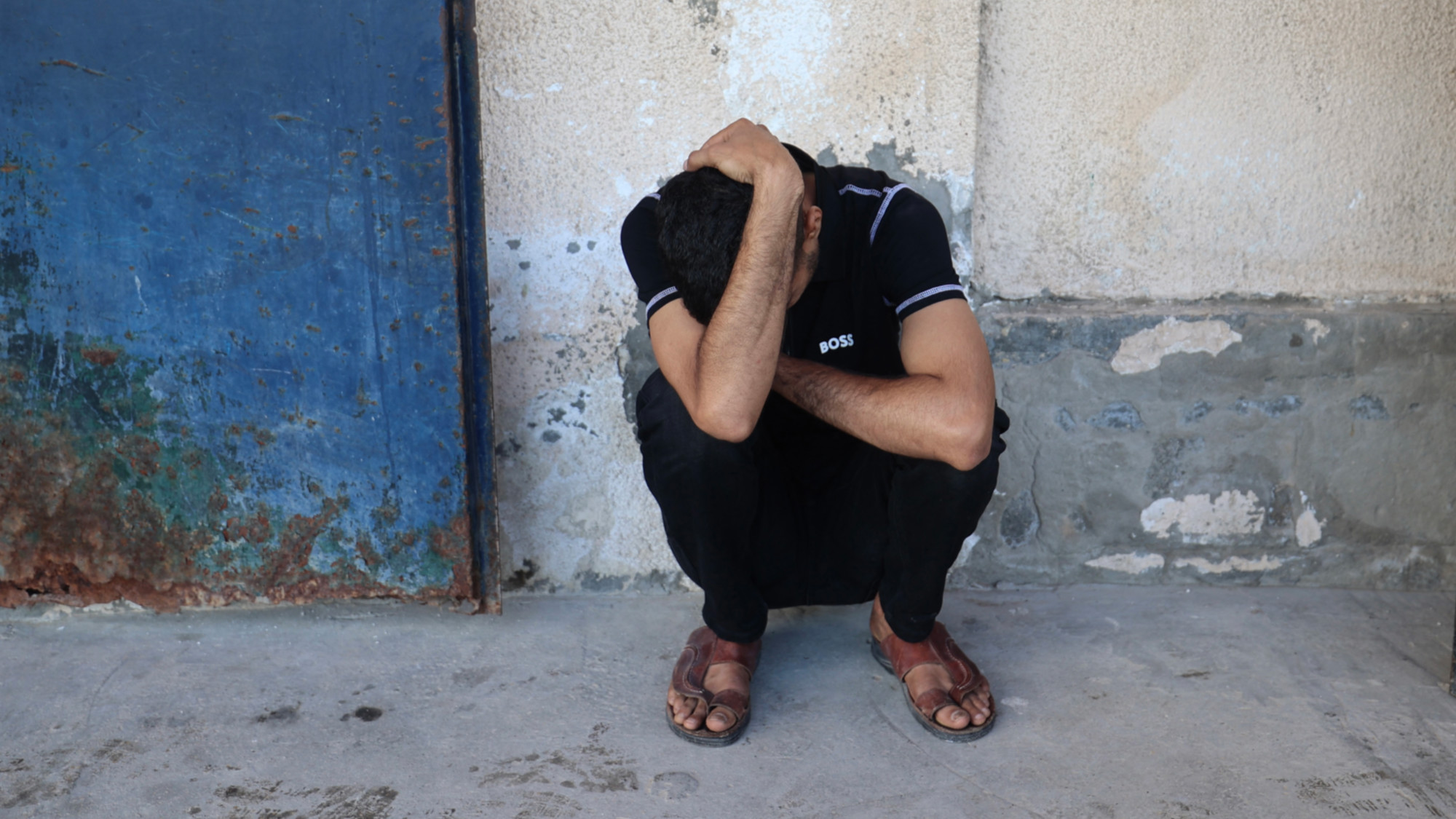
In the early light of each Gaza morning, 13-year-old Jana al-Motouq wakes to an empty space beside her. Where her mother once stirred to wake the family, fry flatbread for breakfast, and braid her hair before school, only silence remains. Today, al-Motouq cooks her own meal, folds her own clothes, and walks to school alone — a daily routine no child should ever have to learn. On November 17, 2023, an Israeli airstrike on the Jabalia residential neighborhood flattened her family’s home, killing every member of her immediate family: parents Ahmed and Heba, her twin sister Saja, 8-year-old brother Hossam, and 4-year-old brother Mohammed. Thirty-five more extended family members, including uncles and childhood cousins, also died in the attack. Al-Motouq lived only because a sudden illness the night before had led her to sleep across the street at her grandmother’s house.
When the pre-dawn blast rattled the neighborhood, she ran outside to find nothing but crumbled concrete and twisted metal where her home had stood. “I sat on the rubble calling for my mum and dad. Nobody answered,” she recalled. For days after, she returned to the ruins each morning, digging through debris until she found a bloodstained family blanket. She held it to her chest, kissing the fabric, before heartbroken relatives pulled her away from the unstable wreckage. “I wished I had been with them,” she told Middle East Eye. “I thought, if I had died with them, maybe I could rest.”
Al-Motouq is far from alone. More than two years of sustained Israeli bombardment across the Gaza Strip has killed more than 73,000 people, displacing most of the territory’s 2.2 million residents and destroying the homes, schools, and daily routines that once anchored community life. Official data from the Palestinian Ministry of Social Development confirms the staggering human cost: more than 68,000 children and adults are now the only surviving members of their once-large families, and over 75,000 children have lost one or both parents. Local medical workers have even created a new clinical acronym, WCNSF — “Wounded Child, No Surviving Family” — to categorize the dozens of injured, alone children who arrive at overcrowded hospitals each week. The result is a generation of young Palestinians growing up not just amid violence and displacement, but crippling grief, unresolved trauma, and a constant uncertainty about what tomorrow will bring.
Survivor guilt is a near-universal experience for these children, explains Sereen al-Absi, a Gaza-based psychologist who has worked with dozens of sole survivors like al-Motouq. “They always ask themselves: Why did I survive when they didn’t? Why couldn’t I protect them?” the 29-year-old therapist explained. “Even when they logically understand they had no control over what happened, their pain doesn’t follow logic.” Today, al-Motouq lives in a displacement tent with her maternal grandparents, the life she knew reduced to scattered memories. Before the war, she and her twin Saja were inseparable: they wore matching clothes, shared homework, and dreamed of memorizing the Holy Quran together. Al-Motouq still smiles faintly when she remembers: “If one of us wore something different, we’d both get upset. She wasn’t just my twin — she was my life partner.” Now, she often accidentally calls classmates by Saja’s name, and reaches for a pencil out of habit, expecting her sister’s hand to meet hers.
Eighteen-year-old Dima Junina, a Gaza City resident, carries a similar loss. On October 30, 2023, an Israeli bombing campaign collapsed a neighboring building onto her family home, killing her father Ahmed, mother Noor, and three younger brothers Anas, Baraa, and six-year-old Mufeed. Trapped beneath rubble, a fallen door shielded Junina from death, and for hours she clung to the hope that her family was still alive, begging rescue workers to pull them out. It was only at dawn that relatives told her the truth: everyone she loved was gone. “I wasn’t even able to cry,” she said. “It still feels like they’re going to walk through the door any minute.”
Unlike many who label her an orphan or a sole survivor, Junina rejects being defined by her loss. “I don’t want people treating me differently because I’m an orphan,” she said. Unthinking reminders of her grief are everywhere: classmates offhandedly mention their mothers, school activities require parent signatures, and even one teacher, mid-sentence, forgot her loss and ordered her to bring her mother to school after an illness-related absence. She never went back to that class, but found other educators who allowed her to grieve without turning her pain into a public spectacle.
Today, both teenagers carry the weight of adult responsibilities their parents once bore. Al-Motouq makes tea for her grandparents before school, studies by the dim light of a camp generator, and pushes forward with her education because that is what her parents always wanted. She has now memorized nine of the Quran’s 30 parts, holding fast to the dream she once shared with her twin. Junina, who recently graduated high school, says she has become “five people in one” — handling all the work her father once managed and all the care her mother provided. “The war made my personality stronger,” she said. “It had to.”
But strength does not erase trauma, al-Absi emphasizes. For many sole survivors, grief manifests in two extremes: either intense attachment to people who remind them of the family they lost, or deep social withdrawal. The trauma is also far more complex than typical grief, she explains: these children carry the grief of multiple loved ones, all lost in a single, violent moment. “It’s caused by losing one, two, three or more people, and it can create a complex form of trauma that is hard to treat even in stable conditions, let alone when you’re living in a camp with no access to consistent care,” she said.
Against all this pain and loss, both girls refuse to give up on their futures. Junina is considering studying psychology at university, and plans to build a water well in Gaza as a lasting charity in her family’s name. When asked what she wants more than anything, al-Motouq did not ask for an end to war, though that is the foundation of every wish she has. Instead, she asked for the simple things children in other parts of the world take for granted. “A home, a school, a place where we can live without fear,” she said. “We have the right to learn. We have the right to play. We have the right to have dreams.” For Junina, the request is even simpler: “Treat me like a person,” she said. “Not just as the girl whose family was killed.”