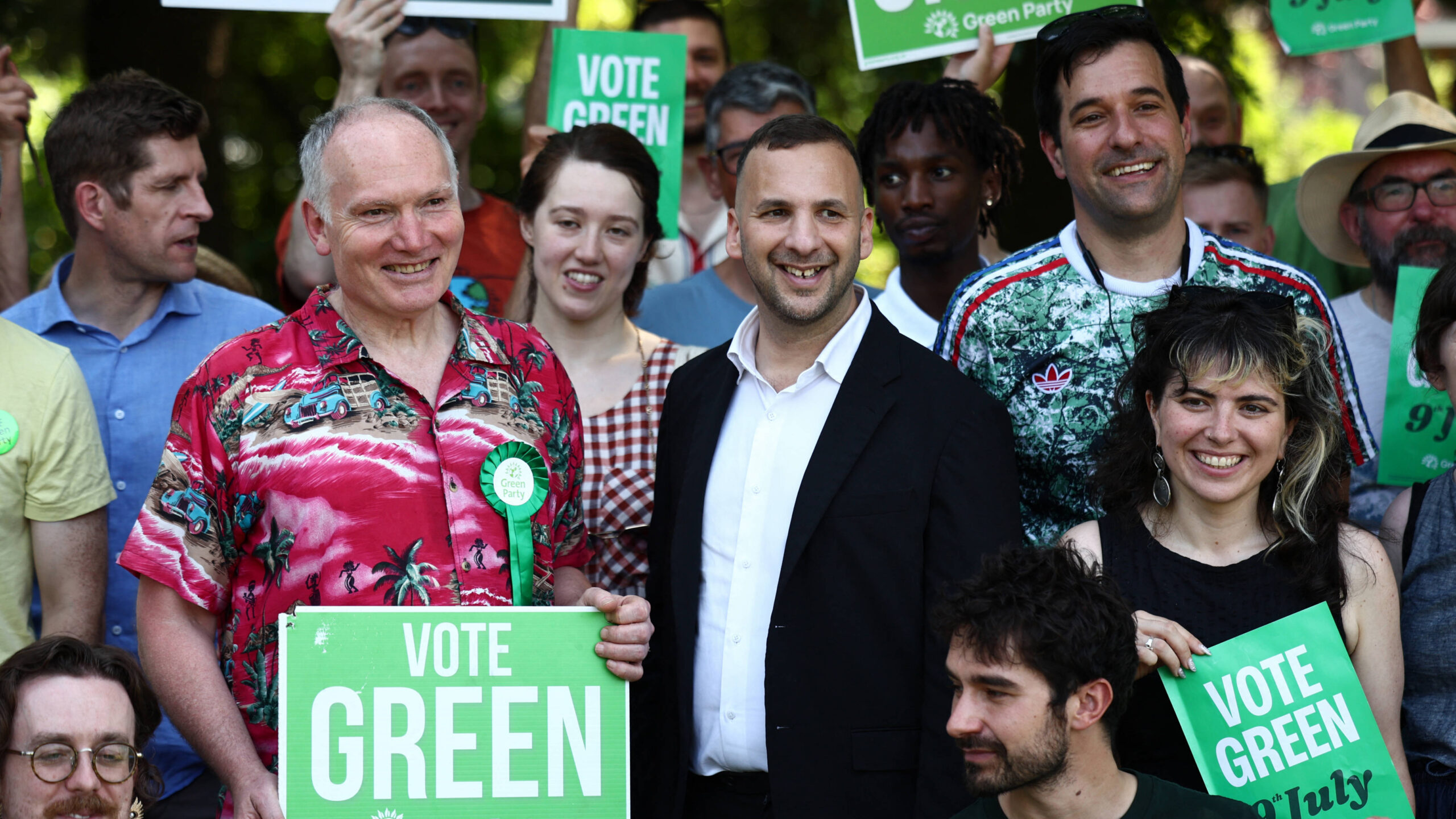
In a groundbreaking and divisive decision that has sent ripples through British political discourse, the Green Party of England and Wales has become the first major UK political party to formally approve a motion classifying Zionism as a form of racism, while also abandoning longstanding support for a two-state solution to the Israeli-Palestinian conflict in favor of a single democratic Palestinian state guaranteeing equal rights for all ethnic and religious groups.
The vote, held Sunday during the party’s annual conference in Brighton, saw 1,022 party members back the controversial motion, with 813 members voting to reject it, according to information obtained by Middle East Eye. The outcome has exposed deep internal rifts within the party, with top figures splitting sharply over the historic declaration.
Co-Deputy Leader Mothin Ali, who has repeatedly voiced public support for the motion, framed Zionism as an ethno-nationalist ideology that has led to ethnic cleansing and is rooted in the belief of inherent superiority of one group over another. A self-identified committed anti-racist who entered politics through anti-racism and anti-war organizing, Ali argued that the core tenets of the motion align with fundamental anti-discrimination principles. “The belief that one group of people is superior to another, I just can’t accept that,” he told Middle East Eye in a post-vote interview.
In contrast, sitting Green MPs Carla Denyer and Adrian Ramsay have publicly criticized the motion, joining party leader Zack Polanski — who is Jewish — in calling for targeted safeguards to protect Jewish members from internal disciplinary action over their ties to Zionist-affiliated community organizations. Before the vote, Polanski insisted the motion needed explicit amendments to confirm that members who oppose Israeli occupation, apartheid and military action in Gaza but maintain affiliation with Zionist-identified institutions would not face unequal treatment within the party.
Members ultimately rejected a proposed amendment that would have barred the party from using the motion to pressure, discipline or sanction members based on their affiliation with Jewish community institutions that identify as Zionist, or for holding pro-two-state or pro-binational state views that would not result in discipline if expressed by non-Jewish members. However, delegates did approve a separate amendment affirming Palestinians’ “inalienable right to self-determination”, according to party insiders.
Ali noted he did not oppose the rejected safeguard amendment, adding that he supports extra reassurance for any Jewish members who feel uncertain about the motion’s implications. “If Jewish members feel like they need an additional level of reassurance, then I think they’re right to ask for that,” he said. “All members should feel safe in this party. Not that the motion should make them feel unsafe, but if they want an additional level of reassurance, I welcome that.”
In the lead-up to the conference, widespread speculation emerged that Jewish members affiliated with Zionist-identified synagogues could face internal party disciplinary action following the vote. But Lubna Speitan, a British Palestinian and the lead author of the motion, pushed back against those claims, clarifying that the declaration is an external policy motion that does not alter the party’s internal disciplinary processes. Speitan also emphasized that the motion explicitly clarifies “not all Jews are Zionist and not all Zionists are Jewish”, dispelling claims that the declaration targets Jewish people as a group.
The motion earned public backing from prominent Holocaust survivor and activist Stephen Kapos, who stated that “Zionism both as an ideology and practice is harmful and has no legitimacy and must be rejected.” The Jewish Greens, the party’s official Jewish member group, opted not to take a formal organizational position on the motion, acknowledging that its own membership is deeply divided on the issue.
Ali argued that the motion will reshape long-stagnant national conversations about the Israeli-Palestinian conflict in the UK, pointing to the party’s earlier lead among major UK parties in formally recognizing allegations of genocide in Gaza in 2024. “So we’ve always led on this subject, we’ve led on the subject of human rights, regardless of where it is. We’re bringing other political parties with us. We’re encouraging the debate to happen in society,” he said.