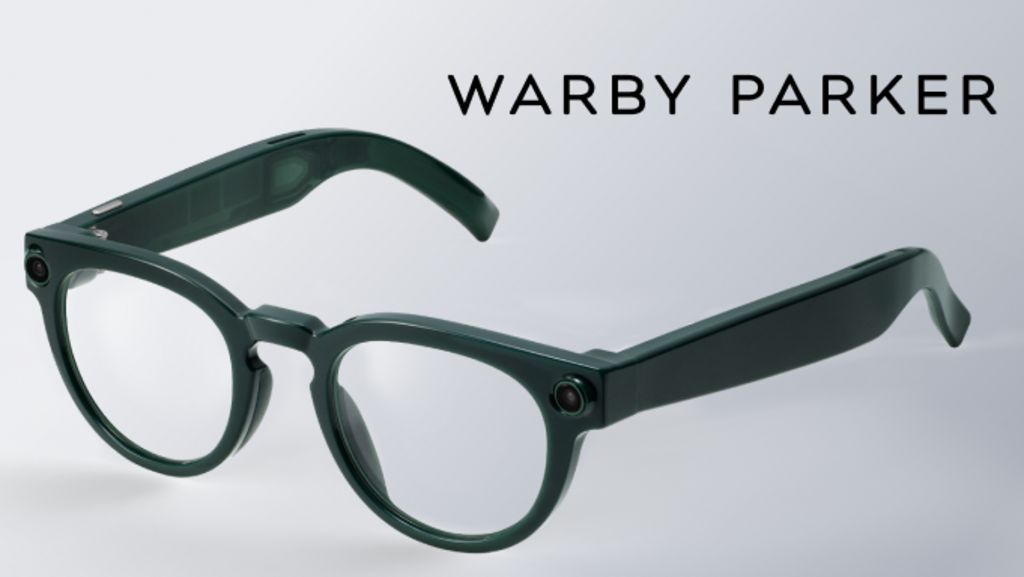
More than ten years after its high-profile first attempt at wearable smart eyewear ended in public backlash and commercial failure, Google is making a second push into the emerging smart glasses space, with a new AI-integrated model slated to hit the market in autumn this year.
The tech giant first unveiled the new device during its annual I/O developer conference held on Tuesday in Mountain View, California. The upcoming launch will feature two distinct style variants, one co-designed by popular direct-to-consumer eyewear brand Warby Parker and the other by Seoul-based fashion eyewear label Gentle Monster.
Google’s original 2013 Google Glass product was pulled from the market in 2015, just seven months after its UK rollout, crippled by widespread criticism over its steep price point and sweeping privacy risks. For its second iteration, Google is leaning heavily on integration with its flagship large language model, Gemini, to deliver a hands-free, heads-up user experience. The new glasses come equipped with a compact camera built into the front frame and small speakers embedded in the arms, and are compatible with both Android and Apple iOS operating systems.
Unlike the original Google Glass, which included a head-mounted micro-display, the initial launch version will operate exclusively via private audio, delivering Gemini-powered responses directly to the wearer’s ear rather than displaying visual information on a screen. “They are designed to give you all-day help with Gemini that’s spoken into your ear privately rather than shown on a display,” explained Shahram Izadi, a senior Google executive who presented the device at the conference. Izadi confirmed that Google is already developing a follow-up version with an in-lens display capable of showing text and other visual data, but that model is not yet scheduled for public release, with additional details expected to be shared by the end of 2025. Developers are already at work building custom applications for the display-enabled variant, the company added.
Google’s new entry mirrors the product architecture of rival Meta’s existing AI smart glasses line, which also pairs a small camera and speakers to enable voice interaction with Meta’s in-house AI assistant. Meta’s Ray-Ban co-branded smart glasses have already hit a major sales milestone of seven million units sold, according to company data, but the product has reignited the same privacy concerns that doomed Google’s first attempt: multiple reports have emerged of unknowing members of the public being recorded in public and private spaces by glasses wearers, with footage later uploaded to public online platforms without consent.
Google is far from the only major tech player racing to capture a share of the growing smart eyewear market. Snap, the parent company of Snapchat, is preparing to launch an updated version of its own smart glasses line this year, and Apple is widely reported to be developing its mixed-reality glasses product as the next major expansion of its wearable device ecosystem.
Industry observers have largely framed Google’s return to the space as a positive step for the emerging category. Christine Tsai, an investor at early-stage venture capital firm 500 Global, who attended this week’s developer conference, noted that mainstream adoption of smart glasses is widely seen as the next major computing shift following the rise of the smartphone. “It’s good for consumers. And it’s good for early stage start ups, where we tend to invest, because they’re a platform where people can build more capabilities,” Tsai said.
Independent developers also see clear opportunities to leverage Google’s existing ecosystem of services. Anil Shah, founder of startup tixfix.ai which builds event management tools, says the form factor holds huge promise for integrating existing Google tools from Maps to Voice into a seamless, hands-free experience. For his own business, Shah is already considering building a dedicated integration that would let users find nearby events directly via voice commands to the glasses, without needing to open a smartphone app. “I think being able to just talk with the smart glasses without opening the app would be a very nice integration,” he said.