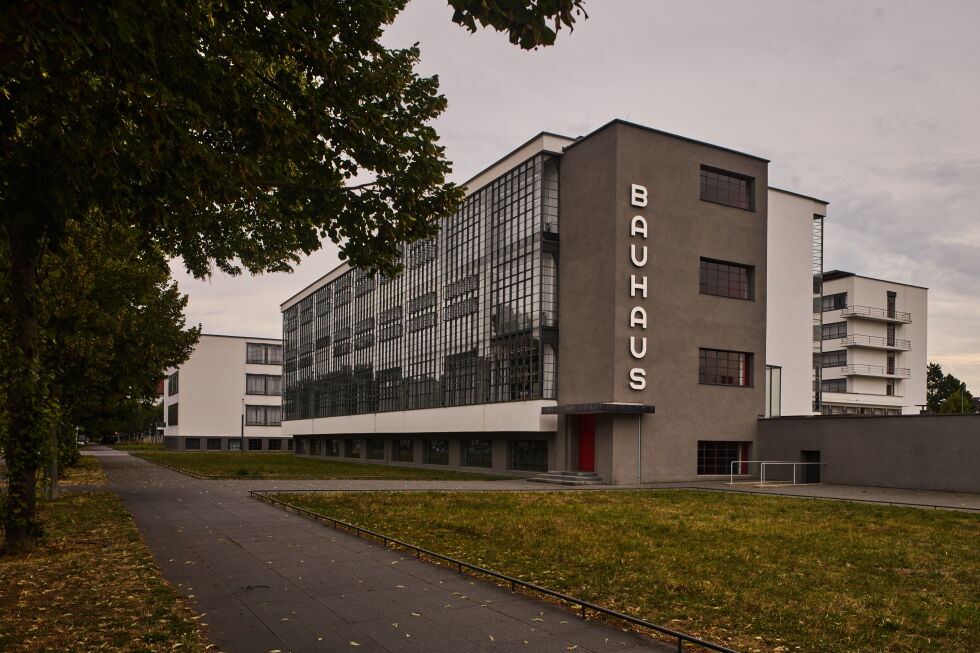
Nearly 100 years after the Nazi regime forced one of the 20th century’s most influential art and design movements to close, Germany’s iconic Bauhaus school has re-emerged as a flashpoint in a bitter cultural conflict between the country’s centrist political establishment and the far-right Alternative for Germany (AfD) party.
Founded by architect Walter Gropius in Weimar, Germany, in 1919 before relocating to its iconic Dessau campus, Bauhaus revolutionized global creative practice by erasing traditional boundaries between fine art and industrial manufacturing. Its radical interdisciplinary approach laid the groundwork for modern mass-produced design and contemporary architecture, and its aesthetic legacy shapes creative fields around the world to this day. When the Nazis rose to power in 1933, they labeled the movement degenerate art and forced the school to shut down, driving most of its faculty and students into exile. Bauhaus practitioners spread the movement’s philosophy across the globe, from Chicago’s modernist skyline to Tel Aviv’s White City, cementing its status as one of Germany’s most important cultural contributions to the world. Today, the original Dessau campus and accompanying museum draw 150,000 international visitors annually, remaining a top cultural attraction and a symbol of Germany’s progressive creative identity.
Now, as the eastern German state of Saxony-Anhalt prepares for a pivotal state election this Sunday, the far-right AfD has once again targeted Bauhaus as part of its nationalist campaign. The party is projected to win an absolute majority in the state legislature — a historic shift that would mark the first time a far-right party has controlled a German state government since the end of World War II. If successful, the outcome would send shockwaves through German national politics and raise urgent questions about the future of cultural freedom in the region.
In AfD’s state-level election platform, the party has condemned Bauhaus for intentionally rejecting what it calls “national rootedness,” and labeled the movement an “aberration of modernism.” During a 2024 debate in Saxony-Anhalt’s state parliament, AfD cultural policy spokesperson Hans-Thomas Tillschneider went further, claiming that Bauhaus “violated the human need for security and comfort in every conceivable way.” The party has also pledged to replace the state’s current marketing slogan “Think Modern” with the nationalist catchphrase “Think German,” arguing that the existing tagline represents a “policy of a lack of identity.”
While lead AfD candidate Ulrich Siegmund has attempted to soften the party’s stance in recent campaign appearances, telling the Associated Press that “Bauhaus itself wasn’t a problem” and that the party merely objected to centering Bauhaus as the sole representation of German culture, political analysts warn that an AfD majority would give the party the power to slash state funding for the Bauhaus Dessau Foundation.
The AfD’s attacks have sparked fierce pushback from Germany’s national cultural leadership and mainstream cultural institutions. German Culture Minister Wolfram Weimer, who is leading the defense of Bauhaus, drew a direct parallel between the AfD’s rhetoric and the Nazi persecution of the movement a century ago. “The AfD is attacking the Bauhaus, using the very same words the Nazis used 100 years ago,” Weimer told the AP. “And that is why democrats, whether they lean conservative or left, are fighting back against it.” Weimer emphasized that Bauhaus has grown into a global brand synonymous with innovative design, progressive architecture, and cross-disciplinary creative practice, adding that the movement’s open, collaborative ethos has long been a target of authoritarian far-right ideology. “This idea, which is very modern, of bringing together elements from different disciplines has always been hated by the far right. The Nazis banned and persecuted it. And today we have new Nazis … growing stronger, and attacking the Bauhaus all over again.” To protect the institution, Weimer vowed that Germany’s federal government will continue to fund the Bauhaus Dessau Foundation independently, guaranteeing its survival and autonomy even if the AfD wins the state election.
In August, Weimer spearheaded a pro-Bauhaus manifesto pushing back against the AfD’s attacks, which has now been signed by more than 2,500 cultural institutions, individual creators, faith groups, and civic organizations. The manifesto commits the broad coalition to defending Bauhaus from anti-democratic aggression, and rejects cultural nationalism that runs counter to the movement’s values. “The Bauhaus stands for intellectual, social, and aesthetic openness and continuous renewal. It stands for exchange, transnational networking, and mutual inspiration. This openness is a great strength of German culture and enriches Germany,” the document reads.
Barbara Steiner, director and CEO of the Bauhaus Dessau Foundation, welcomed the widespread show of support, and dismissed the AfD’s criticisms as based on a false, stereotyped version of the movement that never existed in history, nor exists today. “They have in mind a version of the Bauhaus that never existed historically and, of course, doesn’t exist today either,” Steiner said.