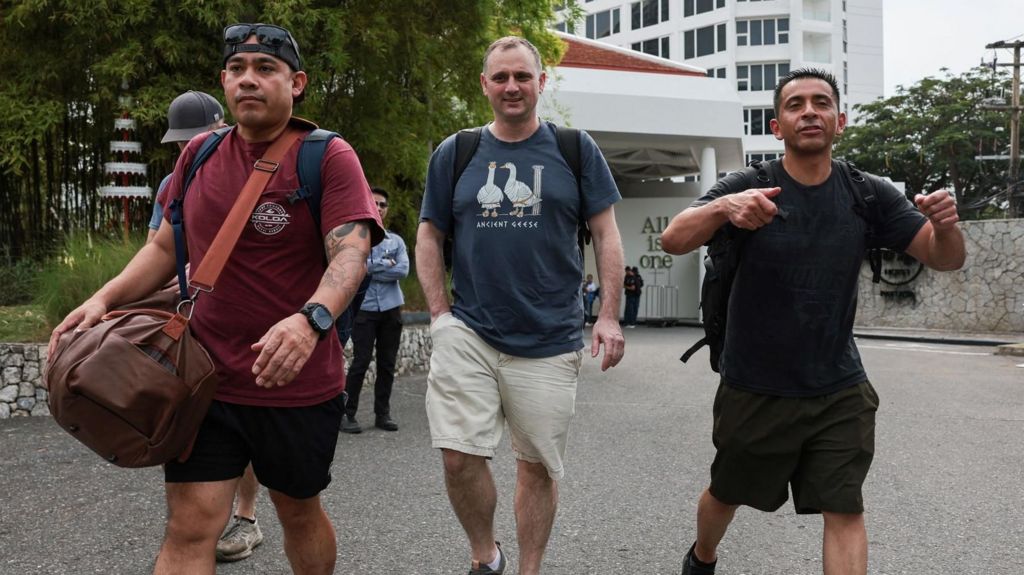
After 250 consecutive days at sea on combat operations in the Middle East, nearly 5,000 sailors from the U.S. Navy’s nuclear-powered aircraft carrier USS Abraham Lincoln finally stepped onto Thai soil in the coastal resort city of Pattaya this Wednesday, wrapping up one of the longest carrier deployments in recent U.S. military history.
Far from the raucous reputation that defines much of Pattaya’s popular culture, most sailors filled their first hours on land with an activity many had craved for months: casual shopping. Clustered in the lobby of the beachfront Hard Rock Hotel, one of two designated accommodations for off-ship crew, sailors chatted and showed off their newly purchased goods, a quiet contrast to the neon-lit nightlife the city is famous for. For men and women who spent nine months confined to the steel hull of a warship, sharing tight quarters with thousands of other service members, even a routine trip to a local shopping mall felt like a much-needed respite from deployment life. With their sharp military haircuts and branded navy t-shirts, the crew stood out easily against the city’s usual crowd of vacationers in flip-flops and casual beachwear.
As night fell, Pattaya shifted into its well-known energetic rhythm, with neon signs lighting up the coastline and the famous Walking Street promenade buzzing with activity. The city’s iconic entrance even erected a large, glowing welcome sign for the USS Abraham Lincoln’s crew, opening the entire strip to visiting sailors. Still, official Navy rules placed the small cluster of venues that make up Pattaya’s sex industry strictly off-limits – a disappointing turn for the workers who line Soi 6, who had been anticipating a major economic boost from the crew’s nine months of unspent deployment salaries.
Pattaya’s local tourism sector has already felt significant strain from ongoing Middle East tensions, which have kept the international tourists the city relies on away from its shores. That makes the Navy port call an especially welcome influx of visitors for local businesses, even with restricted access to certain parts of the city. By midnight, dozens of younger sailors were already leaning on one another after a night of relaxed drinking, while others wandered tentatively into the city’s iconic red-lit go-go bars, drawn to the entertainment on offer.
For most crew members, the break could not come soon enough. Amid the thumping bass of Walking Street’s bars, one veteran crew member shared what nine months at sea had felt like: “The news says we’ve been at sea for nine months. To be honest I’ve lost track of time. It got boring. It’s never big enough on board. It’s big but it still feels like a boat, especially when you’re sharing it with thousands of people.” When asked how long until he returned home to California, he answered simply: “Too long.”
Families back in the U.S. have also waited anxiously through the extended deployment. Shakeira Fairfax, mother of 25-year-old crew member Jada Fairfax, told Reuters that morale among the crew had dipped multiple times through the deployment, especially after the outbreak of new hostilities in the Middle East. “It was an uncertain and scary time,” she said. “I just can’t wait to see her smile. I can’t wait to hear ‘mum’, I know that’s the first thing she’s gonna say.”
The crew has remained strictly prohibited from speaking publicly about the carrier’s operations during its combat mission against Iran, a deployment that has drawn significant political and public criticism back in the United States. Most sailors declined to comment on operational details, and many referred all media questions to the Navy’s official media teams. Patrolling throughout Pattaya during the port call are members of the Shore Liaison Group, identifiable by their SLG-branded t-shirts. Their core mission is to uphold Navy discipline, look after younger, inexperienced crew members new to foreign port calls, and coordinate with local Thai law enforcement and government authorities throughout the visit.
U.S. Naval Attaché Kristopher Robinson declined to answer specific questions from the BBC about restricted activities during the crew’s time in Pattaya, noting only that “we’re trying to give the sailors as much opportunity for rest as they can.” He added that all U.S. personnel would “conduct themselves in accordance with U.S. law, U.S. naval regulations, and the laws of Thailand.”
The choice to schedule a port call in Pattaya follows long-standing protocol for the U.S. Navy, which has a decades-long history of ship visits to Thailand – a close U.S. treaty ally in Southeast Asia. The resort city also falls naturally along the carrier’s route from the Persian Gulf back to its home port in California, creating a convenient stop for the crew to decompress after a grueling extended deployment. If the break achieves its goal, much of the frustration that built up over the unexpected long mission will fade before the crew ever returns to U.S. soil.