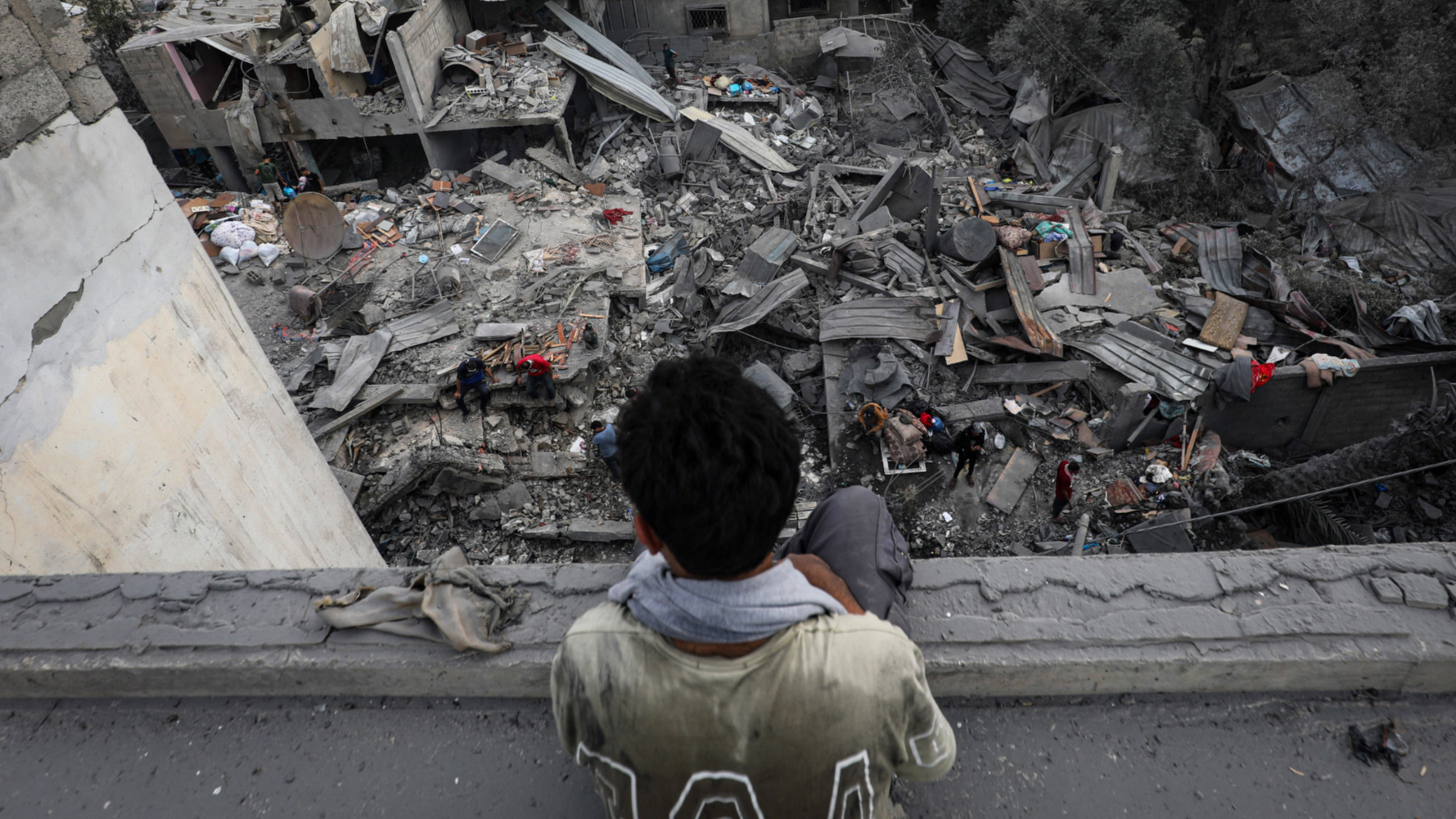
For 60-year-old Palestinian Suhaila al-Mabhouh, two years of relentless bombardment and forced displacement amid Israel’s military campaign in Gaza left one all-consuming desire: to return to the family home she had been forced to flee in northern Gaza. When her daughter, based in Italy, arranged an evacuation offer for al-Mabhouh to resettle in Europe, she turned it down immediately, her longing to reclaim her old life outweighing any promise of safety abroad.
When a nominal ceasefire took effect on 10 October 2025, al-Mabhouh and her 62-year-old husband Sami wasted no time rushing back to their property in Jabalia refugee camp. With quiet determination, she began patching together the severely damaged structure, clinging to the fragile hope that she could piece her life back together after two years of upheaval.
That hope was cut short almost as quickly as it emerged. Israel’s tight siege on the enclave remained in place, and daily bombardment of Gaza continued even as the ceasefire was formally observed. Within eight months of the couple’s return, al-Mabhouh began feeling unwell. A diagnosis of cancer followed, and she died before she could access life-saving care—blocked from treatment inside Gaza by a crippled health system, and barred from leaving for care abroad by Israeli movement restrictions.
Al-Mabhouh is far from alone. She is one of thousands of Palestinians continuing to die from entirely preventable causes as Israel’s ongoing military campaign and blockade strip Gaza’s population of the basic resources needed to survive. Now, nearly a year into the formal ceasefire, conditions for Gazan civilians remain just as deadly as they were during the height of active bombardment, with critical aid, building materials, medical supplies and other essential goods still largely barred from entering the enclave.
“About four months after we returned to our home, her health began to deteriorate rapidly, and we had no idea what was wrong with her,” Sami al-Mabhouh told Middle East Eye in an interview. The couple shuttled between overcrowded, under-resourced hospitals across Gaza City, but facilities overwhelmed by years of damage and shortages could not run the diagnostic tests al-Mabhouh needed. They eventually made the arduous journey to Deir al-Balah in central Gaza, hoping a private hospital could offer the care they needed.
“The journey was extremely difficult, and transportation was so scarce that by the time we arrived, we were exhausted and unable to go straight to the hospital,” Sami recalled. The pair spent the night at a relative’s home in Bureij refugee camp before they could seek care the next day. “After a lengthy series of examinations, which cost us a great deal of money just to obtain a diagnosis, doctors told us she had liver cancer. By then, her health had deteriorated so severely that she could no longer sit up or walk.”
Within two weeks, al-Mabhouh received a medical referral for treatment abroad, the formal approval needed to request exit from Gaza. But she joined a backlog of more than 20,000 other patients with referrals, all waiting for Israeli authorities to grant permission to leave. None of Gaza’s 36 hospitals operate at full capacity today, with only around 20 able to offer partial services, leaving tens of thousands of patients cut off from urgent diagnostics and care.
Under the terms of the 2025 ceasefire agreement, Israeli authorities were required to allow medical supplies, pharmaceuticals and construction materials to repair war-damaged hospitals into Gaza. But the deal has delivered almost no tangible improvement to the enclave’s devastated health sector. Data from Physicians for Human Rights Israel shows that between October 2025 and July 2026, the total number of intensive care unit beds in Gaza increased by just one, rising from 103 to 104. Availability of dialysis units actually worsened over the same period, falling from 17 percent capacity to 12 percent.
“As we waited for her turn to travel, we contacted doctors in Italy and Egypt and shared her medical records with them. They told us her cancer was treatable but not in Gaza,” Sami said. “We waited for three months. She didn’t survive long enough to receive treatment. The disease progressed, and on 18 June, she died.” His verdict is blunt: “She survived the bombing, but not the blockade.”
Al-Mabhouh is one of at least 1,570 patients who have died in Gaza while waiting for medical evacuation between October 2023 and July 2026. That figure includes 505 cancer patients and 264 children, with daily evacuation rates remaining a tiny fraction of pre-war levels. Between the October 2025 ceasefire and mid-September 2026, roughly 3,423 patients were evacuated abroad for treatment, an average of just 10 people per day. Before October 2023, between 50 and 100 patients were evacuated daily, per Physicians for Human Rights Israel.
Preventable deaths from untreated illness are just one layer of the ongoing crisis facing Gaza’s population. For those who survive bombardment and illness, the search for safe shelter carries its own deadly risks. Israeli military operations have damaged or destroyed 92 percent of all homes across Gaza, leaving most of the territory’s 2.2 million residents confined to flimsy makeshift tents or severely damaged, structurally unsound buildings. Exposed to extreme weather and constant collapse risk, these shelters offer little protection from harm.
Last winter, when temperatures dropped sharply across the enclave, at least eight children—most of them infants living in makeshift tents—died from hypothermia. With another winter approaching, Gaza families are trapped in an impossible choice: face freezing temperatures in tents that provide almost no insulation, or risk being crushed under the rubble of a damaged residential building.
“I sleep every day doubting that I would wake up alive the next day. I expect the building to collapse on us every single day,” said Muhammed Abujarad, a 44-year-old resident of a heavily damaged building in Tal al-Hawa, a neighbourhood in southwestern Gaza City. “I am not imagining something that would not happen. It happened several times, and I know people who died after their home collapsed on their heads last month.”
Abujarad was referencing a September 2026 building collapse that killed 21 displaced Palestinians sheltering in the structure, 12 of them children, and injured 14 more. The building had been damaged in a previous Israeli strike, and collapsed shortly before dawn on 21 September. Since October 2023, 61 Palestinians have been killed in similar building collapses across Gaza.
“We know it’s lethal to stay here, but there are no alternatives. We lost our home in northern Gaza and lost another home belonging to our relatives in Gaza City. We have no other choices left,” Abujarad said. “We cannot return to live in tents. We lived through our most hellish days in tents during the war. Now, as long as we have a ceiling above our heads, it’s better than dying of heat or cold in tents that don’t protect us from anything.”
Data from the UN Satellite Centre (Unosat) shows that by August 2026, the total number of destroyed structures in Gaza had increased by 9 percent compared to when the ceasefire was declared in October 2025. Despite the ceasefire agreement, Israel continues to block the entry of tents, prefabricated mobile homes and heavy construction equipment into Gaza, leaving residents without adequate shelter and leaving damaged, dangerous buildings standing without any way to repair or demolish them.
These restrictions have also blocked repairs to Gaza’s crippled water and wastewater infrastructure, 90 percent of which has been damaged or destroyed during the conflict. With critical utility systems in ruins, Palestinians face growing rates of contaminated water exposure and entirely preventable waterborne diseases.
“When you are living in a damaged home with no walls or a tent in the middle of mud and wastewater, how would you protect your children?” Abujarad said. “Wherever we go to flee death, we find another. There is no refuge from death.”