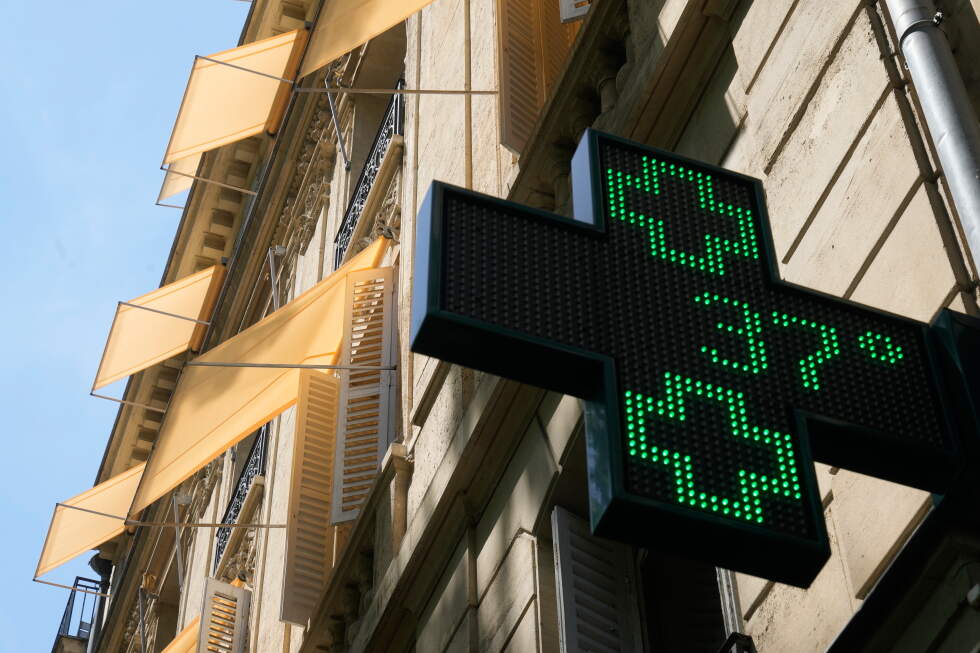
A historic, record-shattering heat wave has descended across Western Europe, forcing France to implement urgent public health and safety protocols as sweltering conditions grip much of the nation through the start of the week. On Monday, the country began a seven-day stretch of extreme heat marked by daytime temperatures exceeding 40 degrees Celsius (104 Fahrenheit) and overnight lows that remain warm enough to prevent residents from getting much-needed cool, restful sleep.
Meteo France, the country’s national meteorological service, reports that the majority of France — the European Union’s largest member state by land area and its second-most populous — has entered a sustained “plateau” of unbroken extreme heat that is not projected to begin abating until at the very earliest Friday. More than half of France’s regions were placed under the highest-level “red alert” for dangerous heat on Monday, with forecasts calling for widespread highs above 40 C and overnight temperatures that will not dip below 20 C, a combination that traps heat in buildings and prevents natural cooling after sundown.
Unlike many other developed nations, France does not have widespread access to air conditioning, leaving individuals, businesses and public services scrambling to adapt to the dangerous conditions. Education Minister Gabriel Attal confirmed that hundreds of public schools across the country were fully closed on Monday, with hundreds more canceling scheduled classes to reduce the risk of heat-related illness for students and staff. On the Paris public transit network, automated announcements repeatedly urged commuters to stay hydrated, while medical experts appeared on national broadcast outlets to warn the public of the lethal risks of combining alcohol consumption with extreme heat. In response to these warnings, French authorities moved to ban alcohol consumption in all public spaces in at-risk regions, and restricted participation in organized outdoor sports activities to reduce heat exposure.
Despite widespread official warnings about hidden hazards, many residents flocked to local rivers and lakes to find relief from the oppressive temperatures, leading to multiple reported drownings across the country in the first days of the heat wave.
The extreme heat event is not isolated to France: across the English Channel, the United Kingdom’s Met Office has also issued an “extreme heat” warning covering most of southern England and parts of Wales, effective from Monday through Thursday. Forecasters in the UK predict temperatures could climb as high as 38 C (100 F), which would shatter the existing national record for the highest June temperature, a 35.6 C (96 F) mark set back in 1976.
Scientists have long linked the growing frequency and intensity of such extreme heat events to human-caused climate change, and recent projections from United Nations climate agencies warn that the next five years are expected to see even more all-time heat records broken around the globe.
The public health risks of sustained extreme heat are well-documented. Earlier this month, the World Health Organization’s European regional office released new data showing that over the past four years alone, more than 200,000 people across Europe have died from heat-related causes, the vast majority of which were preventable. Public health officials stress that sustained above-average summer temperatures, like those being experienced this year, can quickly lead to dangerous heat exhaustion and life-threatening heat stroke, particularly for elderly residents, young children and people with preexisting chronic health conditions.