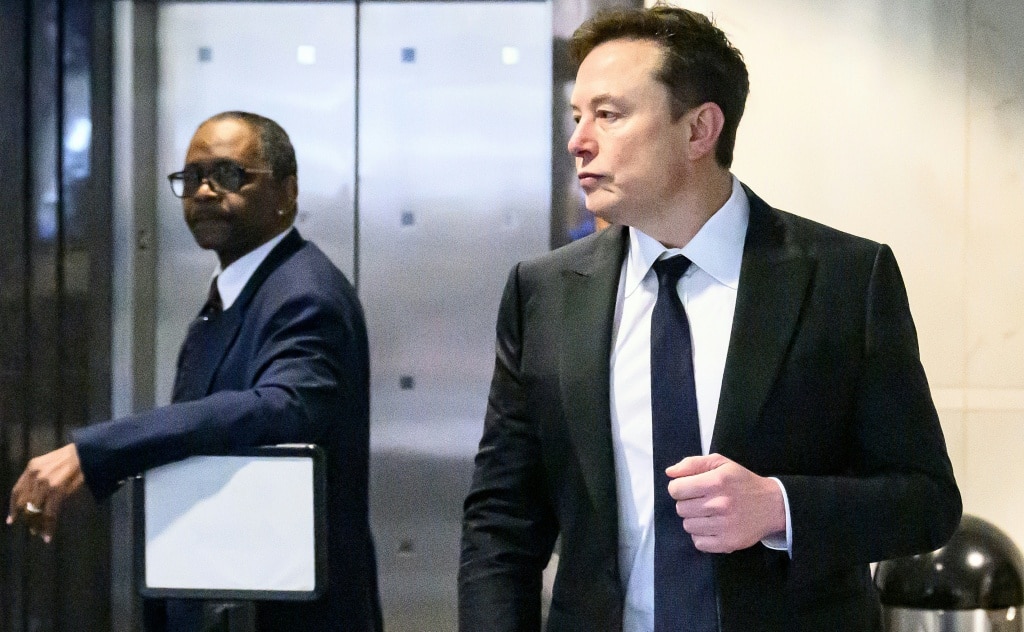
After three weeks of heated courtroom proceedings, one of Silicon Valley’s most consequential legal battles centered on the artificial intelligence industry is drawing to a close. The civil suit filed by billionaire entrepreneur Elon Musk against OpenAI and its co-founders, widely labeled as the tech hub’s first major AI industry trial, is set to go to the jury for deliberation as early as Monday. As the legal process wraps up, four standout moments have come to define the clash between two of the founding factions of one of the world’s most valuable AI companies.
First, Musk has framed his own role in OpenAI’s founding as that of a naive, altruistic pioneer who poured resources into a project for the public good, only to be pushed aside by the co-founders who built a multi-trillion-dollar business from his initial investment. Opening his case on April 28, the SpaceX and Tesla CEO positioned himself as a Good Samaritan focused on safeguarding humanity from unregulated superintelligence that could pose existential risks if controlled by bad actors. “I came up with the idea, the name, recruited the key people, taught them everything I know, provided all of the initial funding,” Musk told the court of OpenAI’s 2015 launch. He added: “I gave $38 million essentially for nothing, which they used to build a company worth $800 billion. I was literally an idiot,” blaming his own early lack of suspicion for the current conflict. Throughout his testimony, Musk displayed clear frustration, accusing OpenAI’s legal team of asking loaded questions designed to trap him. In response, OpenAI lead counsel William Savitt leaned into pointed cross-examination, wrapping his aggressive questioning in polite language that began with the line: “Mr. Musk, you are a brilliant man.”
The second defining moment came when OpenAI CEO and co-founder Sam Altman took the stand to deliver his sharp counterattack, trading his signature casual attire of T-shirts, jeans and sneakers for a formal dark suit and tie. For most of the trial, Altman sat expressionless in the front row of the Oakland courtroom, but when his turn to testify arrived on May 12, he did not hold back. Musk’s lead attorney Steven Molo opened by asking Altman if he had always told the truth throughout his life, to which Altman replied candidly: “I’m sure there have been times in my life when I didn’t.” But he quickly pivoted to strike back at Musk’s claims, alleging that as early as 2017, Musk demanded 90% of OpenAI’s total equity and refused to put a power-sharing agreement in writing. Altman explained that the remaining co-founders had no choice but to push back on the demand, arguing that artificial general intelligence — the superintelligent system OpenAI initially set out to build — should never fall under the exclusive control of a single individual.
Third, decades-old personal notebooks kept by OpenAI president and co-founder Greg Brockman became a central piece of evidence in the case. Throughout the trial, Brockman has been a consistent presence in court, filling yellow notepads with detailed notes on every day’s proceedings. But during his May 4 cross-examination, it was his old private journals from the early days of OpenAI that took center stage. Musk’s legal team pulled out embarrassing excerpts that appeared to show Brockman was focused from early on on growing his personal wealth and pushing Musk out of the organization. One entry asked: “financially, what will take me to $1B?” Another noted Brockman’s goal to convert OpenAI to a benefit corporation without Musk’s involvement, and a third entry even described a plan to take control of the original non-profit foundation from Musk as “pretty morally bankrupt.” Brockman pushed back firmly against the attempt to frame him as unethical, telling the court: “There’s nothing in there I’m ashamed of.” He added that the journal failed to record details of a 2017 explosive confrontation with Musk, where Brockman said he genuinely believed Musk was about to physically assault him. While Musk never touched him, Brockman testified that Musk ripped a Tesla painting — a gift to the company from one of the co-founders — off the wall and stormed out of the room. Today, Brockman’s stake in OpenAI is valued at roughly $30 billion.
The final high-profile moment of the trial came with the testimony of Shivon Zilis, a shadowy figure with close ties to both Musk and OpenAI who rarely appears in public. Zilis, who is the mother of four of Musk’s children, conceived via in vitro fertilization, served on OpenAI’s board of directors from 2020 to 2023, and also holds a senior role at Musk’s neurotechnology firm Neuralink. Her dual role put her in the awkward position of being a close colleague to Musk and a personal friend to Altman, and OpenAI has accused her of acting as a secret mole for Musk during her time on the board. When her relationship with Musk was brought up in court, Zilis responded with dry sarcasm, saying: “Relationship is a relative term,” before acknowledging that “there have been romantic moments.” While her in-court testimony drew intense media curiosity, the greater impact on the case may come from the content of private text messages Zilis sent to both Musk and Altman. Those communications could lead the jury to conclude that Musk was fully aware of OpenAI’s strategic shift toward for-profit development long before he filed his 2023 lawsuit. If the jury agrees that Musk had this information years earlier, his entire case could be dismissed before jurors even begin deliberating on the core legal claims.