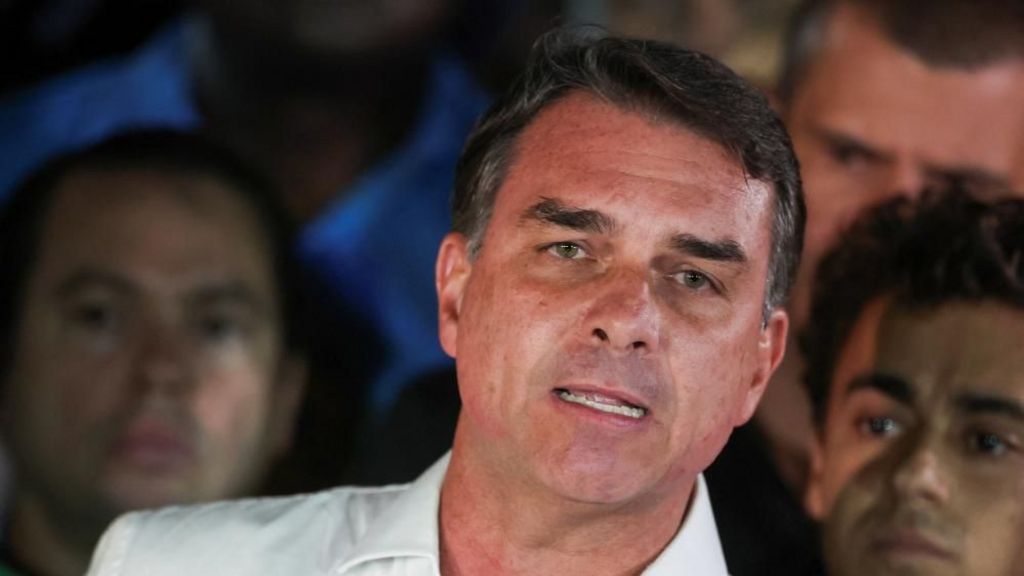
In a rapidly unfolding post-election development in Brazil, federal law enforcement officials have formally invalidated the passports of defeated right-wing presidential hopeful Flávio Bolsonaro, after the high-profile senator failed to adhere to a Supreme Court mandate requiring him to surrender the travel documents within a 24-hour window. The top court issued the original order on Monday, as part of an active probe into unsubstantiated money laundering allegations that Bolsonaro has repeatedly denied. At the time the order was issued, the 45-year-old legislator publicly stated he had no intention of leaving Brazilian territory, vowing to remain in the country to lead organized opposition against newly re-elected left-wing President Luiz Inácio Lula da Silva. When the court-mandated deadline lapsed with no sign of Bolsonaro turning over his passports, widespread public speculation emerged that he may have fled the country. A senior federal police source confirmed to BBC Brasil that border patrol units were conducting targeted checks at all international entry and exit points to verify whether the senator had crossed into neighboring Argentina, but Argentine immigration authorities later informed the BBC that no official entry records for Bolsonaro exist across any of their border checkpoints. The passport revocation adds to a growing list of legal challenges facing Bolsonaro, who was already under investigation for alleged corruption tied to the financing of a documentary centered on his father, former far-right President Jair Bolsonaro. The elder Bolsonaro was previously convicted of plotting a coup and is currently serving a sentence under house arrest. Adding a new layer of scrutiny, Brazil’s Supreme Court issued a separate directive on Tuesday ordering federal police to open a formal investigation into Flávio Bolsonaro’s recent presidential campaign over accusations of unlawful foreign campaign funding. The legal turmoil comes on the heels of a shock upset in the October presidential run-off, which most pre-election polls had projected Bolsonaro would narrowly win after he secured a lead in the first round of voting held on October 4. In a historic upset, veteran incumbent Lula overtook Bolsonaro’s early lead in vote counting to claim 51.79% of the total valid votes, compared to Bolsonaro’s 48.21% – marking the first time a Brazilian presidential candidate overturned a first-round deficit to clinch a second-round victory. Even after trailing by more than 4.4 million total votes, Bolsonaro has refused to concede defeat and is aggressively pushing for the entire election result to be formally annulled. His core grievance centers on a two-hour extension of polling station operating hours on election day, a measure he has labeled a “dirty trick” orchestrated against his campaign – despite the fact that the extended voting window was formally requested by both his own Liberal Party and Lula’s Workers’ Party, and authorized by a Supreme Court justice. Notably, Bolsonaro’s own party has formally accepted the final election outcome, though it has stated that the circumstances surrounding the polling hour extension do merit a separate official review.
Flávio Bolsonaro’s passports cancelled after he fails to surrender them